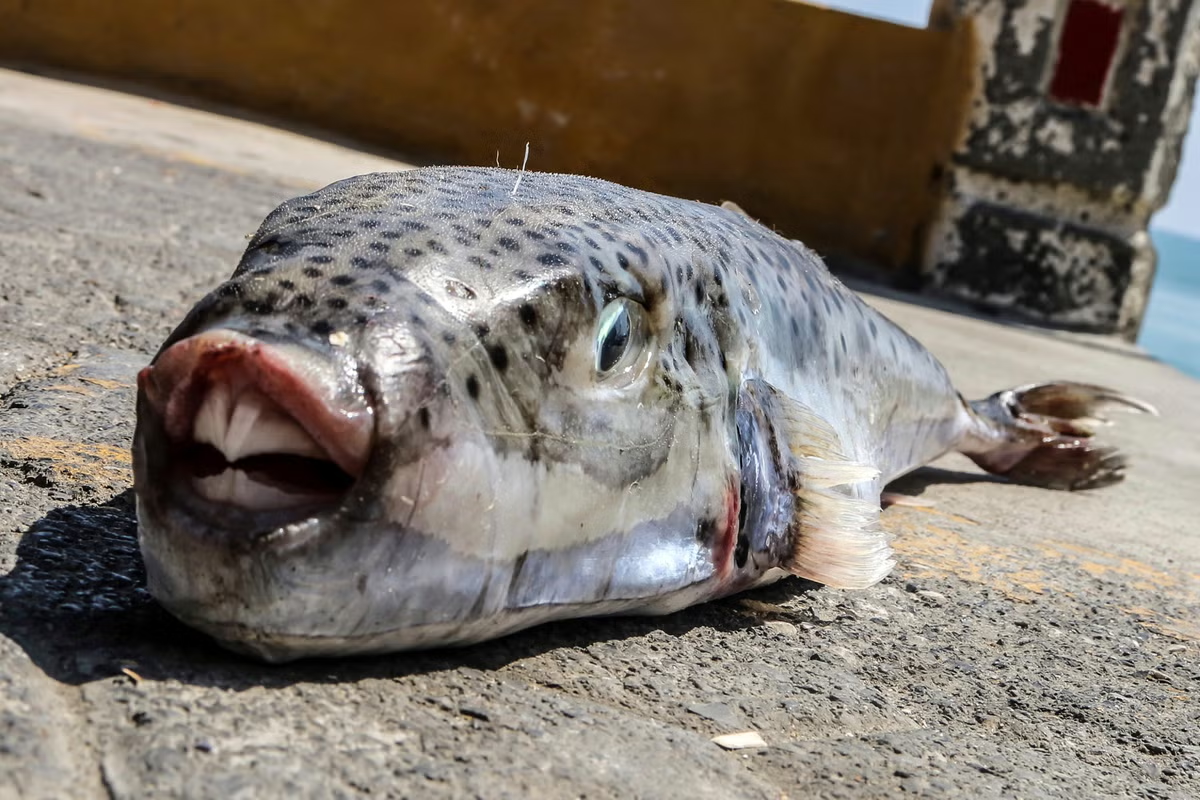
Fishermen in Greece are being paid a bounty to catch a toxic fish migrating north into the Mediterranean Sea and causing chaos for crews.
The silver-cheeked toadfish is a torpedo-shaped species with prominent, humanlike teeth. The skin and organs of the fish contain a powerful neurotoxin that can cause heart failure in humans if consumed.
Public concern has been increased in Greece by online videos posted by fishing crews, showing the fish, known locally as lagokefalos, sinking their teeth into cans or pieces of wood.
The Greek Red Cross has issued a public health warning about the fish, outlining first-aid protocols for bleeding caused by potential bites and warning of the deadly neurotoxin in the fish’s organs.
Greek media reports a woman was injured after being bitten by a fish while swimming at a beach in Varkiza, near Athens. She was taken to hospital and needed stitches as a result of the attack.
The fish are believed to have traveled up the Suez Canal and into the Mediterranean, attracted by warming waters. The invasion prompted Cyprus to launch a similar catch program earlier this year.
Authorities say the fish have not been sighted in bathing areas at Greek island resorts. But in recent weeks, the fish have wreaked havoc for fishermen off the coast of Crete and several other Greek islands, chomping through nets.
A viral video of a fish biting a can:
“It’s got to the point where we might go out fishing one day and then spend the next three days fixing our nets,” Giorgos Kyriakakis, of a Cretan fishermen’s association, told Greek public broadcaster ERT on Friday.
“They eat our catch and damage our nets — that’s very costly,” he said.
Starting Friday, Greece’s government is offering 5.33 euros per kilogram (about $2.75 per pound) for catches of the fish, which is normally found in tropical waters.
“It’s the first time that such a measure has been taken in Greece,” Agriculture Minister Margaritis Schinas, a former European Commission vice president, said ahead of the program’s launch.
The fish – a member of the puffer fish family – will be frozen and incinerated at local government facilities, Schinas said. He added that the measure would likely be expanded from the currently affected islands to all Greek waters.
Authorities and businesses on the island of Crete cautioned against overreacting to the fish’s offshore presence.
“The presence of these fish in the Mediterranean has been known for years,” a statement issued Friday by 16 medical and tourism associations on Crete said.
“There is, however, no ‘invisible’ or imminent danger to bathers. Marine predators do not threaten the safety of visitors and residents,” it said. “Exaggeration is often a feature of public debate.”