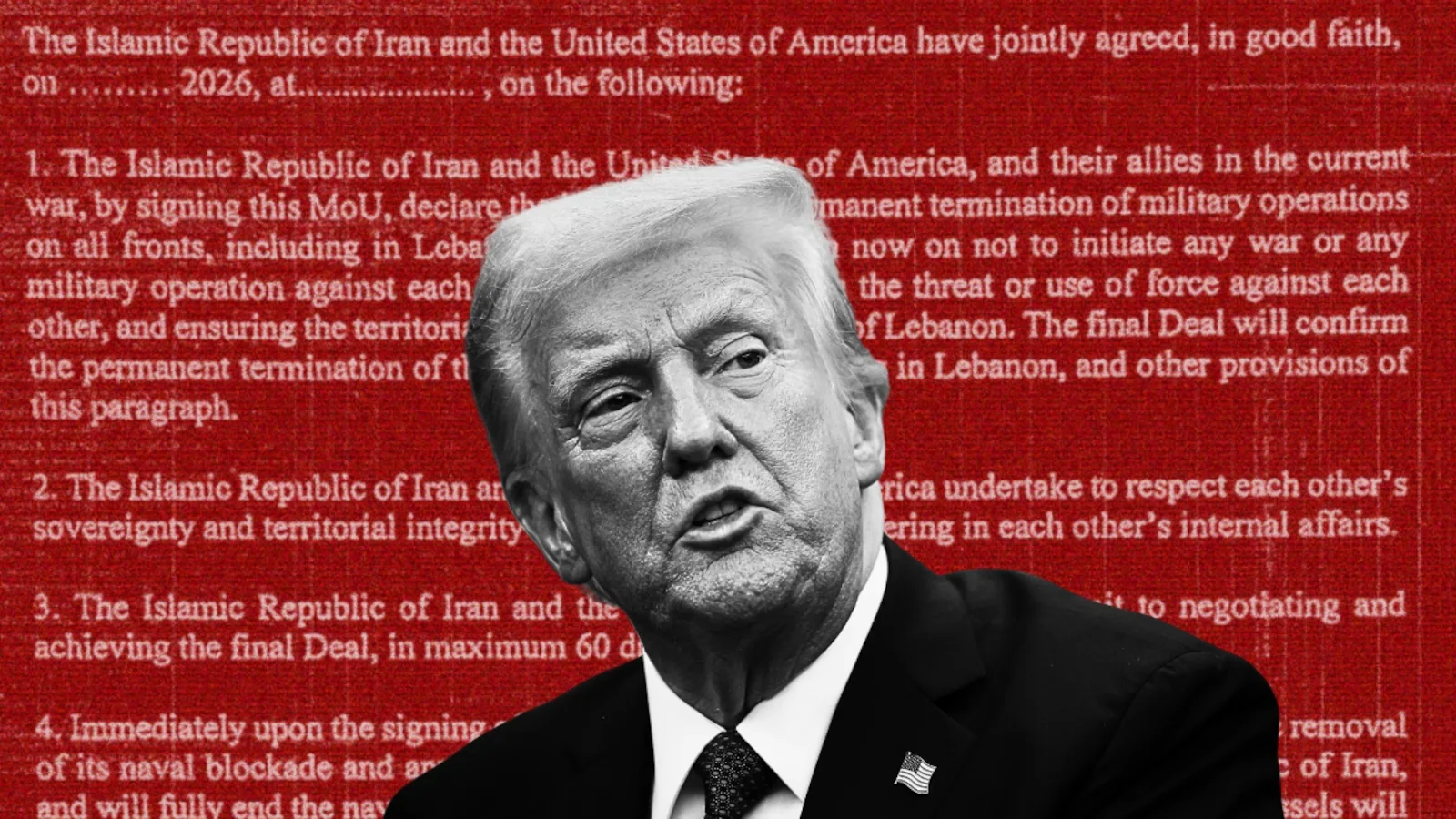
The United States and Iran have surprised the world by signing an interim Memorandum of Understanding (MOU) aimed at ending more than 100 days of conflict in the Middle East. A close reading of the agreement suggests that Tehran has secured several of its key objectives, including sanctions relief, economic reconstruction assistance, and a pathway to restoring important revenue streams.
The agreement provides Iran with significant economic breathing space and could reduce Washington’s leverage in future negotiations. While both sides have presented the deal as a step toward regional stability, critics argue that many of the immediate benefits appear to favour Tehran.
At the same time, one of the most sensitive issues remains unresolved: Iran’s nuclear programme. Tehran has once again reaffirmed that it will not develop or acquire nuclear weapons, a position it maintained throughout the negotiations. However, the far more contentious issue of uranium enrichment has been left for future talks.
As sanctions begin to ease and economic pressure on Iran diminishes, the next phase of negotiations will determine whether Washington can secure meaningful and lasting nuclear restrictions or whether Tehran emerges with even greater bargaining power.
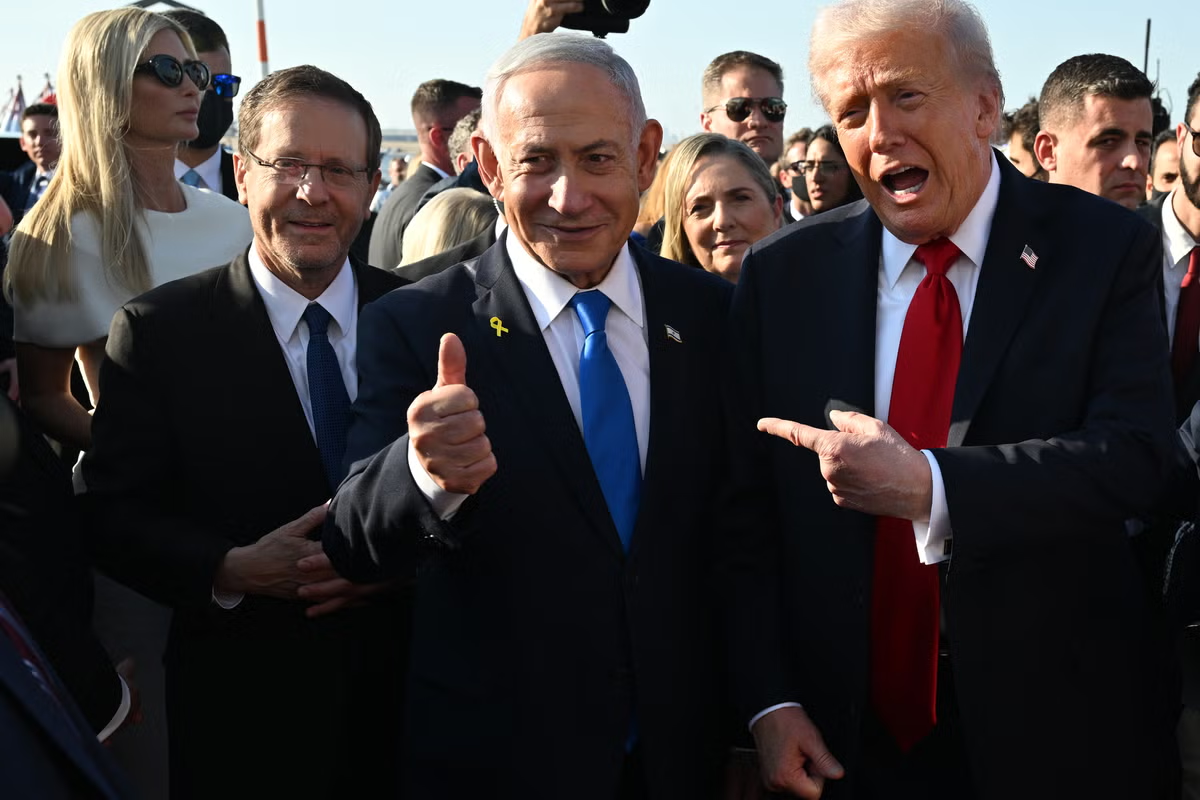
The sudden diplomatic breakthrough has also raised a larger question: Why did US President Donald Trump agree to terms that many observers see as a significant victory for Iran? The answer appears to lie in a combination of economic pressure, political realities at home, growing criticism of the war, and reported tensions with Israeli Prime Minister Benjamin Netanyahu.
Key Provisions Of The US-Iran MOU
Some of the most important provisions of the agreement include:
The United States has agreed to allow Iran to resume exports through its ports and receive commercial shipments.
Commercial vessels will receive free passage through the Strait of Hormuz for an initial 60-day period. After this period, Iran and Oman are expected to discuss future maritime administration and services in the Strait. While international law limits direct transit fees, the agreement could open the door to service-based charges or administrative fees.
- The proposed $300 billion reconstruction and development package represents a major economic concession.
- Agreement calls for the lifting of US, UN, and related sanctions.
- Iran has reaffirmed that it will not develop or acquire nuclear weapons, while discussions on uranium enrichment will continue.
Taken together, the provisions give Iran substantial economic relief and diplomatic recognition. Critics of the agreement argue that it leaves Iran in a stronger position than before the conflict while allowing the United States an opportunity to exit a costly and increasingly unpopular war.
Why Did Trump Sign a Deal That Appears to Benefit Iran?
Rising Inflation Put Pressure on the White House
One of the biggest reasons behind Washington’s push for a diplomatic settlement appears to be the growing economic cost of the conflict. The wartime disruption of shipping through the Strait of Hormuz sent global energy prices soaring, which quickly translated into higher fuel and grocery prices for American consumers.
The impact was visible in inflation data. According to recent figures, the US Consumer Price Index (CPI) rose at an annual rate of 4.2 per cent in May, up from 3.8 per cent the previous month, marking the highest inflation level since April 2023. With the cost of living once again becoming a major political issue, the White House faced increasing pressure to stabilise energy markets and prevent further economic damage.
Midterm Elections Added Political Urgency
The timing of the deal is significant. The United States is now less than six months away from the crucial November 2026 midterm elections, and the Republican Party is already facing a difficult political environment.
Republicans currently hold a razor-thin 218-212 majority in the House of Representatives and a 53-47 majority in the Senate. Recent polls, however, show Democrats leading the generic congressional ballot by 3-6 percentage points, while several forecasts suggest the Democrats are increasingly well-positioned to regain control of the House.
Historically, the president’s party tends to lose seats during midterm elections. Combined with high inflation and voter frustration over rising prices, the Iran conflict risked becoming a major electoral liability for Trump and the Republican Party.
Fuel Prices Became A Political Headache
Fuel prices emerged as one of the most visible consequences of the conflict. According to the American Automobile Association (AAA), the national average petrol price in the United States stood at $4.06 per gallon on June 15. Before the escalation of tensions, the average price was $2.98 per gallon on February 28, highlighting the sharp impact of the war on American consumers.
Experts have warned that fuel prices could take months to normalise even after the US-Iran agreement, meaning the inflationary effects of the conflict may continue for some time.
Nevertheless, the White House appears to be betting that a ceasefire and reopening of shipping routes will gradually ease pressure before voters head to the polls.
The broader energy picture is equally concerning. According to the latest Labor Department inflation report, energy prices have increased 7.7 per cent in the past two months alone and are up 40 per cent compared to a year ago, making them a major contributor to rising inflation.
Trump’s Approval Ratings Remain Under Pressure
The political cost of the conflict has also been reflected in Trump’s approval ratings. A recent Reuters/Ipsos poll conducted between June 12 and June 15 showed Trump’s approval rating ticking up by one point to 36 per cent as the Iran war appeared to be approaching an end. However, the figure remains significantly below the 40 per cent approval rating he enjoyed at the end of February, before the United States launched strikes against Iran.
While the slight improvement suggests voters may be responding positively to efforts to end the conflict, the numbers also underscore the political damage caused by months of war, rising prices, and economic uncertainty.
Growing Resistance in Congress
The war also generated increasing criticism on Capitol Hill, particularly over its financial and military costs. According to available estimates, the United States fired more than 850 Tomahawk missiles in the first four weeks of the conflict alone, with the total exceeding 1,000 missiles by the time of the ceasefire. That figure is reportedly around ten times the normal annual procurement rate, raising concerns about military readiness and defence spending.
Democrats, along with some Republicans, used these figures to question the overall strategy, mounting costs and the administration’s reliance on military force. Congressional debates also revived questions around the War Powers Resolution, with lawmakers demanding greater oversight and accountability regarding America’s military involvement.
Growing bipartisan scrutiny increased the pressure on the White House to seek a diplomatic exit from what was becoming an increasingly expensive conflict.
Friction With Israel Changed The Political Equation
The conflict also appears to have strained relations between Trump and Netanyahu. Reports suggest that the war exposed serious disagreements between the two leaders, culminating in a reportedly tense phone call on June 1, 2026, during which Trump allegedly expressed frustration with Israel’s handling of the conflict.
Facing rising inflation, falling approval ratings and mounting political pressure at home, Trump reportedly pursued negotiations with Iran while largely sidelining Netanyahu from the process. Critics argue that this reflected the White House’s determination to secure a quick diplomatic settlement, even at the cost of creating friction with one of America’s closest regional allies. Trump’s willingness to move ahead with the agreement despite Israeli reservations highlights the extent to which domestic economic and political concerns may have influenced Washington’s decision-making.
The Biggest Question Remains: Iran’s Enriched Uranium
Despite the breakthrough, the most difficult issues have been postponed rather than resolved. The future of Iran’s stockpile of highly enriched uranium, the scale of its enrichment programme, and the reconstruction of damaged nuclear facilities will now become the focus of future negotiations.
Trump has argued that the agreement ensures Iran will never acquire a nuclear weapon. However, the current text stops short of imposing detailed restrictions on enrichment activity, leaving considerable room for further negotiations.
This uncertainty means the toughest discussions are likely still ahead.