Etim Etim
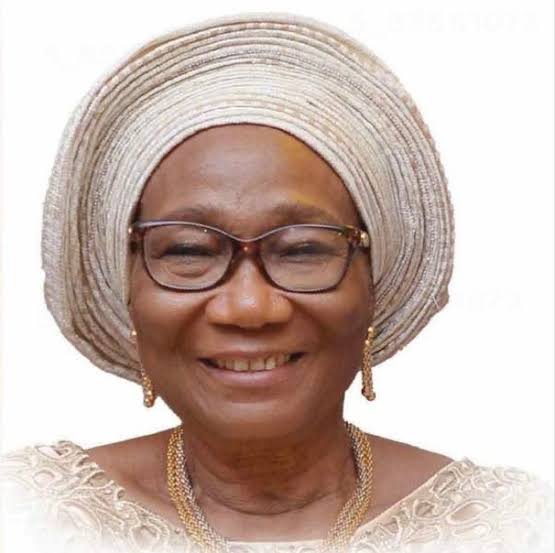
Monday June 8 marked the fifth anniversary of the passing of Pastor Emily Aig-Imoukhuede, former Minister and former President of Nigerian Council of Women Societies (NCWS), and to honour her memory and celebrate her life, the children organised a memorial lecture. The theme for the inaugural lecture was ‘Leadership and Service to God, Nation and Humanity,’ and the lecturer was no other person than Bishop Mathew Hassan Kukah, one of the most cerebral Africans of the 21st century.
It was held at the Agip Hall of the MUSON Centre, Lagos. The venue was packed and for a Monday afternoon in Lagos, that was an impressive attendance. Kuka’s 40-minute presentation was, as usual incisive, philosophical and profoundly provocative. It was immediately followed by a panel discussion on service and leadership.
Eminent banker and businessman, Fola Adeola, moderated the discussion led by Dame Esther Didi Walson-Jack, Head of the Civil Service of the Federation and Zelda Akindele, a lawyer and partner in Templars Law firm. Mrs Walson-Jack promptly announced that she was at the panel in her personal capacity; not as the nation’s number one civil servant. The clarification was understandable.
It’s not surprising that the family chose leadership as the theme of the inaugural lecture. Nigerians are quite unanimous in their belief that their country has been steadily weakened over the years by successive sets of incompetent, decadent and corrupt leadership. Bishop Kukan made the point succinctly in a rhetorical question he posed in the course of his lecture: How was Nigeria with so many talented and brilliant people brought to its knees by the dregs of the society? He later suggested that the taking over of secondary schools from the church by the military régime of Gen. Olusegun Obasanjo in the 1970s was the seed that sowed the rot in the country. To illustrate how important those mission schools were, Bishop Kukah noted that Pastor Emily’s success in life could be attributed to her education at St. Anne’s School, Ibadan, a Catholic School.
Kukah identified various concepts of leadership and different types of leaders. He noted that leadership is not necessarily tied to the office one occupies. There are leaders who do not occupy office and there are people in office who are not leaders, he said, earning a loud applause, one of the many that punctuated his lecture. Leadership, he said, is all about influence and the use of such influence for the advancement of the society.
Leadership is also about creating conditions that allow every section of the society and every person equal opportunity to realize their God-given potentials. Kukah identifies vision (why are we here and where are we going to?); character (a moral sense of what is right and what is wrong, the choice we make when no one is looking); empathy; compassion and kindness as the key qualities of a good leader. He used the lives of Mother Theresa, Pastor Emily and the teachings of Jesus Christ to demonstrate the essence of empathy, kindness and compassion as important attributes of leadership.
Kukah particularly commended Pastor Emily’s concern and love for the poor despite her privileged life and compared it to Mother Theresa’s exemplary life devoted to helping the poor and stressed the need to do good no matter one’s situation in life. Bishop Kukah is a compelling story teller who spices his presentations with anecdotes; personal encounters and jokes. His Monday afternoon lecture was a class act.
Pastor Emily’s husband, Pa Frank Abiodun Aig-Imoukhuede; their four children and their spouses were at the lecture. First son, Aigboje, said the family had decided that the fifth anniversary of their mother’s passing should be an opportunity for reflection – reflection on the values by which a life should be lived; reflection on the responsibilities that accompany leadership; reflection on the obligations we owe to God, to our families, to our country and to humanity.
He said her mother was not defined by fortune, power or ideology. ‘’What distinguished her was something deeper. It was her unwavering commitment to service. She believed that life was not merely to be lived for oneself. She believed that every gift carried a responsibility; every opportunity carried an obligation; every blessing carried a duty to bless others. Throughout her life she answered four calls. The call to serve God. The call to serve family. The call to serve country. And the call to serve humanity,’’ said Aigboje.
The three discussants – Fola Adeola; Mrs Didi Esther Walson-Jack and Mrs Zelda Akindele – added fresh perspectives to the leadership question in their contributions. Adeola opened the session with his own concept of leadership, noting that leadership is all about service, family; country and faith. Walson-Jack said she’s been guided by a set of values (hard work; integrity; diligence and empathy) in the course of her professional calling. Mrs Akindele said as a mother of young children, every day is a balancing act between service to family and service to the nation. The day ended with a vote of thanks given by Pastor Emily’s first child, Prof. Erekpitan Ola-Davis.
* Etim, a journalist, writes from Abuja