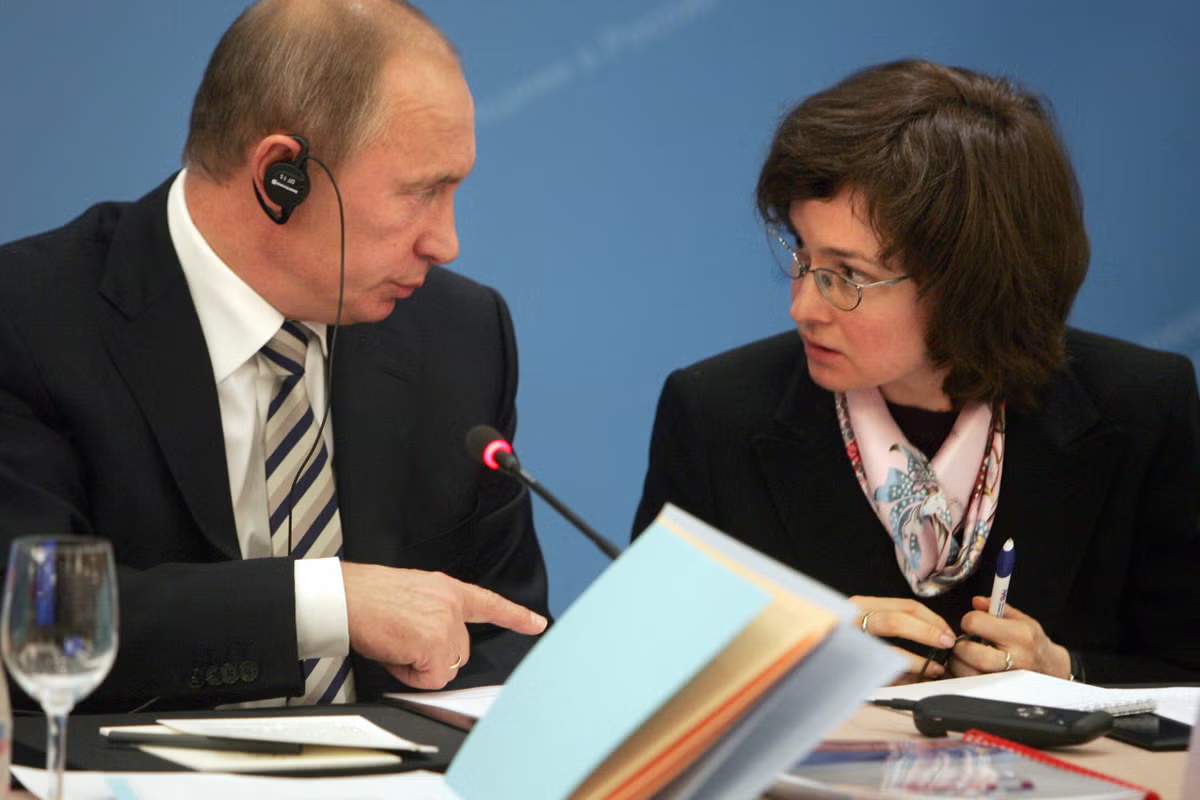
Elvira Nabiullina, who once reportedly threatened to quit as head of Russia’s central bank over Vladimir Putin’s decision to invade Ukraine, has not been seen in public for almost three weeks.
Ms Nabiullina is widely credited with keeping the Russian economy afloat despite the financial pressures of the Ukraine war, which Mr Putin has poured vast resources into pursuing. She had received multiple international awards prior to the 2022 invasion, but is now the subject of Western sanctions.
The former economy minister is serving her third term at the central bank and is due to stand down in June next year.
She was reinstated for her second five-year term just days after the Ukraine war began, and had attempted to quit due to her deep reservations about the invasion, according to multiple US media reports at the time. Mr Putin is said to have rejected her resignation.
She was last seen in public at the end of May. She has cancelled two key engagements in recent weeks, including a major economic forum in St Petersburg, where Mr Putin sought to project financial stability and strength in a bid to shore up investment.
Ms Nabiullina, considered a trusted aide of the president, was announced as a speaker on two panels at the so-called “Russian Davos”, but her name was removed from the list of participants ahead of the summit.
Ms Nabiullina also didn’t appear at a meeting chaired by Mr Putin on inflation and interest rates.
Kremlin spokesperson Dmitry Peskov rubbished claims of the central banker being “missing” and said it was not a cause for “conspiracy theories”.
“People get sick sometimes,” he said.
The central bank said Ms Nabiullina was on sick leave but would attend a press conference on 19 June following a meeting of the board of directors on monetary policy.
Still, Ms Nabiullina’s recent absence from the public eye has caused speculation that she may be looking to step down from her role a year short of the end of her third and final term.
Russian law prohibits the head of the central bank from serving more than three terms. The president is legally required to nominate Ms Nabiullina’s successor to the parliament by March 2027.
Ms Nabiullina’s absence comes as central banks in the UK, Japan, Australia, Switzerland, Sweden, and Norway meet this week to deliberate monetary policies. Japan is considered the one likely to lift rates this time.
The Russian central bank is also meeting on Friday. The meeting will be closely watched for the chief’s attendance.
Analysts credit Ms Nabiullina with shielding the Russian economy from the worst impacts of the Ukraine war and say her prolonged absence may test market faith in the system.
But she has also faced criticism from Russian businesses over the central bank’s rate hike to 21 per cent in 2024 to fight inflation, which contributed to economic growth slowing to 1 per cent last year from 4.9 per cent in 2023.
More details here...