The production of the new Kiswa draws on premium raw materials. Each covering requires 825 kilogrammes of natural silk, 47 rolls of black silk for the outer covering, and 400 kilogrammes of raw cotton for the inner lining
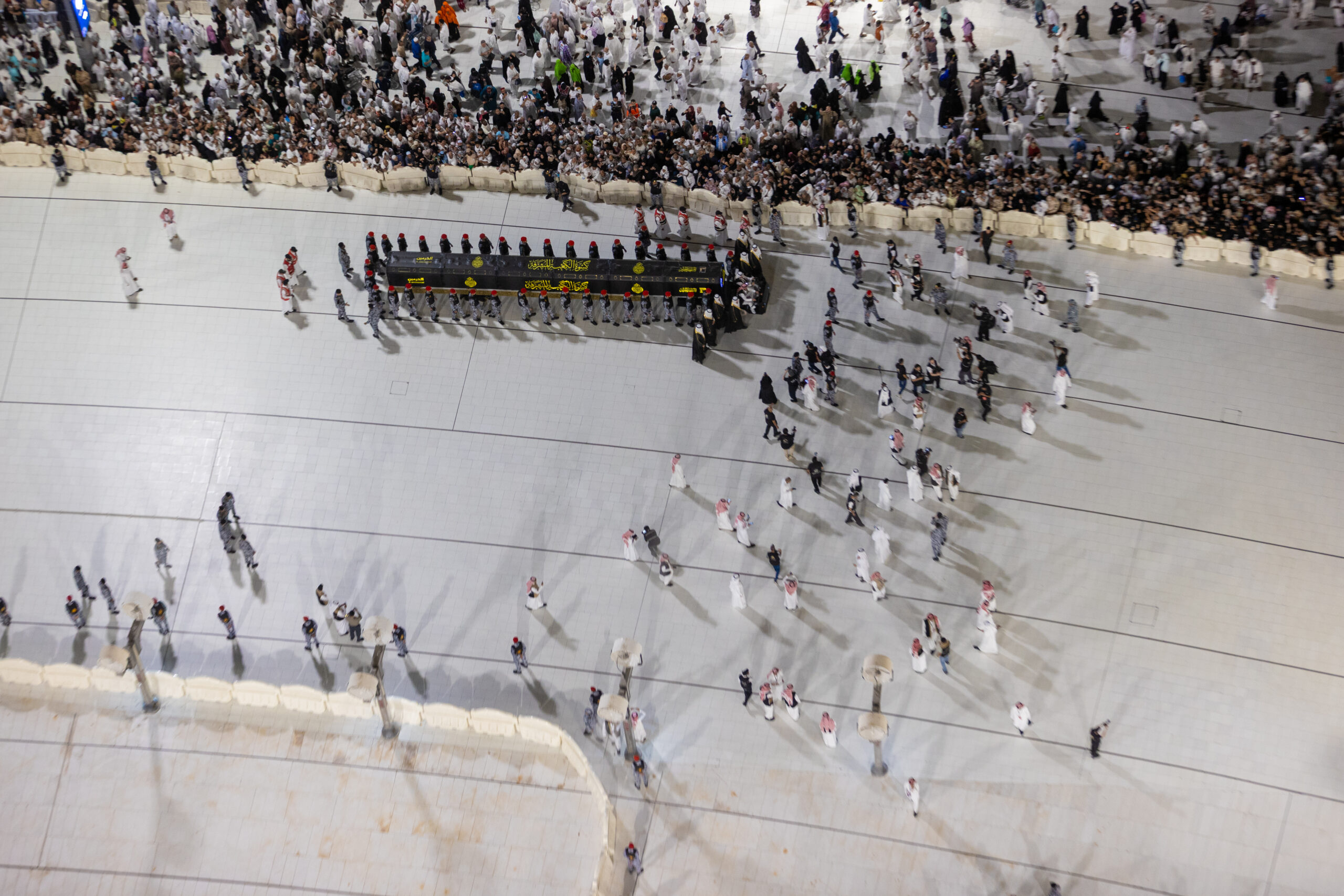
Saudi Arabia has completed the annual replacement of the Holy Kaaba’s Kiswa, the ornate black silk covering that adorns Islam’s most sacred site in Makkah in a centuries-old tradition that the Kingdom describes as a symbol of its custodianship of the Two Holy Mosques.
The exercise, coordinated by the General Authority for the Care of the Affairs of the Grand Mosque and the Prophet’s Mosque through the King Abdulaziz Complex for the Holy Kaaba Kiswa, involves a meticulous multi-stage process combining traditional Islamic craftsmanship with modern manufacturing technology.
Preparatory work included the removal of gold-embroidered ornaments, decorative lamps, and other embellishments from the existing Kiswa, as well as the lowering of the curtain covering the Kaaba’s door.
The new Kiswa was subsequently transported from the King Abdulaziz Complex to the Grand Mosque under a coordinated operational framework described by the Saudi Press Agency (SPA) as meeting international standards.
A specialised team of Saudi experts oversaw both the removal of the old covering and the installation of the new one.
The production of the new Kiswa draws on premium raw materials. Each covering requires 825 kilogrammes of natural silk, 47 rolls of black silk for the outer covering, and 400 kilogrammes of raw cotton for the inner lining.
The embroidery of Quranic verses and decorative Islamic motifs demands a further 60 kilogrammes of pure silver and 120 kilogrammes of gold-plated silver threads — a combined use of 180 kilogrammes of precious metals.
All materials undergo rigorous laboratory testing before production commences to verify quality standards and ensure durability across varying climatic conditions. Quranic verses and Islamic designs are first printed onto the fabric before being embroidered with gold and silver threads using advanced techniques.
The Kiswa is produced through a seven-stage process encompassing dyeing, weaving, testing, printing, embroidery, hand weaving, and final assembly. Saudi craftsmen continue to anchor the process, with hand weaving remaining indispensable for producing specialised decorative pieces that require exceptional precision.
Once all components are completed and assembled, the finished Kiswa is installed on the Holy Kaaba.
The Saudi government says the process reflects a deliberate blend of heritage and innovation, ensuring that the Kiswa remains a work of craftsmanship befitting the sanctity of the Grand Mosque.
For over a century, the annual replacement of the Kiswa has served as a defining expression of Saudi Arabia’s commitment to preserving Islamic heritage. The Kingdom says it continues to rely on local expertise and advanced technologies to sustain the tradition.
More details here...