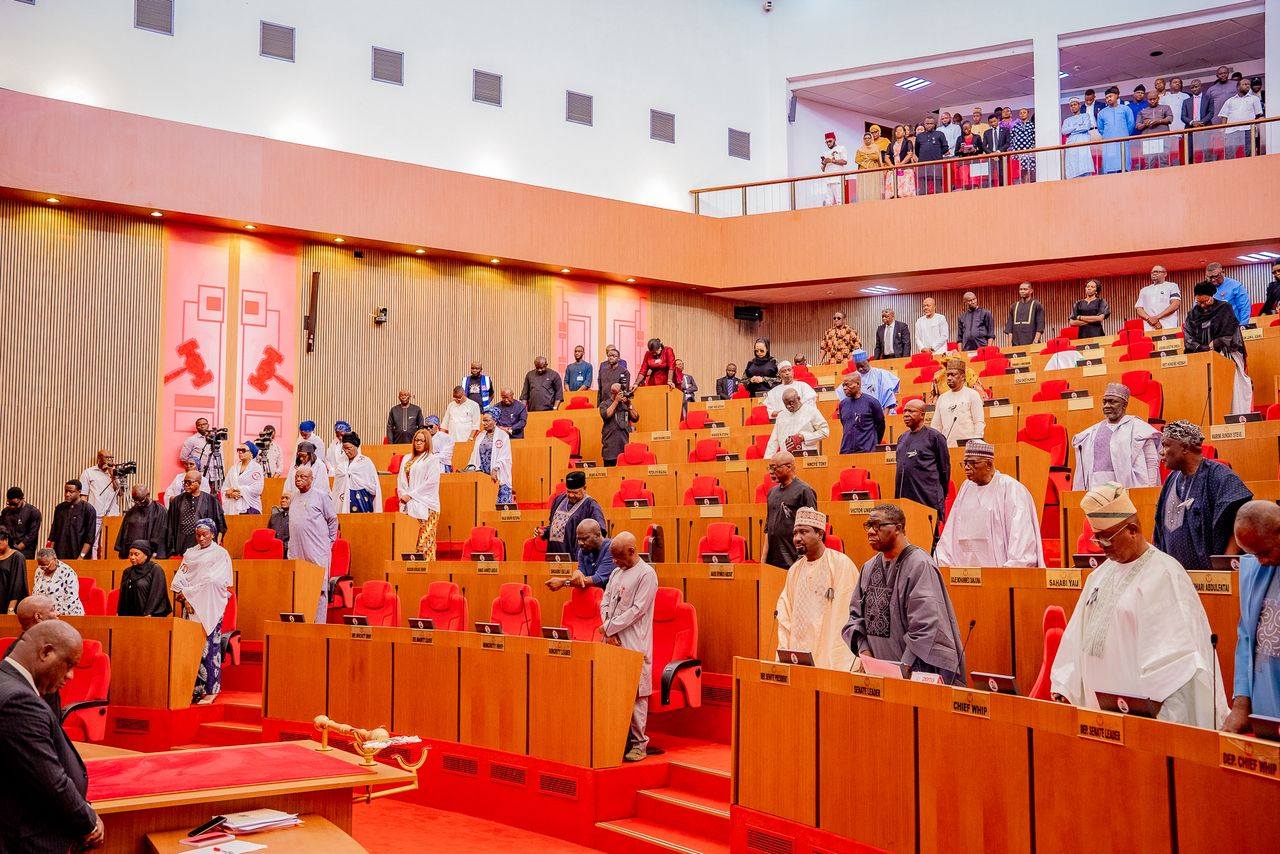
The lawmakers say the revival of the textile sector would create jobs and generate more revenue for the country
The Senate on Wednesday called for a total ban on the importation of textile products to enable Nigeria’s local textile industry to thrive, create jobs, and generate more revenue for the country.
The upper chamber also urged the federal government to provide the Bank of Industry (BOI) with additional funding dedicated to reviving the textile sector.
The resolutions followed the adoption of a motion sponsored by Kaduna South Senator, Sunday Katung, on the need to revive the country’s struggling textile industry.
The motion was co-sponsored by Natasha Akpoti-Uduaghan (PDP, Kogi Central), Adams Oshiomhole (APC, Edo North), Ibrahim Khalid (APC, Kaduna North) Tahir Monguno (APC, Borno North) and Mustapha Khabeeb (APC, Jigawa South-west).
Mr Katung, who presented the motion on behalf of the senators, lamented that the unregulated importation of textile products had caused Nigeria to lose its position as one of the largest employers of labour in the sector.
He noted that Nigeria’s first large-scale textile manufacturing mill, established in 1957, became a major employer, providing direct jobs for about 500,000 people.
The senator, however, said the once-booming industry had gradually declined, adding that by 2007, three textile mills had shut down, leaving more than 7,000 workers unemployed.
“65 years after the years of textile boom, the fortunes of the once flourishing industrial sector have tumbled and reduced the sector to the unenviable status of the weakest segment of Nigeria’s industrial sector.
“With the lifting of the ban on textile importation in 2010, Nigeria now has almost 80% of its textiles imported from China, Indonesia, Taiwan and other countries. This trend is definitely not helping the Nigerian economy, in terms of unemployment/job creations and needed foreign exchange,” he said.
Mr Katung therefore urged the federal government, the Federal Ministry of Agriculture and the Federal Ministry of Industry, Trade and Investment to take urgent steps to revive textile industries in Kaduna and Kano states to create jobs and stimulate economic growth.
He also called on the Nigerian Customs Service (NCS) to strengthen border surveillance to curb smuggling and ensure the collection of appropriate tariffs on imported textiles and related products.
Most senators who contributed to the debate supported the motion.
Kogi East Senator, Isah Jibrin, urged the National Assembly to engage relevant government agencies to ensure the implementation of the Senate’s resolutions.
Similarly, Nasarawa South Senator, Ogoshi Onawo, said reviving the textile sector could help address unemployment and insecurity.
“This motion wouldn’t have come at a better time than this. All that is happening in our country today is due to lack of jobs for our youth. I am sure we can come back on track, get our youth employed, get our farmers engaged, and this country will be better for it,” he said.
Kebbi Central Senator, Adamu Aliero, argued that a total ban on textile imports was necessary to protect local manufacturers.
“Nigeria used to be the largest producer of cotton in the world. We were producing a lot of cotton, but because of a lack of protection and smuggling, textile mills started closing, and we saw a lot of textiles coming from Asia. If we really want to revive the sector, the only solution is a total ban,” he stated.
The Deputy Senate President, Barau Jibrin, who presided over the session, put the motion to a voice vote, and it was overwhelmingly supported by lawmakers.
Mr Barau described the motion as critical to Nigeria’s economic development.
Nigeria’s textile industry was once among the largest employers in the country’s manufacturing sector, with textile mills in Kaduna, Kano and other parts of the country providing hundreds of thousands of jobs and supporting the cotton value chain.
However, the industry experienced a sharp decline over the past two decades due to factors such as smuggling, high production costs, inadequate infrastructure, poor access to credit, and the influx of cheaper imported textiles. Many textile factories subsequently shut down, leading to massive job losses and a significant reduction in local textile production.
Industry stakeholders have repeatedly called for government protection for local manufacturers, arguing that reviving the sector would boost employment, reduce dependence on imports, strengthen the naira and stimulate economic growth.