The bill seeks to establish an agency that will coordinate national efforts towards the prevention, control and eventual elimination of malaria in Nigeria.
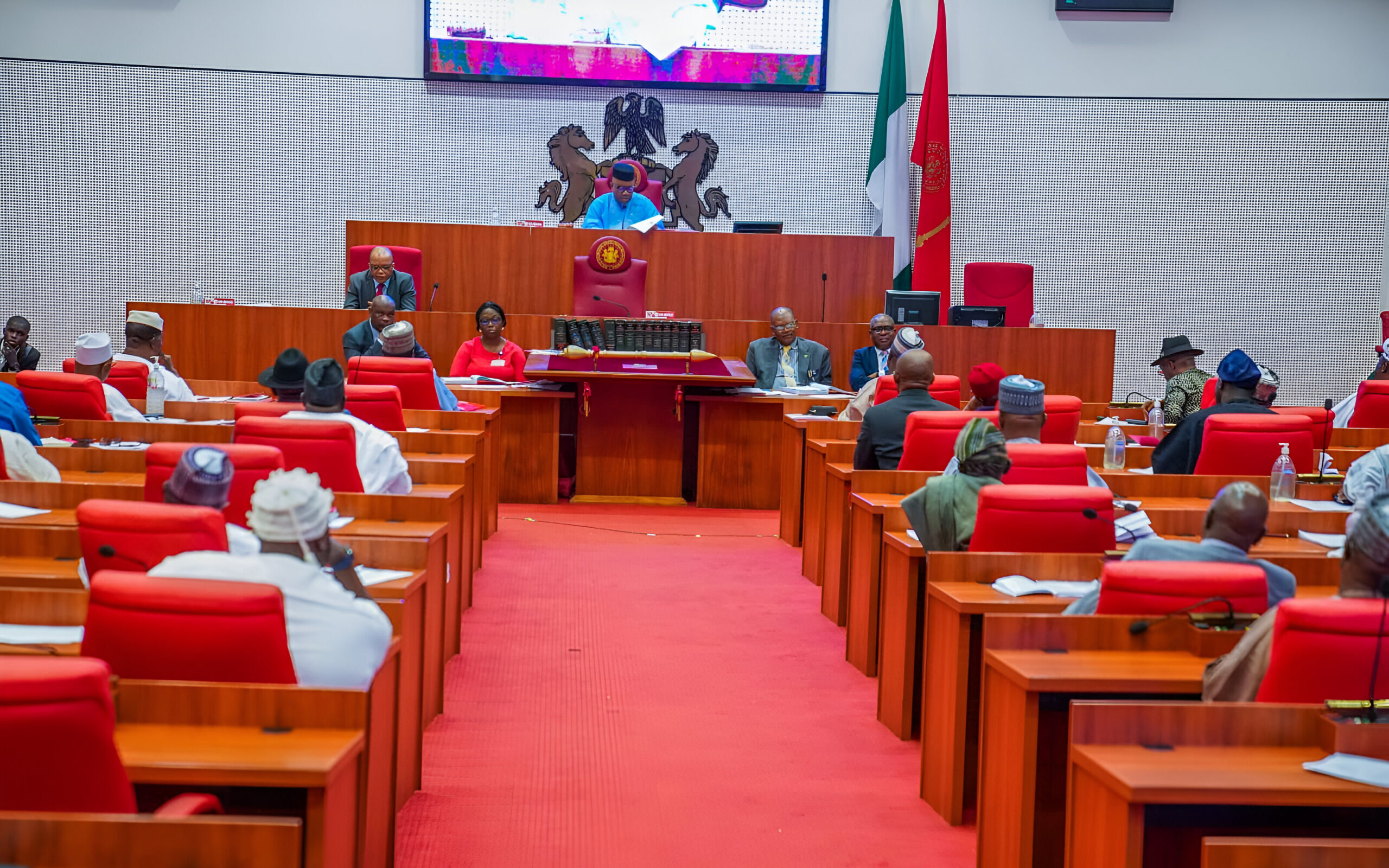
The Senate on Wednesday passed a bill seeking to establish the National Agency for Malaria Elimination in Nigeria.
The upper chamber passed the bill after considering the report of its Committee on Health, presented by Banigo Ipalibo, its chairman.
The clauses of the bill were considered at the Committee of the Whole.
The Senate President, Godswill Akpabio, announced the passage of the bill after a majority of the senators supported it through a voice vote.
The bill was sponsored by the senator representing Delta North Senatorial District, Ned Nwoko.
The legislation seeks to establish an agency to coordinate national efforts to prevent, control, and eventually eliminate malaria in Nigeria. It also mandates the agency to formulate and periodically review a national malaria elimination strategic plan and coordinate the implementation of malaria programmes and interventions across the country.
In addition, the bill provides for the establishment of zonal and state offices to drive malaria elimination efforts nationwide. The agency is expected to institutionalise malaria elimination through a framework backed by law, science and accountability.
The bill will be transmitted to the House of Representatives for concurrence before being forwarded to President Bola Tinubu for assent.
Presenting the committee’s report, Mrs Ipalibo, who represents Rivers West Senatorial District on the platform of the All Progressives Congress (APC), said the proposed agency would serve as the central coordinating body for malaria prevention and elimination in Nigeria.
“The agency will be responsible for coordinating all national efforts towards the prevention, control and eventual elimination of malaria,” she said.
The senator stated that stakeholders who participated in the public hearing overwhelmingly supported the bill, noting that it would provide institutional mechanisms at all levels of government to tackle malaria, which has remained a major public health challenge in the country.
She added that the establishment of the agency would help shift Nigeria’s approach from largely treating malaria cases to preventing and ultimately eliminating the disease.
Contributing to the debate, Mr Nwoko said that eliminating malaria in Nigeria is both practical and achievable.
“In the course of my research on the elimination of Malaria, I went to Antarctica with some of my legislative aides, after which I came up with the bill,” he said.
He maintained that malaria elimination could be achieved through the establishment of a dedicated agency focused on effective waste management, fumigation and vaccine research.
“Eradicating or Eliminating Malaria is achievable in Nigeria through a special agency for that purpose. The agency, when established, shall, through effective waste management, fumigation and research on vaccines, see to the elimination of malaria in Nigeria,” he added.
After announcing the passage of the bill, Mr Akpabio described the legislation as a landmark intervention in the fight against malaria, which he noted remains one of the most common diseases affecting Nigerians.
Malaria remains one of Nigeria’s most serious public health challenges despite decades of interventions by governments, international organisations and development partners.
According to the World Health Organisation (WHO), Nigeria bears the highest malaria burden globally, accounting for about 27 per cent of the world’s malaria cases and nearly 32 per cent of malaria-related deaths. Nigeria, alongside the Democratic Republic of Congo and the Niger Republic, accounts for more than half of all malaria deaths recorded in Africa.
The disease is transmitted by bites of infected female Anopheles mosquitoes and remains endemic across the country, particularly during the rainy season, when mosquito breeding increases.
Children under the age of five and pregnant women are the most vulnerable groups. WHO estimates show that children under five account for the overwhelming majority of malaria-related deaths in Africa. In Nigeria, malaria is one of the leading causes of illness, hospital visits and deaths among young children.
Aside from its health consequences, malaria imposes a significant economic burden on Nigeria. The disease contributes to school absenteeism, reduced productivity, increased household healthcare spending, and pressure on the country’s health system. Experts estimate that Nigeria loses billions of naira annually through treatment costs, reduced workforce productivity and preventable deaths linked to malaria.
Although the country has made progress through the distribution of insecticide-treated mosquito nets, seasonal malaria chemoprevention programmes, indoor residual spraying and improved access to diagnosis and treatment, the disease continues to pose a major threat due to poor sanitation, inadequate healthcare access, drug resistance, climate-related factors and funding gaps.
In 2024, Nigeria received and began rolling out the Oxford R21 malaria vaccine, becoming one of the first countries in Africa to deploy the vaccine as part of efforts to reduce infections and deaths among children. Health authorities, however, maintain that vaccination must be complemented by existing preventive measures such as mosquito nets, environmental sanitation and prompt treatment.