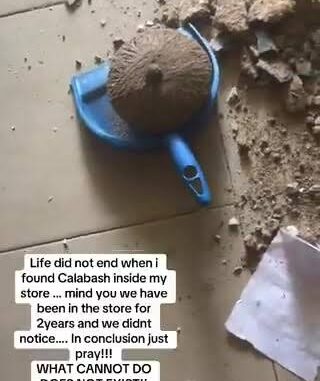
A shop owner in Lagos got the surprise of her life yesterday when workers digging up her store floor pulled out a large calabash buried deep in the ground. The discovery, captured in a short video now circulating on WhatsApp and TikTok, has triggered widespread speculation about traditional charms and business fortunes.
The woman, who took over the shop just two months ago, said the previous owner never mentioned anything buried on the premises. In the viral clip, a man is seen digging carefully with a shovel inside the empty store. After several minutes, he lifts out a calabash wrapped tightly in red cloth. Onlookers gasp and shout as the object emerges from the soil.
“I was shaking when I saw it,” the new owner said. “I don’t know what is inside, but my pastor will pray over the shop before we open again.” She added that renovation work was being done to replace cracked tiles when the workers hit the buried item.
Many viewers of the video believe the calabash was planted there as _juju_ — a traditional charm intended to attract customers and boost sales. Some former customers commented online that the previous tenant always recorded quick, steady sales and rarely complained of low patronage. “Now we know the secret,” one comment read.
The belief that objects can be buried for good luck or profit is not new in Nigeria. Across markets in Lagos, Onitsha, and Aba, stories of charms placed under shops, stalls, or doorways are common. Practitioners and skeptics alike acknowledge that some traders consult spiritualists for what they call “market success.” Others dismiss the practice as superstition, arguing that location, pricing, and customer service drive sales.
The new owner said she has shut the store temporarily and invited her pastor to conduct prayers and “remove whatever charm is inside” before resuming business. As of press time, the calabash had not been opened in the video, and its contents remain unknown.
The incident has prompted warnings on social media. Many Nigerians are advising new tenants and shop buyers to inspect floors, ceilings, and corners before starting business. “Do a proper handover. Ask questions. If possible, renovate,” one business coach wrote on Facebook.
Anthropologists note that calabashes are traditional vessels used in rituals, storage, and medicine across West Africa. A wrapped calabash buried in a commercial space is often interpreted locally as an _owo aye_ or prosperity charm. However, without forensic or cultural analysis, its purpose cannot be confirmed.
Religious leaders have also weighed in. Some pastors and imams urge traders to rely on prayer and ethical business practices rather than charms. Traditionalists counter that such practices are part of indigenous belief systems and should not be demonized outright.
There was no report of police involvement, as no crime was alleged. The matter is being treated by the parties as a spiritual and personal concern rather than a legal one….See More