Vice President Kashim Shettima has called on state governments across Nigeria to speed up business-enabling reforms under the $750 million World Bank-assisted State Action on Business Enabling Reforms (SABER) programme, saying stronger implementation is necessary to attract investments, improve infrastructure, and support economic growth at the subnational level.
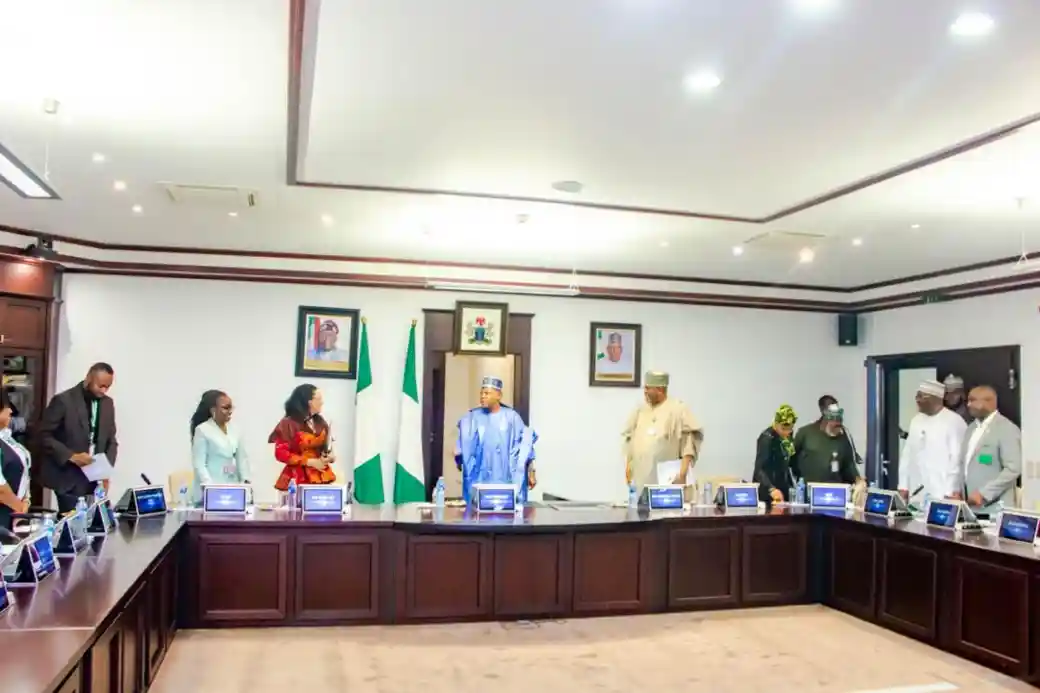
Shettima made the call on Tuesday during a stakeholder meeting on optimising the implementation of the SABER programme at the Presidential Villa in Abuja.
The Vice President said the programme remains critical to Nigeria’s economic growth ambitions, especially as the Federal Government continues efforts to improve the country’s business environment and attract both local and foreign investors.
According to him, many of the issues affecting businesses in Nigeria are tied directly to policies and processes controlled by state governments, making the role of governors and state institutions essential to the success of the reforms.
“The success of this agenda depends significantly on our ability to create an enabling environment for businesses to invest, expand, and create jobs,” Shettima said.
“While the Federal Government continues to implement reforms at the national level, the reality remains that many of the conditions that define the experience of investors and businesses are determined at the subnational level. This is why the role of State Governments in the implementation of SABER is critical.”
The SABER programme was introduced as a performance-based initiative supported by the World Bank to help states improve the ease of doing business through reforms tied to measurable outcomes.
The programme focuses on improving regulatory processes, strengthening infrastructure, reducing bureaucratic bottlenecks, and creating a more transparent and predictable business environment for investors and entrepreneurs operating across the country.
Shettima noted that full implementation of the programme would help states attract domestic and international capital while also boosting investor confidence.
He added that the reforms are expected to reduce the cost of doing business, improve access to land, strengthen commercial justice systems, expand digital and physical infrastructure, and improve the competitiveness of states.
“These outcomes will translate into increased economic activity, higher productivity, job creation, improved internally generated revenue, and better living standards for our citizens,” the Vice President stated.
The Vice President also directed the Director-General of the Presidential Enabling Business Environment Council (PEBEC), Zarah Mustapha-Audu, to begin moves aimed at extending the lifespan of the programme by one additional year.
According to him, the extension would allow participating states to fully utilise the opportunities provided through the intervention programme.
He said Nigeria’s drive towards becoming a one trillion-dollar economy would depend heavily on how effectively states implement reforms capable of supporting businesses and attracting long-term investment.
“I therefore encourage us to engage constructively and contribute meaningfully to our deliberations. Let us seize this opportunity to unlock the full potential of the SABER Programme and position our States as engines of economic growth, investment, and sustainable development,” Shettima said.
Also speaking at the meeting, the Minister of State for Budget and Economic Planning, Dr Doris Uzoka-Anite, urged stakeholders involved in the programme to address implementation bottlenecks slowing down progress in some states.
She expressed confidence that states would fully access the $750 million intervention package designed through collaboration between the World Bank technical team and the PEBEC Secretariat.
Uzoka-Anite said the programme aligns with the Tinubu administration’s Renewed Hope Agenda and remains important to ongoing efforts to improve Nigeria’s economic competitiveness.
Meanwhile, PEBEC Director-General Zarah Mustapha-Audu said the council remains committed to working with state governments, the private sector, civil society organisations (CSOs), and other stakeholders to remove obstacles affecting businesses in the country.
She explained that although the funds are tied to specific deliverables and reform targets, several participating states are already making progress towards meeting the disbursement-linked indicators required under the programme.
The Federal Government has repeatedly stressed the importance of subnational reforms in improving Nigeria’s investment climate, particularly as states compete to attract industries, technology companies, manufacturers, and private capital needed to drive economic expansion and create jobs.