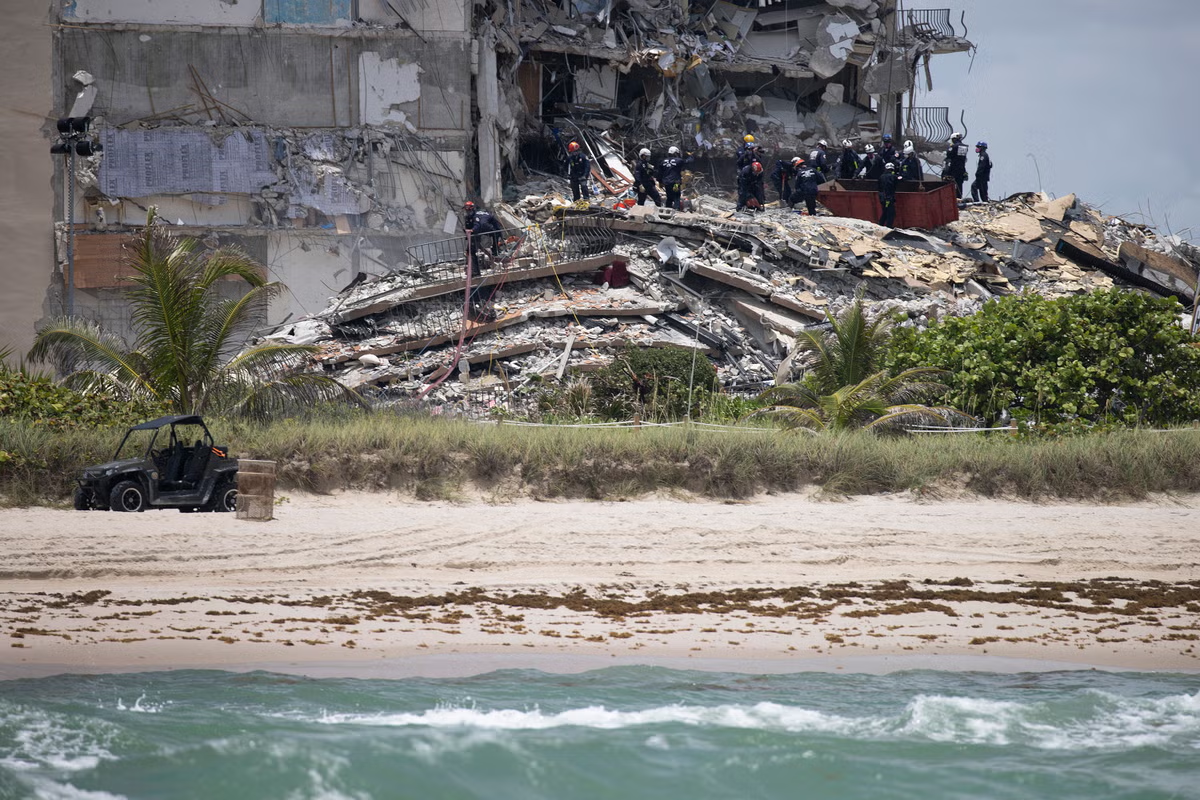
The catastrophic 2021 collapse of a Florida beachfront condominium, which killed 98 people, was a disaster waiting to happen, federal investigators have concluded. Their final report, issued Monday, states the building was vulnerable from its inception, with destruction beginning weeks before its tragic fall.
The National Institute of Standards and Technology (NIST) found that two connections between garage columns and the pool deck began failing in early June.
Its report detailed how a design not meeting building codes, coupled with 40 years of alterations, rendered the pool deck unable to withstand the extra load, initiating a “slow-motion” collapse.
Judith Mitrani-Reiser, co-leading the investigation, underscored the findings. “When building structures are designed and built to required codes and standards, they have margins against failure, meaning they should be able to support much more load than they are expected to bear,” she said. “In the case of Champlain Towers South, these margins against failure were too narrow from the start.”
The report underscores findings that have trickled in since the 12-story beachfront condominium catastrophe, which showcase weeks of building distress and deeper-seated problems.
Most residents were asleep when the building in the tiny town of Surfside, Florida, a few miles north of Miami, collapsed into a huge pile of rubble at 1:22 a.m. on June 24, 2021.
The dead included members of the area’s large Orthodox Jewish community, along with the sister of Paraguay’s first lady, her family and their nanny. A Miami judge approved a more than $1 billion settlement for personal injury and wrongful death claims from the disaster.
Harley Tropin, who represented the families of victims and survivors in a class-action lawsuit, declined to comment on the new report.
The structure didn’t meet the building codes in place at the time and the building’s construction did not follow the design, including large planters being added on the pool deck, explained Mitrani-Reiser.
“In some locations, the design provided less than half of the code-required strength,” she said
Work done later around the pool, in which sand and pavers were added, further strained an “already structurally inadequate” system, she said.
Meanwhile, reinforcing steel in the pool deck and street-level parking slabs were corroded in some areas, according to NIST.
Photos taken by people at the building in the weeks before the collapse show a long crack in a planter wall on the pool deck as well as cracks in the corner where the planter wall met a planter box, according to the NIST report. Less than a day before the collapse, that planter had detached from the pool deck.
About one week before the tower collapsed, water that had been leaking from a ceiling in the parking garage increased, according to NIST. A few hours before the destruction, one person interviewed by investigators described it as a “water faucet.”
People in the building described seeing the pool deck collapsing, “one bay at a time as if dominoes were falling in a sequential chain reaction,” said Mitrani-Reiser. Some said they felt a sudden wind in the lobby and others heard sounds like a “jet engine.”
The pool deck started falling minutes before two parts of the tower. A strong concrete wall helped to keep the destruction from completely spreading to the third section, according to NIST.
The companies responsible for designing and building the original structure in the late 1970s are no longer in operation.
After the collapse, state legislators enacted a law in 2022 requiring condo associations to have sufficient reserves to cover major repairs. Some residents were caught off guard by hefty fees imposed to cover years of deferred maintenance expenses required to bring their buildings into compliance with the law’s standards. That led to another law providing condo associations and residents more flexibility in handling the costs.