There is an old habit among governments facing insurgencies — declare that the situation is under control, repeat it often enough, and hope reality eventually catches up.
And for nearly six years, Colonel Assimi Goita’s military government has promised Malians exactly that. ‘The era of state retreat was ending. French troops had been expelled. Russian military contractors had arrived. Political opponents had been sidelined.’ Colonel Goita’s junta had presented itself as the only institution capable of rescuing a country battered by decades of coups and rebellions. Whatever criticism could be directed at military rule, its supporters argued, at least it offered some security.
Advertisement – Scroll to continue
Then came April 25, 2026.
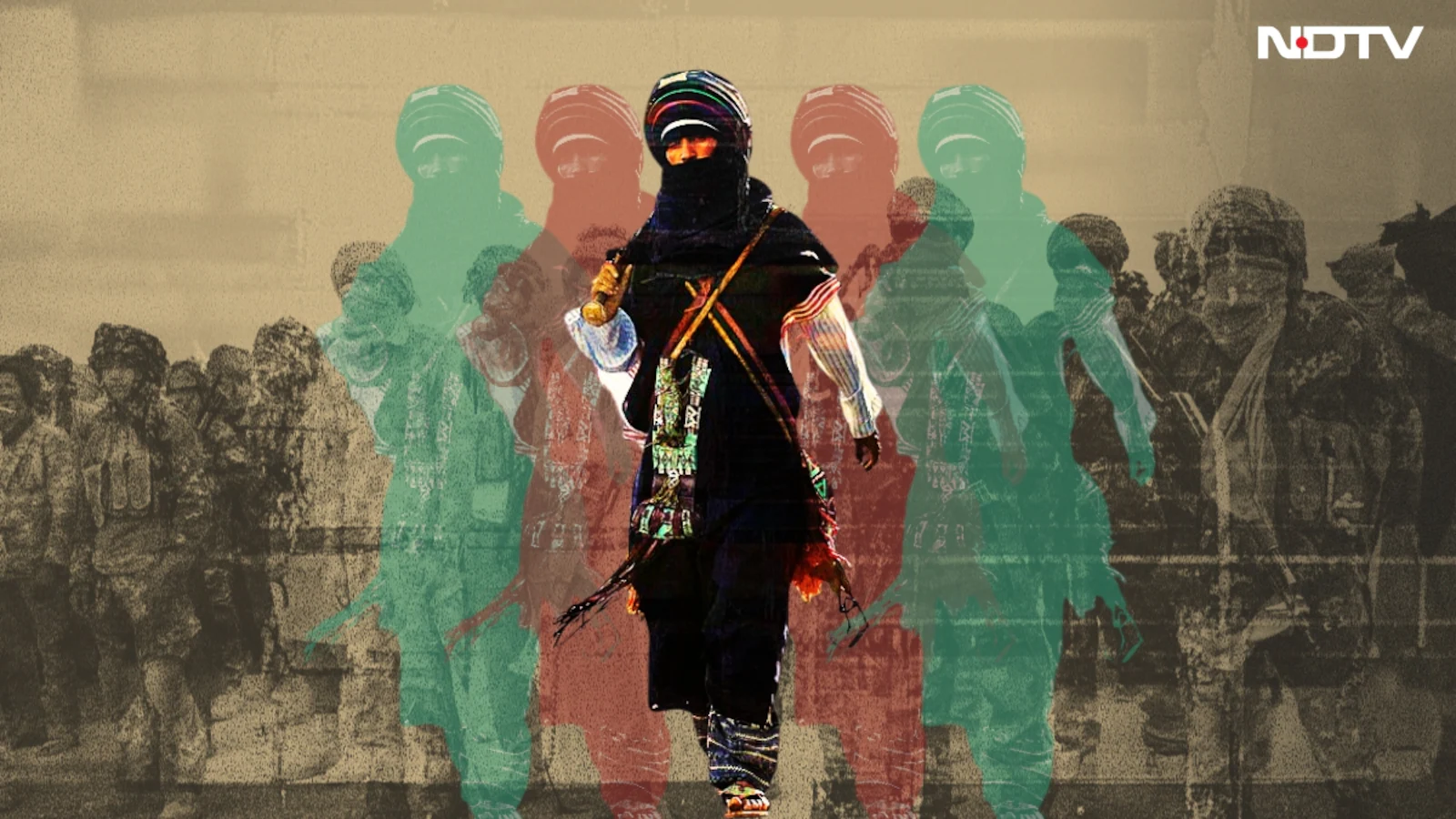
In one of the most audacious military operations seen in the Sahel in recent memory, thousands of fighters belonging to the al Qaeda-linked Jama’at Nusrat al-Islam wal-Muslimin (JNIM) and ethnic Tuareg separatists operating under the umbrella of the Azawad Liberation Front (FLA) launched coordinated attacks across Mali. The Malian Defence Minister Sadio Camara was killed at his residence in Kati, the heavily militarised garrison town that serves as the beating heart of Mali’s security establishment.
“Militant Islamist groups have become more capable, better organised, and geographically more expansive across the Sahel over the past several years,” Dr Daniel Eizenga, Research Fellow at the African Center for Strategic Studies, told NDTV. “In Mali, JNIM has increased its ability to coordinate attacks across large distances, target economic corridors, and pressure major population centres. These trends are also affecting neighbouring countries, particularly along border regions and trade routes linking the Sahel to coastal West Africa.”
The offensive offered a glimpse into what the future of conflict in the Sahel may look like with agile insurgent coalitions, technologically adaptive militant groups, weakened states struggling to maintain control.
A Marriage Of Convenience
The story begins, however, with a partnership few would have predicted.
For much of the past decade, Tuareg separatists and jihadist organisations have occupied overlapping spaces in northern Mali. They have occasionally cooperated. They have frequently fought. They have often viewed one another with suspicion. The FLA seeks autonomy for Azawad, the vast northern region whose separatist aspirations stretch back generations and whose leaders first declared independence in 2012. JNIM, meanwhile, is part of al Qaeda’s global network and seeks an Islamic order governed by its interpretation of Sharia law.
Men perform a traditional dance during the Sebeiba Festival, a yearly celebration of Tuareg culture, in the oasis town of Djanet in southeastern Algeria.
Photo Credit: AFP
At first glance, these objectives appear difficult to reconcile. Yet battlefields have a way of creating temporary marriages between unlikely partners — the recent announcement of a military partnership between Russia and the Taliban is an example of that.
But the JNIM-FLA “alliance” should be viewed with caution. The temptation among observers is to see the cooperation between JNIM and the FLA as evidence of a grand political union. The reality is more complicated.
“I would be cautious about characterising the current relationship as a fully developed alliance,” Dr Eizenga told NDTV. “What we can observe is operational cooperation between two actors that have historically had periods of both collaboration and conflict. The most immediate explanation is a convergence of interests against a common adversary rather than the resolution of underlying political or ideological differences. The more important question is not what united them, but whether those shared interests are durable enough to sustain cooperation over time.”
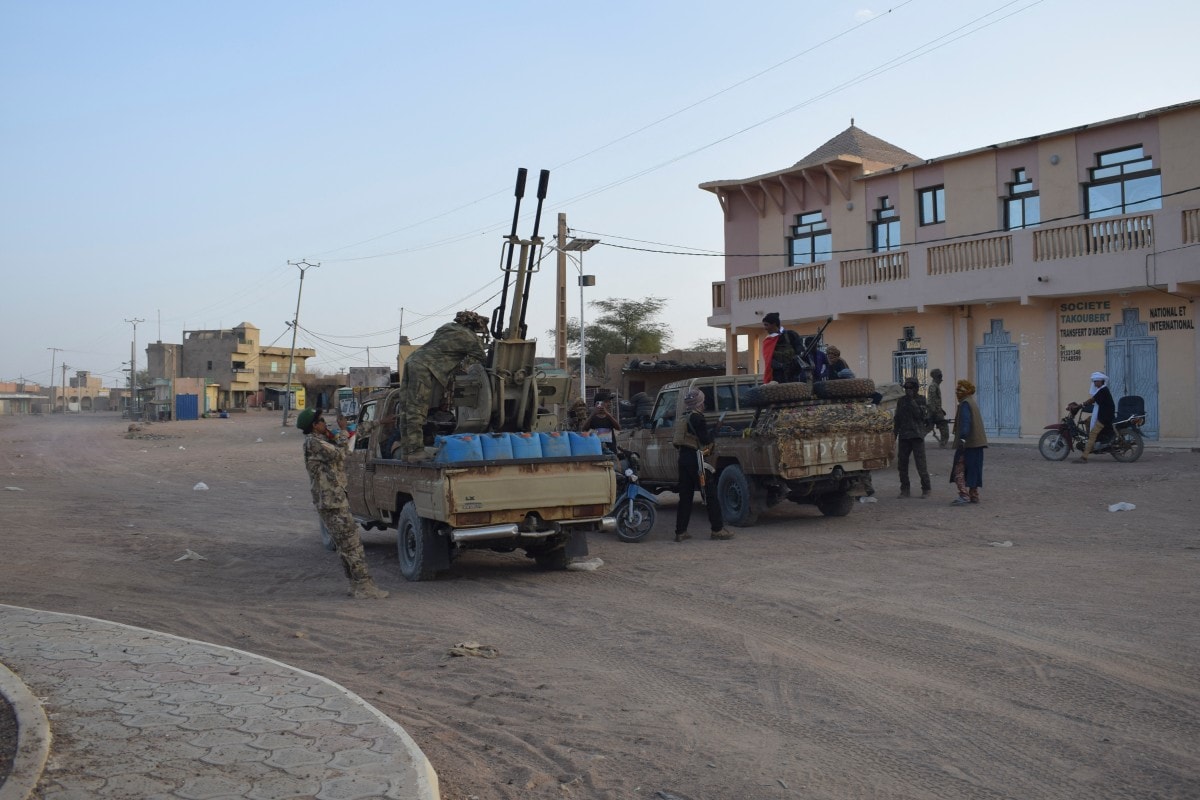
Tuareg rebels of the Azawad Liberation Front (FLA) ride on the back of pickup trucks in Kidal.
Photo Credit: AFP
In its early years, the JNIM was often viewed as one among several militant organisations competing for influence across the Sahel. Today it is arguably the most formidable insurgent movement in the region. According to the United NAtions, it has somewhere between 5,000 and 6,000 fighters. Its operational reach expanded alongside its manpower. It imposed a blockade across much of southern Mali. It temporarily overran provincial capitals in neighbouring Burkina Faso.
One of the biggest reasons behind that evolution is money. JNIM has expanded informal taxation systems across areas under its influence and has reportedly benefited from substantial ransom payments.
“JNIM has often demonstrated greater pragmatism than some other jihadist organisations. In many areas it has worked through existing local authorities, customary structures, and local mediators. This is also consistent with JNIM’s coalitional structure, which comprises several semi-autonomous militant groups that adapt to local political, economic, and social conditions. Whether this reflects ideological moderation or strategic adaptation is difficult to determine, but it has often allowed JNIM to operate differently than organisations that rely primarily on coercion,” Dr Eizenga told NDTV.
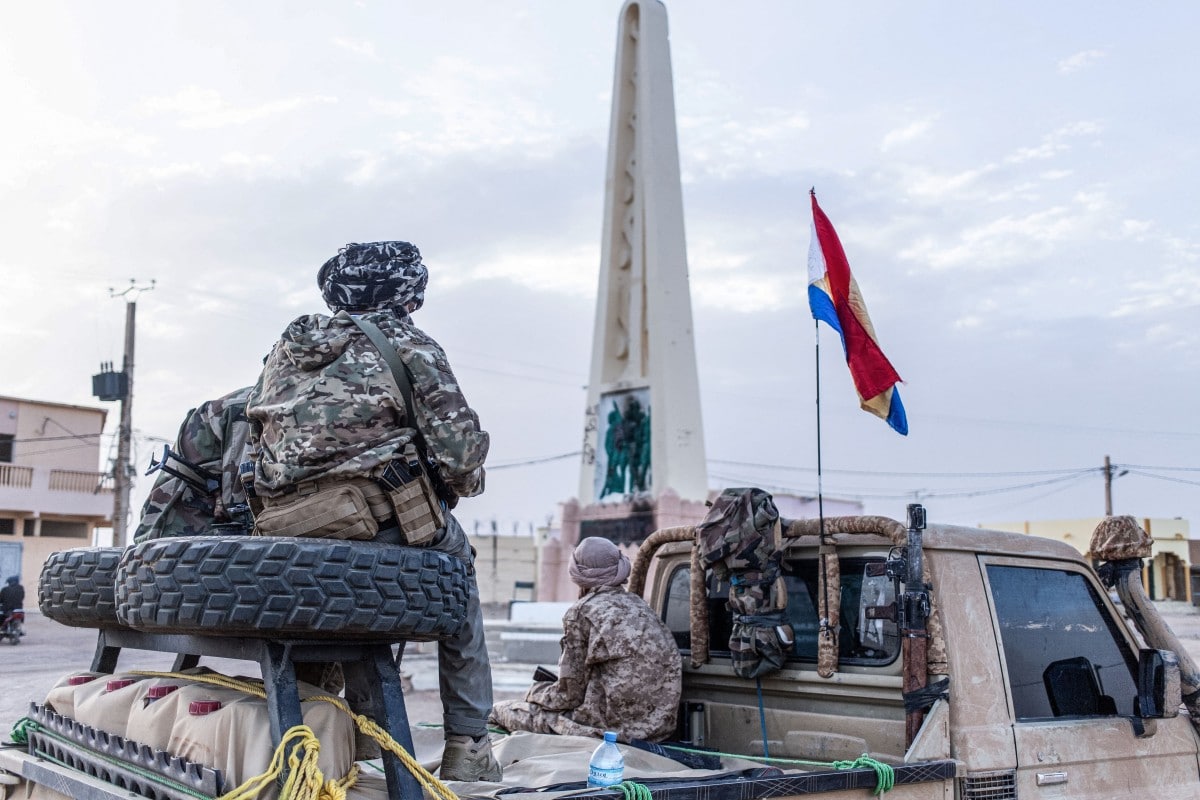
Soldiers from the National Front for the Liberation of Azawad (FLA) sit on a pick-up truck as they patrol the streets of Kidal.
Photo Credit: AFP
The battlefield partnership with the FLA appears to reflect similar pragmatism. Some analysts have suggested that JNIM offered Tuareg leaders a pathway towards autonomy under Islamic governance rather than outright independence.
“I would avoid assuming there was a single offer or political bargain,” Dr Eizenga told NDTV. “What appears more likely is that both actors currently see tactical advantages in cooperation against the Malian state. The FLA and JNIM maintain distinct objectives and constituencies.”
In other words, the current arrangement may be less a shared political project than a marriage of convenience.
“Their current coordination is probably better understood as a response to evolving battlefield conditions than as evidence of a shared long-term political project,” he said. “Cooperation today appears focused primarily on tactical and operational objectives. Questions of governance, political authority, and the future organisation of territory remain unresolved and would almost certainly be subject to negotiation should these groups achieve their immediate military aims.”
Economy In Crisis
One of JNIM’s most effective tactics has been its campaign against Mali’s economy. For much of the past year, the group has targeted fuel convoys and transportation routes serving Bamako. The objective is to weaken the state by making governance more expensive.
“The strategy appears designed to increase economic pressure on the authorities by targeting fuel supplies, transportation routes, and commercial activity. Such measures can raise costs for the government and expose vulnerabilities in state control. However, prolonged economic disruption can also impose severe costs on civilians, making outcomes difficult to predict. Yet economic warfare carries risks. Governments may suffer, but civilians often bear the immediate burden,” Dr Eizenga told NDTV.
Since taking power, Colonel Goita’s government has dissolved political parties, suspended civil society organisations and curtailed media freedoms. Human rights organisations have accused the authorities of abuses. Following the April attacks, critics argue that repression has intensified.
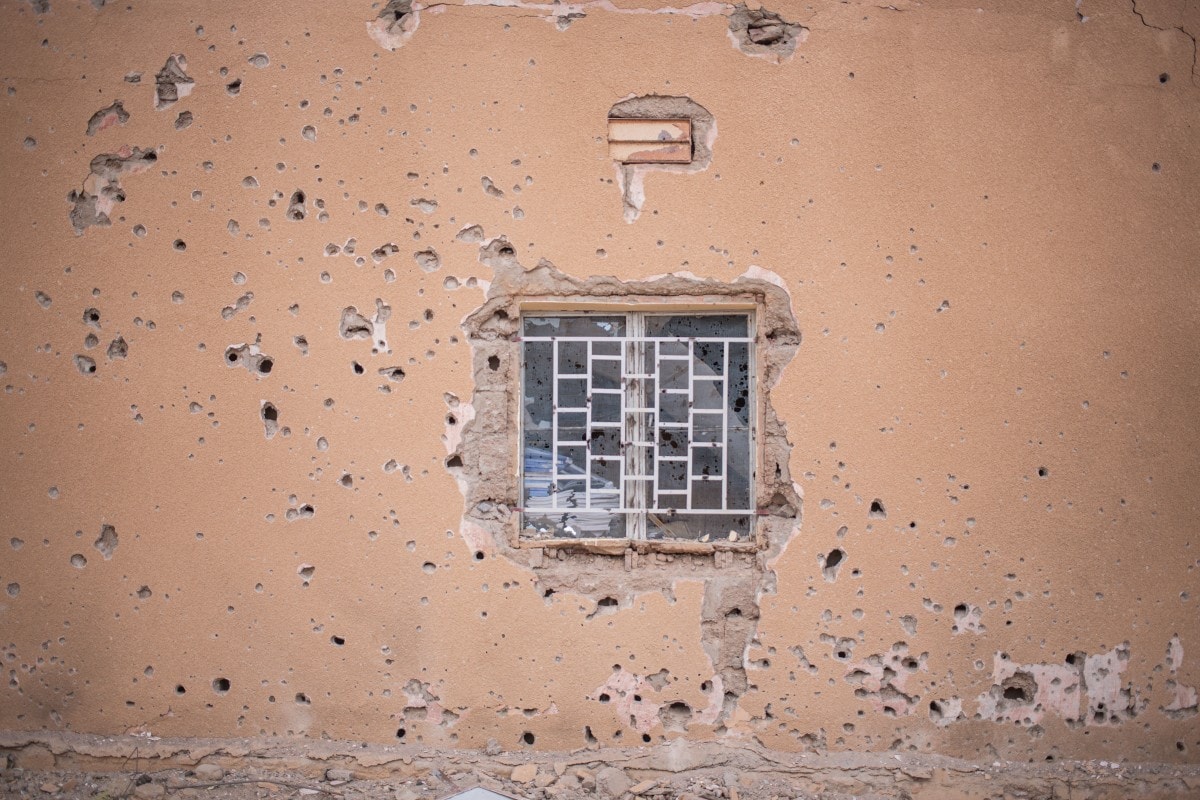
A general view of a wall covered in bullet holes at a school near the Kidal regional headquarters in Kidal.
Photo Credit: AFP
“The current environment has likely created incentives for tactical cooperation among actors who might otherwise remain divided. However, I would be careful about reducing these developments to a single cause. Military pressure, local grievances, political exclusion, economic incentives, and battlefield opportunities all shape the decisions of armed groups. What can be said with confidence is that narrowing political space and intensifying repression have reduced nonviolent channels for political competition at a moment when security conditions are deteriorating,” Dr Eizenga said.
Yet even if JNIM continues advancing against the Malian state, another challenge awaits. The organisation does not operate in isolation. It exists within a crowded and competitive militant ecosystem that includes the Islamic State Sahel Province (ISSP) and the Islamic State West Africa Province (ISWAP). Competition among these groups is shaping the conflict in important ways.
“Competition between JNIM and the Islamic State Sahel Province remains an important feature of the conflict,” Dr Eizenga explained. “JNIM must balance military effectiveness, recruitment, and local legitimacy while preventing defections to rival organisations.”
This rivalry influences everything from recruitment strategies to battlefield behaviour.
“That competition likely influences both tactical decisions and efforts to maintain support among local populations,” he added. “One possible next phase would involve intensified competition between JNIM and ISSP for recruits, resources, and influence, particularly in contested areas of the central Sahel.”
And hovering above all these developments is Russia.
The Russian Overtone
Since the departure of French troops in 2022, Moscow has become Bamako’s principal external security partner. Africa Corps personnel operate across the country, replacing the mercenary unit Wagner Group’s presence in the country.
The Africa Corps were driven out of Kidal following pressure from JNIM-FLA forces recently. The killing of Defence Minister Camara was another embarrassment.
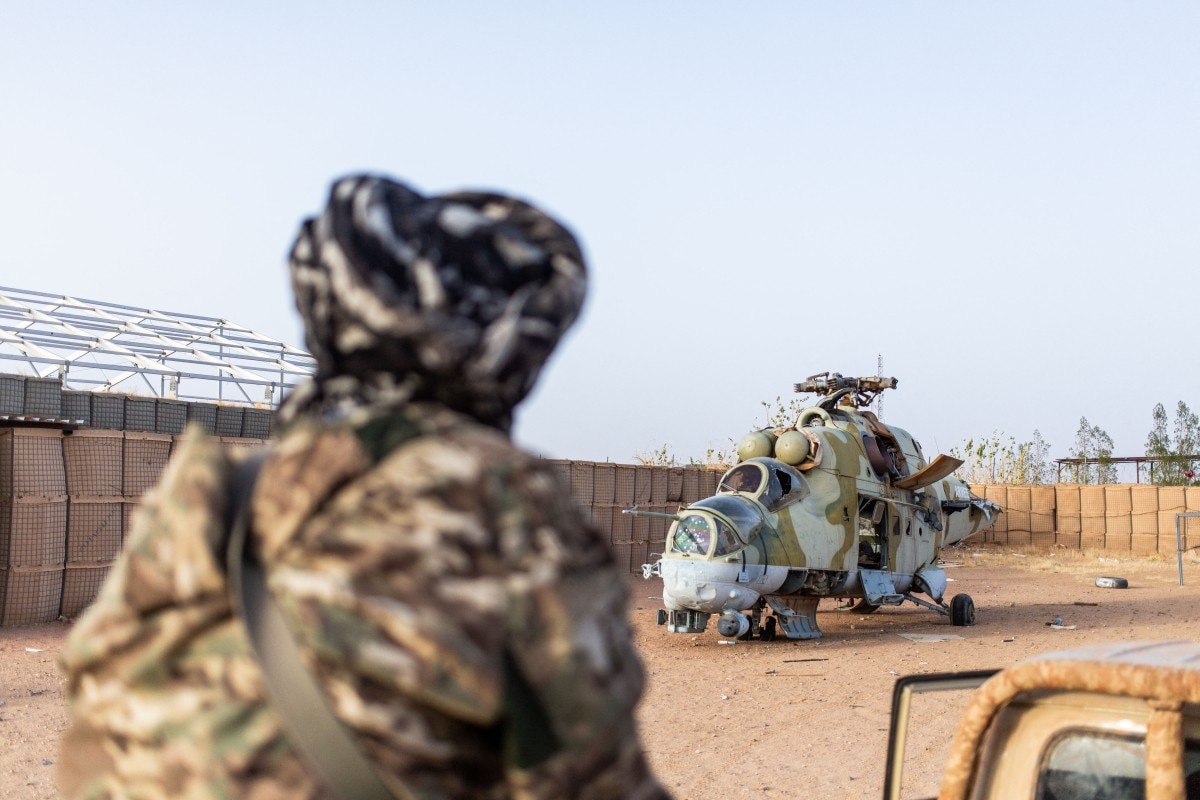
An Azawad Liberation Front (FLA) soldier stands near a damaged Mi-24 helicopter, an attack and troop transportation helicopter, at the former Africa Corps barracks at Camp 2 in Kidal.
Photo Credit: AFP
“Russia’s engagement appears focused on maintaining influence, supporting its partners in government, securing strategic relationships, and expanding its geopolitical presence in the Sahel. The effectiveness of that approach in addressing Mali’s broader security challenges remains a matter of debate,” Dr Eizenga told NDTV.
Continued instability threatens to ripple across the entire region through displacement and economic disruption. Trade routes linking Mali to coastal West Africa are already under pressure. Dakar-to-Bamako and Abidjan-to-Bamako corridors have become particularly vulnerable.
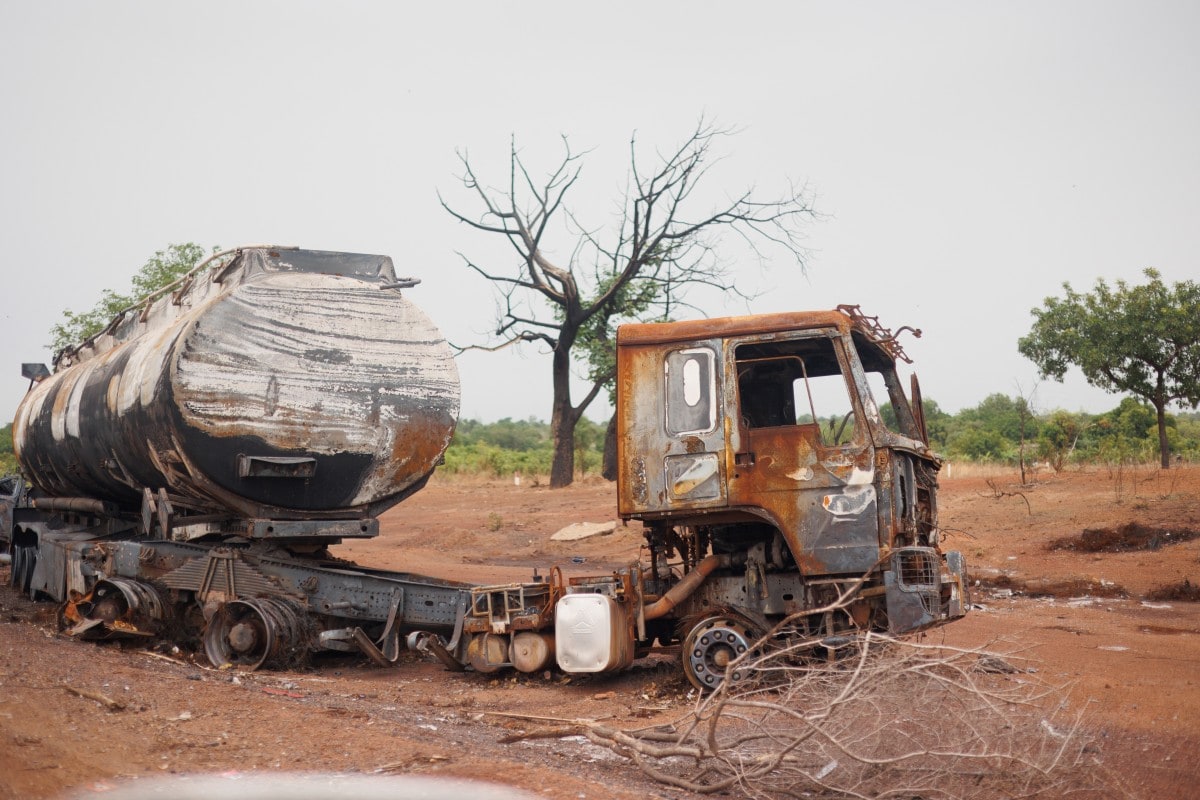
A fuel truck burned by armed men is seen abandoned in the middle of the road leading to Sikasso on May 26, 2026. In Mali, roads have been blocked by jihadists linked to Al-Qaeda, making transport routes dangerous.
Photo Credit: AFP
“Continued instability in Mali could increase pressure on neighbouring countries through population displacement, economic disruption, and the expansion of militant activity along border regions,” Dr Eizenga warned. “The greatest risks are likely to be felt in areas already experiencing security challenges, particularly in the central Sahel and along key cross-border corridors connecting the Sahel to coastal West Africa.”
“Niger and Burkina Faso are already facing mounting insurgencies of their own that are directly linked to the conflict in Mali. This will likely intensify over the long term,” he added. “Mauritania, Senegal, Guinea, and Ivory Coast are all likely to face increasing pressures along their border with Mali as well, since JNIM has been able to successfully install itself in western and southern Mali.”
That warning may ultimately prove the most important takeaway from Mali’s crisis.