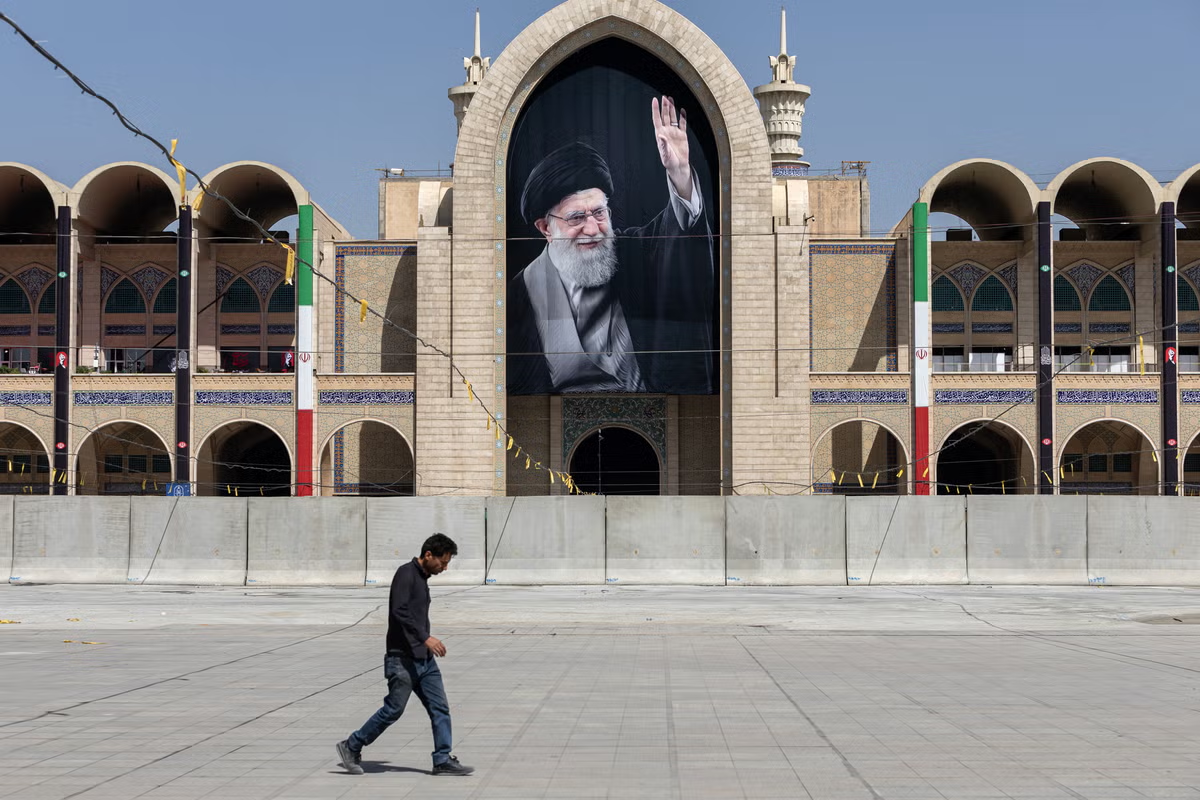
World leaders are gathering in a French spa town Monday for a summit of the Group of Seven club of powerful democracies with a new impetus following President Donald Trump ‘s announcement of an agreement that he says will bring an end to the U.S. war against Iran.
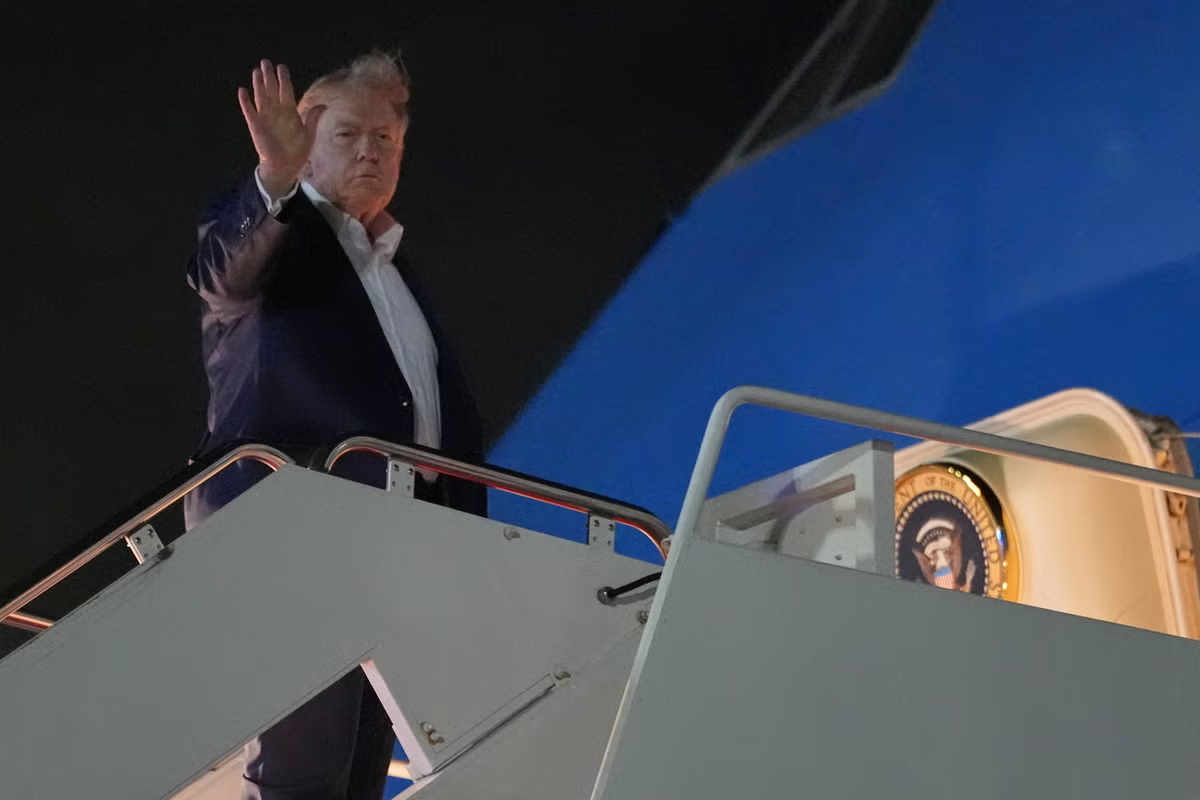
Trump arrives in Evian-les-Bains on Monday afternoon for talks with G7 leaders, including some who have been sharply critical of his managing of the roughly 15-week conflict that has led to a surge in global energy prices.
Trump has had sharp disagreement with host French President Emmanuel Macron, British Prime Minister Keir Starmer, German Chancellor Friedrich Merz and Italian Prime Minister Giorgia Meloni over failing to consult them before the decision to go to war. Trump has threatened reprisals, including drawing down U.S. troops in all four countries, all members of the NATO military alliance, for their lack of support.
The G7 includes France, the United States, Canada, Germany, Italy, Japan and the United Kingdom. Guest nations at this summit include Brazil, Egypt, India, Kenya, South Korea, Qatar, Syria, Ukraine, and the United Arab Emirates.
The Latest:
Macron seeks Trump’s backing for Ukraine and more pressure on Russia
The French president says he’ll seek to persuade President Trump to continue supporting Ukraine and increase pressure on Russia to help reach a peace agreement.
Macron is to meet later Monday with Trump at a G7 summit in the French resort town of Evian-les-Bains, which Ukrainian President Volodymyr Zelenskyy is expected to join Tuesday for talks.
Macron said he wants the United States to say: “We are with you, we will continue to support Ukraine, and we will increase the pressure on Russia to achieve a meaningful negotiation,” speaking in an interview with French broadcaster TF1.
“The right negotiation is one in which Ukraine and Russia are at the table, but with Europeans and Americans present as well,” Macron said.
Macron rejects Trump tariff threats
French president Emmanuel Macron says he will not back down in the face of threats from President Trump to impose 100% tariffs on French wines unless Paris removes its digital tax on U.S. tech companies.
In an interview with broadcaster TF1, Macron said Monday that the tax was decided by Europeans and that it is not “for the United States to decide what European or French law should be.” He added that this position is “normal” and will not change “as long as I am here.”
Wines and spirits exported from the European Union to the U.S. currently face a 15% tariff. Macron said he intends to address the issue in a “respectful but firm” manner during the G7.
“What is important to understand is why the G7 was created,” he said. “To resolve many of our international imbalances, it is better to coordinate and consult with one another, especially when we are among the world’s major democracies.”
Trump has a track record of insults and awkward moments with the G7 leaders
Sometimes it’s over foreign policy issues like Iran or Ukraine. Other times, it’s been over tariffs.
And two of the leaders have endured sitting through clumsy asides by Trump about dark moments in their countries’ histories.
It makes the G7 not unlike a family holiday gathering where “there’s an uncle you don’t quite like,” said Max Bergmann, an analyst at the Center for Strategic and International Studies.
▶ Read more
Macron says France is ready to act quickly to help securing the Strait of Hormuz
Macron said France and other Western partners are “ready to take action very quickly” to help reopen the Strait of Hormuz peacefully.
France and Britain have championed a mission to restore maritime security in the strait as soon as conditions allow.
“We already have forces in the area,” including France’s nuclear-powered aircraft carrier, the Charles de Gaulle, Macron said in an interview Monday on French television TF1.
“We are ready to take action very quickly … to send aircraft, deploy a frigate, send mine-clearing vessels. We also have our aircraft carrier, the Charles de Gaulle, along with its accompanying strike group, which remains in the region and could be deployed within two or three days following confirmation” of the tentative deal between the U.S. and Iran, he said.