At 9:40 pm on 17 January 1961, in a forest clearing in Katanga — the mineral-rich southeastern province that Belgium had tried to detach from the newly-independent Congo — Patrice Lumumba was stood before a firing squad. Congo’s first democratically elected prime minister, in office for fewer than three months, was shot dead with the, direct involvement of Belgian officers commanding Katangan secessionist troops. He was 35 years old.
Afterwards, Belgian police commissioner Gerard Soete exhumed his body, dismembered it, and dissolved the remains in sulphuric acid. He kept a gold tooth as what he called “a trophy.” That tooth — all that physically remained of the man who had promised the Congolese people sovereignty over their own soil — was returned to Lumumba’s family in Brussels in June 2022, sixty-one years later. They buried it in Kinshasa on the 62nd anniversary of independence, before hundreds gathered around a photograph of a man who they had never been permitted to mourn. A tooth in a blue velvet box: the sum total of what the West saw fit to return.
Fifteen years later, in 1976, a haemorrhagic fever of unknown origin began killing people in Yambuku village in what is now Équateur province, roughly sixty miles from a tributary called the Ebola River. Scientists named the virus after that river — deliberately choosing a distant landmark rather than Yambuku itself, to spare the community permanent stigma. It was a small mercy.
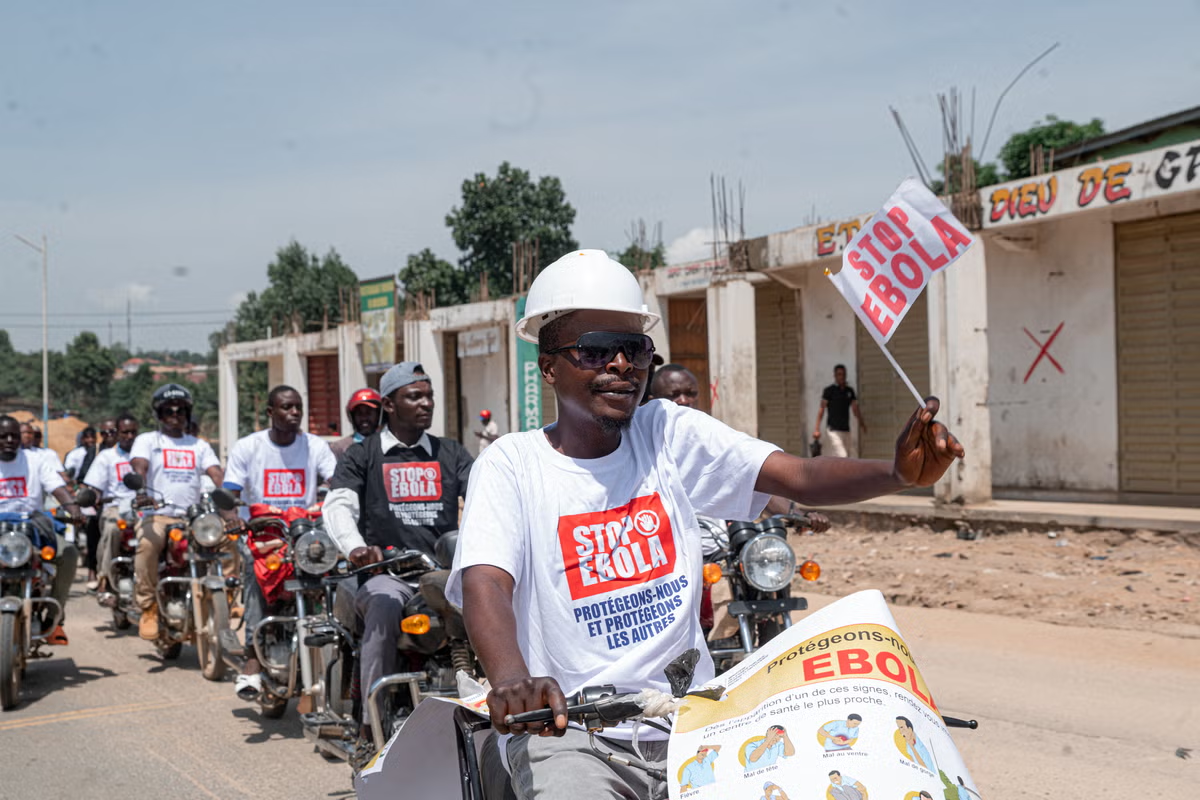
The country has had no such protection. The DRC has now recorded seventeen Ebola outbreaks since that first emergence, and the seventeenth — declared a public health emergency of international concern in May 2026 — is active today in Ituri Province. The connection between Lumumba’s murder and Congo’s endless outbreaks is not metaphorical. It is causal. The causation runs not through biology but through politics: Lumumba’s removal enabled three decades of Western-backed kleptocracy that hollowed out Congolese state capacity, creating the governance vacuum in which epidemic disease takes hold and spreads.
The case for Western agency in his removal is documented, not speculative. Declassified US records show the CIA spent August to November 1960 actively working to assassinate or abduct him, despatching a scientist to Leopoldville with biological materials — a poison intended for Lumumba personally, never deployed — and cabling its station chief that his “disposition” was “the highest priority.” Mobutu Sese Seko — the general who staged the coup ending Lumumba’s government — was the CIA’s principal agent in the Congo.
In the UK, a former member of the House of Lords stated in 2013 that Daphne Park, MI6’s officer in Leopoldville at the time, personally confirmed to him that Lumumba was killed as part of a British intelligence-led operation. The UK has never formally responded to the accusation. Belgium’s parliamentary inquiry in 2002 found it “morally responsible”; prosecutors are currently seeking to try a 92-year-old former Belgian diplomat for his role in the execution. Three Western powers. One murder. The motive was never purely ideological: Katanga held cobalt, copper, and uranium. It was Congolese uranium, mined from the very province where Lumumba was shot, that provided the fissile material for the bombs dropped on Hiroshima and Nagasaki.
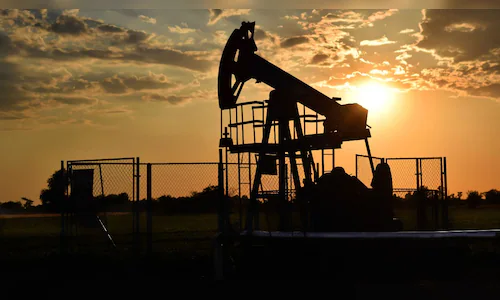
What his removal then produced was thirty-two years of Mobutu — a kleptocracy installed and protected by Washington precisely because it would never exercise sovereignty over Congo’s resources. That deliberate hollowing-out of the state is the structural origin of everything that follows: the militias, the displacement, the absent health infrastructure, and ultimately the Ebola outbreaks. The virus does not emerge at random. It spills over from wildlife reservoirs when people are pushed — by poverty, displacement, the opening of roads and camps into previously undisturbed forest and ecosystems — into novel contact with the animals that carry it. The current outbreak began in Mongbwalu, a high-traffic mining town. The World Health Organisation’s own outbreak notice named “mining-related population movement” as a key driver. This is not coincidence. It is ecology shaped by political economy.
The starkest illustration sits in the geography. Of all seventeen DRC outbreaks since 1976, not one has occurred in Katanga — the country’s historic mining heartland. Katanga has never been free of extraction.
What it has had is a different extraction profile — large-scale industrial open-pit mining on a high savanna plateau, ecologically distinct from the tropical forest zones where Ebola circulates — and critically, relative stability and a functional security apparatus maintained to service industry and global commodity markets, avoiding the forest encroachment and population displacement that drive spillover elsewhere. The provinces that have repeatedly suffered outbreaks — Équateur, North Kivu, Ituri, Kasaï — are those where artisanal mining, conflict, and displacement have driven communities into undisturbed forest and into contact with the wildlife populations that carry the virus. Ebola, in this reading, is a disease of ecological disruption compounded by manufactured instability.
Intellectual honesty demands acknowledging that neighbouring states have compounded this damage. Rwanda and Uganda — themselves products of colonial border-drawing and Cold War interference — have backed armed proxies in eastern DRC that directly obstructed the response to the 2018–2020 North Kivu epidemic, the second largest Ebola outbreak in history, killing 2,280 people. These are real contributions to the catastrophe. They are, however, downstream currents in a river whose source lies elsewhere. The structural conditions of eastern Congo were engineered from outside over a century and are sustained by global demand for what lies beneath its soil.
The corporate dimension is not hypothetical. Glencore, the world’s largest commodity trader and dominant Western mining company in the DRC, pleaded guilty in 2022 to paying over $100 million in bribes to officials between 2007 and 2018. Among the documented consequences: a healthcare company serving Congolese mine workers was destroyed after Glencore bribed a judge, leaving dozens of health workers unemployed and communities without clinical coverage. Total penalties paid globally exceed $1.7 billion; the Congolese settlement of $180 million has never had its terms disclosed.
Meanwhile, Dan Gertler — an Israeli billionaire sanctioned by the US Treasury in 2017 and 2021 after extensive investigation for “opaque and corrupt” DRC mining and oil deals — continues receiving tens of thousands of dollars daily in royalties from mines acquired through Glencore’s admitted criminal activity, channelled through what a joint Global Witness and PPLAAF investigation described as “a suspected money laundering network stretching from Kinshasa to Europe and Israel.” Gertler denies all allegations of corruption. This is not aberration. It is the system functioning as designed.
he contemporary final turn is the most explicit. The America First Global Health Strategy, published by the US State Department in September 2025, frames health assistance as “a strategic mechanism to further bilateral interests” and openly flags Africa’s mineral deposits as of strategic importance to Washington. The DRC’s recent health memorandum of understanding was signed only after a separate agreement granting the US preferential access to Congolese mineral reserves and direct oversight of the mining sector — an agreement now challenged in Congolese courts as unconstitutional. The logic that sent a CIA officer to Leopoldville in 1960 with poison in his briefcase now arrives in the language of bilateral agreements: Congo’s health in exchange for Congo’s cobalt and rare earth minerals. Sixty-five years on, the transaction is near-identical.
The solutions are not complex. Mining companies in high-risk tropical ecosystems must fund health and environmental impact assessments before a shaft is sunk, and contribute a levy on profits to the community health infrastructure their operations strain. Western governments must stop treating African instability as a manageable externality of resource acquisition and recognise it as the primary driver of the pandemic risks they claim to fear. And they must reckon, finally, with what was done to Lumumba — not as historical contrition, but as a prerequisite for understanding why the outbreaks keep coming.
His tooth was buried with full honours in the country he was killed for trying to protect. The seventeenth Ebola outbreak is active today. The line between those two facts runs straight.
Dr Osman Dar is an associate fellow in the global health programme at the Chatham House think tank
This article has been produced as part of The Independent’s Rethinking Global Aid project