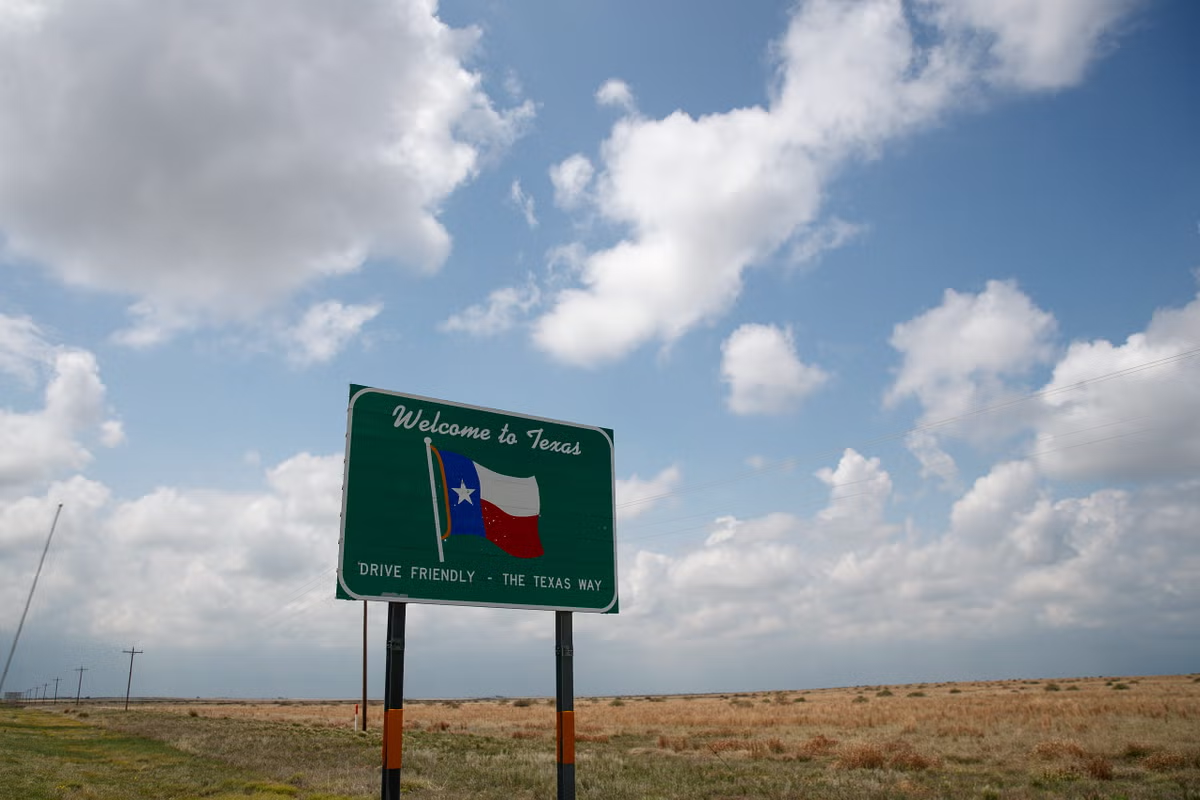
A former ranching community an hour north of Dallas has been named the fastest-growing city in the United States, leading a broader trend of families moving to outer suburbs as population growth slows in major cities.
According to new data released by the U.S. Census Bureau, Celina’s population surged by 24.6 percent between July 1, 2024, and July 1, 2025, surpassing every other municipality in the nation with a population of 20,000 or more.
The rapid transformation of the small Texas town, which also topped the national growth rankings in 2023, comes amid a broader national slowdown in big-city growth.
The figures show that the top five fastest-growing cities in the United States are all located in Texas. Four of these rapidly expanding municipalities are clustered in the suburbs of the Dallas-Fort Worth-Arlington metro area, while the fifth is located outside Houston.
This rapid expansion is altering the infrastructure and the economy of once-rural areas.
Local officials say that the influx of residents has brought a continuous wave of infrastructure projects, including road construction, sewer upgrades and new water lines to service future residents.
The transition from open ranch land to dense suburban neighborhoods has raised concerns regarding utility capacities and the preservation of small-town character.
Celina Mayor Ryan Tubbs told Fox News Digital that while the expansion brings jobs, it also introduces significant challenges from an infrastructure standpoint, particularly regarding water and road resources.
The shifting population is also changing local employment dynamics. While roughly 30 percent of Celina’s residents work remotely and others commute to nearby economic hubs like Frisco and McKinney, local public services are growing to meet demand.
Tubbs told the outlet that the school district has become the city’s top employer, now accounting for nearly 1,000 jobs.
Despite the physical transformation, residents suggest that community ties remain resilient.
“Yes, we can see and feel the growth, but we haven’t lost our sense of community here in Celina,” resident Carolyn Harvey told the publication.
The pattern seen in North Texas reflects a wider national trend where the expansion of major central cities is being outpaced by surrounding midsized suburbs.
Though big-city growth decelerated across the country — and New York City saw the nation’s largest numeric decline, losing 12,196 residents — suburban communities are absorbing a significant influx of new residents.
“Big-city growth slowed significantly between 2024 and 2025, with some major hubs even seeing small declines,” Matt Erickson, a statistician in the Census Bureau’s Population Division, said in a statement. “In contrast, midsized cities found a ‘Goldilocks zone’ where domestic and international migration, paired with new housing, helped prevent the sluggish growth seen in small towns and larger metropolitan centers.”
The Southern region dominated the latest population data, claiming 10 of the nation’s 15 fastest-growing cities and 11 of the 12 largest numeric gains. Additionally, Austin, Texas, crossed the one-million-population milestone to join a dozen other U.S. cities with at least seven-digit populations. Raleigh, North Carolina, also crossed a threshold, surpassing 500,000 residents.
Despite the national slowdown in population growth, residential construction has kept pace.
The total number of housing units in the U.S. reached 148.3 million in 2025, marking an increase of 1.4 million units from the previous year. California, Texas and Florida continue to maintain the largest total housing stocks in the country.
On a local level, Maricopa County, Arizona, added the highest number of new housing units with an increase of roughly 42,000, followed by Harris County, Texas, which added 28,000 units.