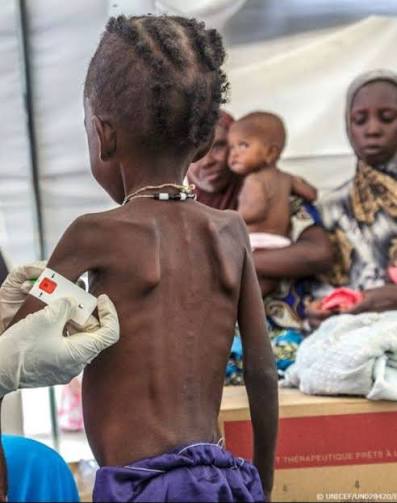
(severe acute malnutrition. Photo by Punch News)
Médecins Sans Frontières (MSF) has raised the alarm over a deepening child malnutrition crisis in Kebbi State, warning that thousands of children face grave risk as cases of severe acute malnutrition continue to climb.
According to a statement signed by Field Communication Officer Abdulkareem Yakubu, the international medical humanitarian organisation recorded a sharp rise in severe malnutrition cases among children between 2024 and 2025, fuelling concerns about increasing child mortality in the north-western state.
MSF Nigeria Country Coordinator Stuart Alexander Zimble said malnutrition remains one of the leading causes of death among children under five in Kebbi State.
“Malnutrition remains alarmingly widespread in Kebbi State and is a leading cause of death among children under five.
Authorities and humanitarian actors must urgently increase their support to prevent further avoidable deaths,” he said.
Figures cited from UNICEF indicate that an estimated 30 newborns and 100 children under five die daily in Kebbi State, with roughly half of those deaths linked to malnutrition.
The crisis is further compounded by high rates of stunting, malaria infections and low vaccination coverage, with only 7.4 per cent of children under two years fully immunised.
MSF noted that after suspending admissions for children with moderate acute malnutrition in September 2024 to concentrate resources on severe cases, the fallout was swift a 41 per cent increase in severe malnutrition cases at outpatient facilities and a 39 per cent rise in inpatient admissions.
“We sadly observed that children who initially presented with moderate malnutrition deteriorated and later returned with severe, often life-threatening symptoms,” Zimble said.
In response, MSF has launched a preventive nutrition initiative centred on Tom Brown, a locally produced food supplement made from sorghum, soya beans and groundnuts, aimed at supporting children with moderate acute malnutrition before their condition deteriorates.
The organisation plans to distribute approximately 20,000 kilograms of the nutritional flour blend across Jega and Maiyama Local Government Areas, targeting children between six months and five years of age, with an estimated 16,000 children expected to benefit by the end of 2026.
MSF also called on government authorities, development partners and humanitarian agencies to invest more in community-based nutrition programmes, warning that insecurity, poor healthcare access, climate-related challenges and declining livelihoods continue to worsen the humanitarian situation in the state.
The organisation added that the programme’s progress will be closely monitored, with plans to expand it to other parts of Kebbi State if results prove encouraging.