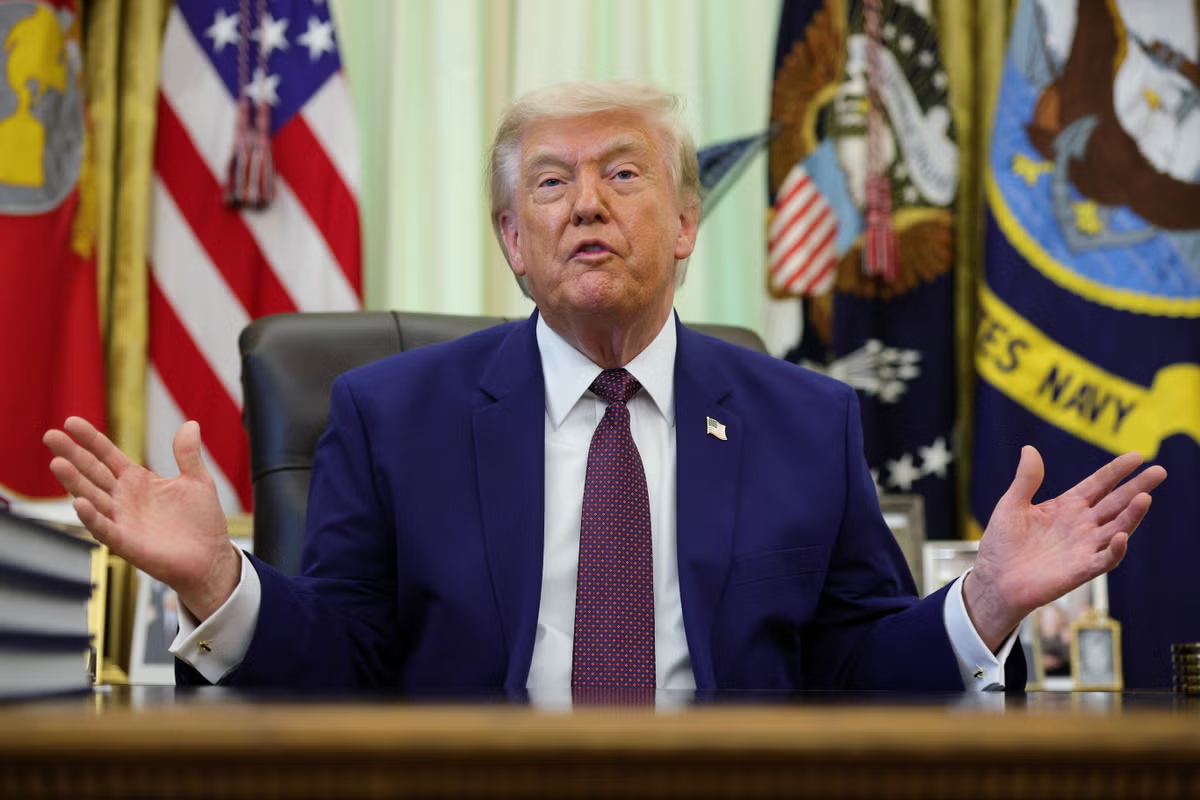
Donald Trump ended his lawsuit against his own IRS on the condition that his administration could spend nearly $1.8 billion handing out taxpayer dollars to alleged “victims” of government “weaponization.”
That “slush fund” is dead, for now. But that so-called settlement deal included one more term in his favor: the IRS agreed to formally drop any tax investigations into the president, his family and his companies.
Acting Attorney General Todd Blanche, who signed the one-page agreement that blocks the federal government from investigating potential tax claims against the president, told members of Congress this week that “nothing has changed” about the plan.
It might not be up to him, however. The judge overseeing the president’s lawsuit against the IRS could sanction the parties if the court finds that Trump filed a “frivolous lawsuit for the sole purpose of forcing a settlement” that bails out his family members and their businesses, all on taxpayers’ dime.
Congress could also step in. Lawmakers and watchdog groups want the deal thrown out and legislation that would permanently dissolve any agreements that shield Trump from future audits.
The memo signed only by Blanche and dated May 19 says the IRS is “forever barred and precluded” from pursuing “examinations” into Trump and “related or affiliated individuals,” including his family, trusts and “related companies, affiliates and subsidiaries.”
That immunity, which applies only to existing audits and not future investigations, shields the president from a potentially damaging ruling that could have cost him more than $100 million, according to The New York Times, which among several outlets to obtain Trump’s leaked tax return data, which prompted Trump’s lawsuit.
“As is customary in settlements, both sides have executed waivers of a variety of claims that were or could have been brought,” Justice Department spokesperson Natalie Baldassarre told The Independent last month.
“There would be little point in settling several significant claims if either party could simply turn around and seek to initiate more adverse claims that could have been pursued previously,” she added.
The deal was announced days after a series of court decisions that signaled something was very off about Trump’s $10 billion lawsuit against himself.
Judge Kathleen Williams in Washington, D.C., had scheduled a hearing on May 27 to hear from Trump’s personal lawyers and the Justice Department on whether there was a genuine argument in the president’s complaint. That hearing never happened.
She also appointed a team of outside lawyers to help her untangle the unusual nature of the case. In their brief to the court on May 14, they stopped short of recommending the lawsuit be dismissed but noted the “significant” issues at stake and suggested the court should hear more from the parties involved.
“This case is unprecedented,” they wrote. “A sitting president seeks monetary damages for alleged harm to his personal interests from an executive agency that he controls.”
Trump and the IRS never filed a response, and on May 18, the Justice Department published a press release announcing the “Anti-Weaponization Fund.” That same day, Trump’s personal attorney filed a notice with the court that he was dropping the case.
And on May 19, in a separate memo that Blanche later called an “attorney general order,” the Justice Department granted the president immunity from tax investigations.
A group of 35 former federal judges urged Williams to open the case, which “raises profound questions about the parties’ candor toward the court and manipulation of the judicial system,” they wrote.
“The court was deceived,” they wrote, arguing that Trump and the IRS essentially laundered the “settlement” through the court’s legal credibility.
“The parties to this case are using this lawsuit as the legal justification for these actions,” they said. “This is not speculation; the parties themselves have proclaimed it, repeatedly.”
Williams is now investigating allegations of “serious misconduct.”
Rep. Jamie Raskin, the top Democrat on the House Judiciary Committee, said Blanche’s “super Pardon” for Trump’s alleged tax violations should be “null and void.”
“Congress must act to extinguish this outrageous claim of lifelong, lawless impunity for any misconduct, ‘whether presently known or unknown,’ which could include Jared Kushner’s corrupt business deals in the Middle East, no-bid government contracts Donald Trump Jr. steered to his companies, Donald Trump’s ongoing $100 million federal tax audit, any Epstein-related sexual assault allegations against Trump family members or any family members’ insider trading schemes,” he said in a statement.
“Taxpayers have a right to assume that all filers are treated fairly and equally,” according to a statement from former IRS commissioner John Koskinen. “The proposed settlement sends the regrettable, and unprecedented, signal that powerful people can arrange to avoid having their tax returns reviewed at all.”
Treasury Secretary Scott Bessent refused to discuss the deal with members of Congress Wednesday, citing the ongoing litigation, but he repeatedly came to the president’s defense over the “leak” of his tax documents.
He suggested he wasn’t aware of the terms of the deal despite being a party in the lawsuit.
“This little giveaway to Trump and his family gets them off scot-free,” Democratic Sen. Ben Ray Lujan told Bessent.