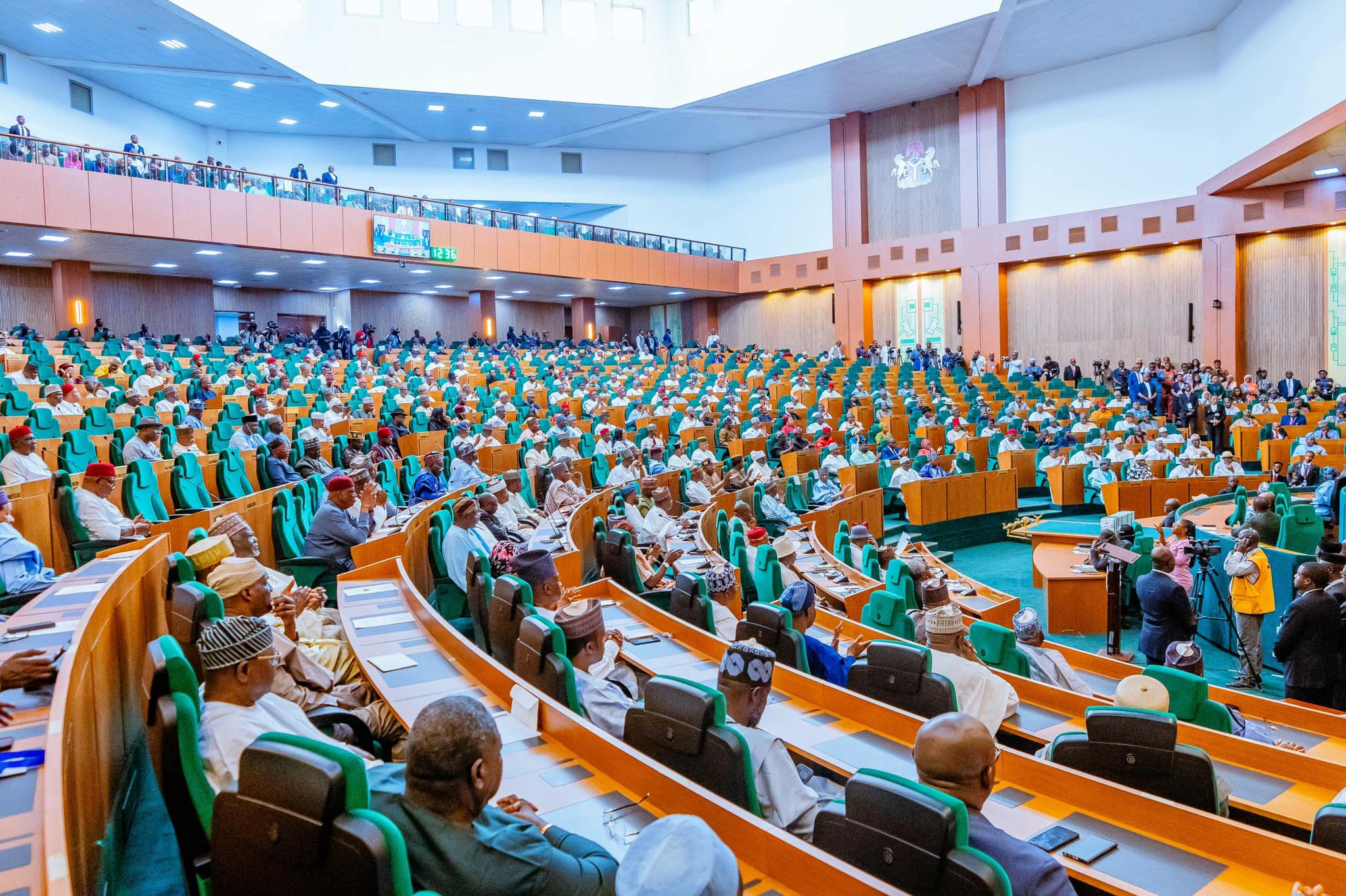
The lawmakers moved to define the requirement “cognate legislative experience” amid arguments that the House Standing Orders may restrict such positions to members who have completed at least one full term.
The nomination of Ikenga Ugochinyere (APP, Imo) as minority leader of the House of Representatives has triggered a fresh debate over the interpretation of the chamber’s rules on eligibility for principal offices, exposing divisions among lawmakers over what constitutes adequate legislative experience for leadership positions.
The controversy played out during Wednesday’s plenary when Babajimi Benson (APC, Lagos) sponsored a motion seeking clarity on the meaning of “cognate legislative experience” as contained in Order Seven, Rule 15 of the Standing Orders of the House.
The debate comes in the wake of the vacancy created by the resignation of former Minority Leader Kingsley Chinda, who stepped down from the position after emerging as the APC governorship candidate for Rivers State.
Last Tuesday, Speaker Abbas Tajudeen formally announced the vacancy during plenary, which subsequently led to the nomination of Mr Ugochinyere as the preferred candidate of a coalition of opposition parties in the House.
The nomination, however, triggered opposition from some lawmakers who questioned whether Mr Ugochinyere, a first-term legislator, met the requirement of possessing cognate legislative experience as stipulated by the House rules.
Presenting the motion during plenary, Mr Benson said the House Standing Orders currently recognise only members with cognate legislative experience as eligible for appointment as principal officers, but do not expressly define the term.
He noted that parliamentary systems worldwide generally reserve principal offices for experienced legislators to preserve institutional memory and ensure effective leadership.
According to him, experienced lawmakers are better positioned to navigate legislative procedures, constitutional interpretation, and relations among the different arms of government.
Mr Benson said the need for clarity had become more pressing given recent developments in the National Assembly.
“Order Seven, Rule 15 of the Standing Orders of the House of Representatives states that only members with cognate legislative experience as Members of the House of Representatives shall be eligible for appointment as Principal Officers of the House,” he said.
He argued that global parliamentary best practices discourage first-term parliamentarians from occupying principal offices, reserving such positions for lawmakers with prior legislative experience.
The lawmaker further pointed to a recent decision by the Senate, which defined cognate legislative experience as applying to senators who had completed at least one full four-year term, while lawmakers with multiple previous terms must also have served in the immediate past Assembly.
He said such an interpretation would strengthen institutional continuity, deepen parliamentary stability, and minimise avoidable leadership disputes.
Mr Benson, therefore, urged the House to define cognate legislative experience as applying only to lawmakers who have completed at least one full four-year term in the House of Representatives.
He also proposed that the House expressly declare that no other interpretation of the term should apply.
In his contribution, Bob Solomon (APC, Rivers) argued that the Standing Orders already empower the Speaker to interpret contentious provisions.
Addressing Mr Tajudeen, he said the motion was unnecessary and risked undermining the authority vested in the presiding officer.
“It is conferred on you the power to interpret the rules as an officer. This motion is totally redundant and not necessary,” Mr Solomon said.
“What it means is that we are amending our rules for you to be able to exercise that power. Henceforth, if any question comes here for interpretation, we have to first see the House’s resolution to ask you to interpret the contentious provision in our rule.
“You have that power, you have the inhibition of the judge, and as an officer, what you say is final.”
Responding briefly, Mr Tajudeen acknowledged the differing views expressed by lawmakers.
“It’s okay, it’s okay, it’s good that every one of us is saying yes, we are taking voice vote,” the speaker said.
This motion was thereafter adopted after being seconded and adopted by the majority of lawmakers present.
Wednesday’s debate is the latest twist in the leadership tussle within the opposition caucus following Mr Chinda’s exit from the minority leadership position.
Mr Ugochinyere’s nomination was backed by 61 lawmakers drawn from the African Democratic Congress (ADC), Nigeria Democratic Congress (NDC), All Progressives Grand Alliance (APGA), Peoples Redemption Party (PRP), Labour Party (LP), Action Peoples Party (APP), Allied Peoples Movement (APM), Social Democratic Party (SDP) and Accord Party.
The parties said their decision reflected the preference of the majority of opposition lawmakers in the chamber.
However, some members have questioned whether the nomination complies with the House Standing Orders.
A lawmaker who opposed the endorsement and spoke anonymously to PREMIUM TIMES earlier argued that the controversy centres on the interpretation of the phrase “cognate legislative experience.”
According to the lawmaker, parliamentary convention generally treats cognate experience as referring to returning legislators who have previously served in the legislature.
“The Standing Rules say you must be cognate, and who is to define that cognate is the speaker. Cognate means you are coming back for another term. That is the problem,” the lawmaker said.