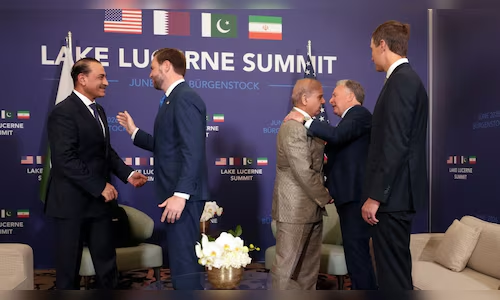
The talks at the Swiss resort of Bürgenstock come amid fresh tensions over the Strait of Hormuz that flared within days of signing the deal.
3 Min Read

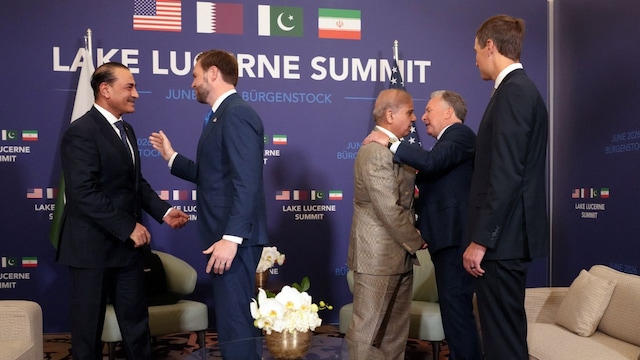
The US and Iran are holding their first face-to-face talks since signing a memorandum of understanding aimed at ending the 110-day conflict and laying the groundwork for a broader agreement.
The talks at the Swiss resort of Bürgenstock come amid fresh tensions over the Strait of Hormuz that flared within days of signing the deal.
Delegations from four countries – warring nations Iran and the US and mediators Qatar and Pakistan – are ready to take seats at the negotiating table in Burgenstock resort in Switzerland, Here’s all we know so far:
- The talks will last one day. Iran’s Foreign Ministry spokesperson Esmaeil Baghaei said the meeting is focused on implementing the memorandum of understanding signed earlier this week.
- Two rounds of meetings are planned.
– Morning: Iran will hold separate bilateral meetings with mediators Pakistan and Qatar.
– Afternoon: A four-party meeting involving Iran, the US, Pakistan and Qatar will take place. - Lebanon is expected to dominate discussions. Tehran has said Washington’s failure to ensure a ceasefire in Lebanon will be a central issue. US Vice-President JD Vance has also identified the Lebanon ceasefire as one of the top priorities for the talks.
- Iran’s nuclear programme remains a core agenda item. The negotiations are aimed at expanding the interim understanding reached earlier this week and advancing discussions on Iran’s nuclear activities, uranium enrichment and future monitoring arrangements.
- Sanctions relief is high on Tehran’s wishlist. Iranian officials have said discussions will cover waivers for Iranian oil sales and the release of frozen Iranian assets held abroad.
- The $6 billion Qatar funds issue is back in focus. President Masoud Pezeshkian said Iran expects the return of roughly $6 billion in frozen funds currently held in Qatar as part of the preliminary understanding with Washington.
- Pezeshkian has publicly backed the negotiations. According to Iran’s Tasnim news agency, the president said the provisions of the memorandum were favourable to Iran and argued that Washington had acknowledged several rights previously disputed by Tehran.
- Iran says it does not seek nuclear weapons. Pezeshkian reiterated that Tehran’s position remains unchanged, saying Iran does not want an atomic bomb and that this principle has long been part of the country’s official stance.
- The Strait of Hormuz dispute could complicate the talks. Iran’s military announced on Saturday that the strategic waterway would remain closed to vessel traffic, accusing the US and Israel of violating ceasefire commitments. US Central Command has rejected the claim and says maritime traffic continues to move through the strait.
- The talks are being closely watched by global energy markets. Any breakthrough on Hormuz, sanctions relief or Iranian oil exports could have implications for crude prices and global energy supplies.
- Who’s attending?
US delegation led by Vice-President JD Vance
Iranian delegation led by Parliament Speaker Mohammad Bagher Ghalibaf
Mediators from Pakistan and Qatar
Senior economic and diplomatic officials from both sides
What’s at stake?
The Bürgenstock meeting is effectively the first major test of the US-Iran peace process. Success could pave the way for a broader agreement on Iran’s nuclear programme and sanctions relief, while failure risks reopening disputes over the Strait of Hormuz and escalating tensions in Lebanon.
(Edited by : Tenzin Norzom)