Obstacles around obtaining visas will shut some of the world’s poorest and most climate-vulnerable countries out of crucial UN climate talks that are taking place in Germany this month, country representatives have told The Independent.
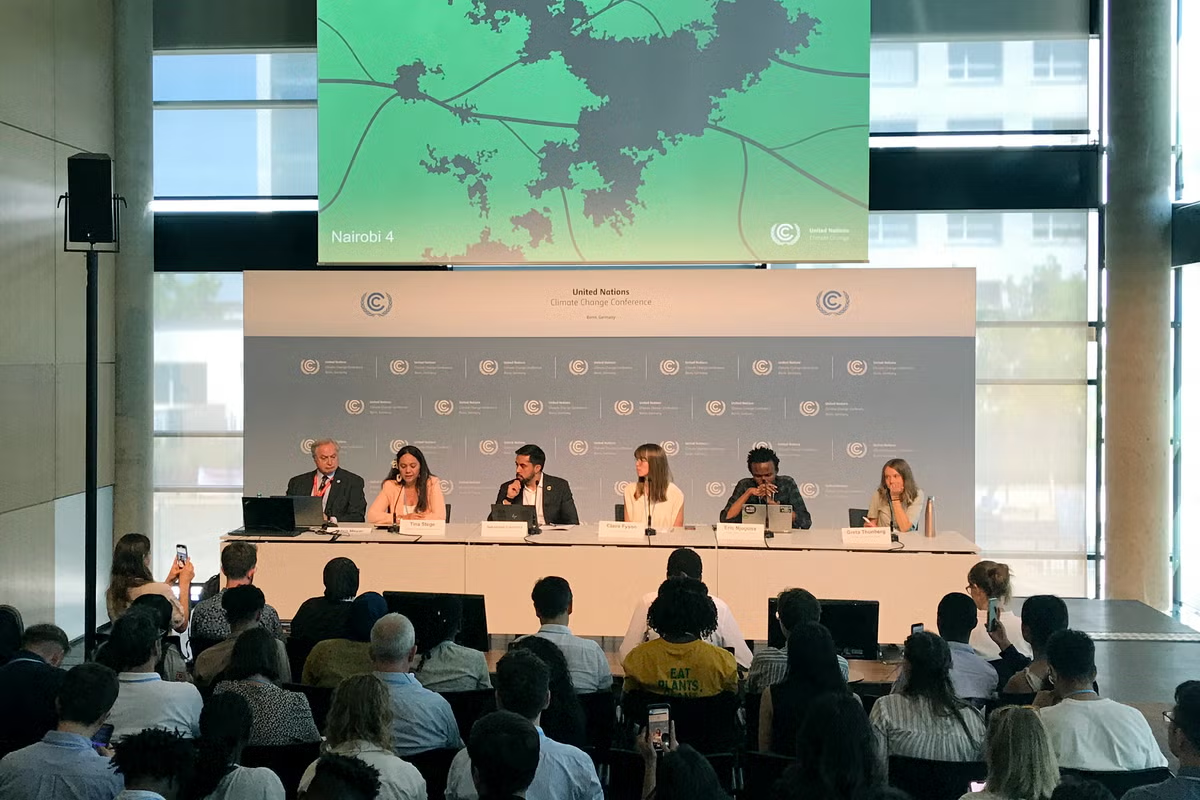
Countries including Sudan, Yemen, Sierra Leone, Senegal and The Gambia have all reported significant barriers accessing the 2026 Bonn Climate Change Conference, which is taking place from 8 June to 18 June, and are set to send smaller delegations as a result.
Their absence comes despite many of these countries being among the most vulnerable to the impacts of rapidly warming global temperatures, with the least financial capacity to respond.
“The Sudan delegation expresses its deep concern and disappointment at the severe visa barriers faced by its representatives ahead of the Bonn Climate Change Conference,” Dalal Ebrahim, who leads the climate adaptation department for Sudan, told The Independent.
“The majority of the delegation, including the head of delegation, have received visa refusals, while others remain unable to secure appointments through German embassies outside Sudan,” she added.
Marwah Aref Ahmed Saleh, who leads discussions for Yemen on climate losses and damages, said that she has now been sponsored for a German visa twice by a British think tank the International Institute for Environment and Development (IIED) for the Bonn talks. Each time, however, she not been granted approval to travel despite submitting all the relevant paperwork – and travelling to German consulates in Jordan last year and Ethiopia this year to apply.
“The situation is compounded by the fact that travel from Yemen is already extremely difficult, and even reaching a country where a visa application can be submitted is often a major undertaking,” she said. In the end, only two members of Yemen’s delegation have managed to travel to Germany, she said.
The Bonn Climate Change Conference is an annual two-week conference that centres on technical climate policy discussions, and is considered a key event in the global climate action calendar.
It is organised by the UN each year in the small German city of Bonn, and progress at the talks will often determine whether the next ‘COP’ climate conference – taking place this year in Anatolya, Turkey, in November – is a success or not.
Delegates from nearly 200 countries will meet to discuss progress on the Paris Agreement, which is the key agreement driving climate action globally, and they will begin to compile the texts that will be presented at the COP31 conference, which will in turn drive global climate policy in the years to come.
Country representatives spoken to by The Independent said that reduced delegation sizes in Bonn will seriously impact their ability to influence the global climate agenda this year.
“Under normal circumstances, a larger delegation would have participated, allowing us to cover multiple negotiation tracks, technical discussions, workshops, and coordination meetings simultaneously,” said Marwah.
“When countries like Yemen are represented by only a handful of delegates, it becomes impossible to effectively cover all negotiation tracks.”
Both years, Marwah has received the same reason for rejection: that there are “reasonable doubts as to your intention to leave the territory of the Member States before the expiry of the visa”, according to documents seen by The Independent. “I remain committed to engaging in these important international processes, but at this moment I cannot hide how disheartening this experience has been,” she said.
Her rejection comes despite the fact that Yemen is highly vulnerable to climate impacts – as The Independent has previously reported – with extreme weather events compounding humanitarian difficulties resulting from the ongoing conflict in the country.
Dalal Ebrahim, from Sudan, said that her country is facing similar challenges at the nexus of climate and conflict.
“Sudan’s realities, including climate vulnerability, conflict, displacement, food insecurity, and limited institutional capacity, must be part of the discussions on climate adaptation, finance, loss and damage, and implementation,” she said.
“Visa barriers should not become a hidden form of silencing or isolation within the climate process,” she added. “Climate diplomacy cannot be credible if the countries at the centre of the climate crisis are spoken about, but not heard.”
In response to the claims that climate negotiators from the world’s least developed countries are facing visa barriers, a spokesperson for the German Federal Foreign Office said that Germany takes its responsibility towards accredited delegates “very seriously”, adding that it recognises that “participation of all delegates, particularly those from countries most affected by climate change, is essential to the effectiveness of the negotiations”.
“However, the basis for reviewing applications for Schengen visas (short-term stays of up to 90 days) is always Schengen law. Visa offices are therefore strictly bound by European law,” they said.
On the question of assessing the “so-called willingness to return” of visa applicants, the spokesperson said that they can only make a decision based on available evidence. “In principle, a visa may only be issued if applicants can credibly demonstrate that their living circumstances provide sufficient incentives for return,” they said.
A spokesperson for UN Climate Change, meanwhile, said that representatives of all countries had been accredited to participate “in the usual manner”, adding that the final issuance of the visa rests with the host-country relevant authorities.
Binyam Gebreyes, a climate diplomacy expert from British think tank IIED, which has sponsored representatives – including Marwah – from the world’s poorest countries to attend the Bonn climate talks, said: “UNFCCC meetings are one of the few spaces where the Least Developed Countries can be heard when it comes to climate change.
“Physically excluding [Least Developed Country] negotiators from the Bonn talks gives the impression their contributions and experiences don’t matter to the rest of the world.”
This article has been produced as part of The Independent’s Rethinking Global Aid project