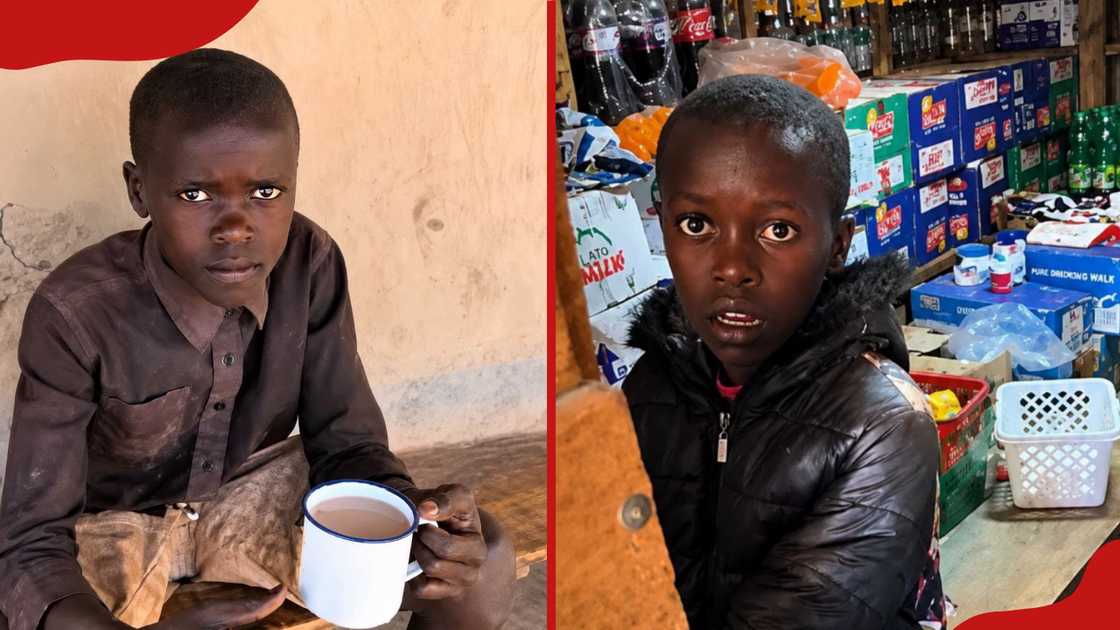
- A 13-year-old boy from West Pokot has gone viral for quitting school to focus on building a business empire
- He took a break from the classroom because theory could not compete with the immediate pressures of earning a living
- His ventures include a posho mill, a small retail shop, a barbershop, a water vending business, and a roadside hotel
Search option is now available at TUKO! Feel free to search the content on topics/people you enjoy reading about in the top right corner 😉
A 13-year-old boy from West Pokot County has become the centre of national fascination after building a cluster of small businesses that would challenge many adults, while openly rejecting formal education.
Source: Facebook
The teenager, whose rise has gone viral on social media, is being described by admirers as a “tycoon-in-training” and by critics as a symbol of a childhood cut short by circumstance and ambition.
He comes from pastoralist settlements in West Pokot, a region where livelihoods are often shaped by erratic rainfall, livestock rearing, and periodic insecurity linked to cattle rustling.

Read also
How Gen Z is rewriting workplace culture and challenging traditional expectations
In such communities, education is widely seen as a pathway out of poverty, but not one every child embraces.
For this boy, school reportedly felt disconnected from daily survival, as he claims he took a break from the classroom because theory could not compete with the immediate pressures of earning a living.
What followed has fuelled even greater attention. He is said to have sold part of his family’s livestock, reportedly around 50 goats and additional cattle, raising roughly KSh 150,000.
In pastoral economies, livestock is more than property; it is savings, security, and social status. Liquidating it at such a young age was a bold and controversial move within his community.
With the capital, he began building what he describes as a self-sustaining business base. His ventures reportedly include a diesel-powered posho mill and a small retail shop stocked with household essentials.
He also runs a barbershop, a water vending business, and a modest roadside hotel offering meals and basic accommodation for locals, herders, and travellers.

Read also
Mzungu man shares photos of luxurious Malindi mansion at centre of KSh 80m divorce row
Locals say he is actively involved in day-to-day operations: serving customers, overseeing milling, restocking goods, and managing cash flow.
Footage shared online shows him operating machinery and moving between his businesses with striking confidence for his age.
His supporters view him as evidence of untapped entrepreneurial talent in rural Kenya, someone who is not waiting for opportunity but attempting to manufacture it.
Some even suggest his success highlights gaps in education and employment systems that leave young people disillusioned.
Others, however, see a more troubling picture: a child taking on adult economic responsibility far too early, with limited guidance and uncertain long-term prospects.
The boy himself appears unmoved by the criticism. He frames his decision as practical rather than emotional, contrasting classroom learning with what he calls the “real world” of trade, profit, and survival.
He speaks less like a student and more like a micro-entrepreneur focused on margins and expansion.
For now, his operations remain local but visible, serving the immediate community and generating steady attention beyond West Pokot.

Read also
Unemployed medical graduate ventures into media, starts own company: “It’s tough out here”
Customers continue to patronise his shop, milling business, and eatery, while online audiences dissect his choices in comment sections and talk shows.
To some residents, he represents resilience in a harsh environment, proof that initiative can emerge even where formal structures are weak.
To others, he is a cautionary tale of what happens when childhood is overtaken by economic necessity and viral fame.
What is undeniable is the intensity of interest his story has generated. At just 13, he has become a symbol of a larger national conversation about education, opportunity, rural poverty, and the meaning of success.
Whether his path leads to a sustainable business empire or eventual reintegration into formal education remains unknown.
But for now, a boy-turned-entrepreneur continues to run his small network of enterprises, defying expectations, inviting debate, and rewriting his own script in real time.
Source: NGBREAKINGNEWS