4 min readUpdated: Jun 26, 2026 04:42 PM IST
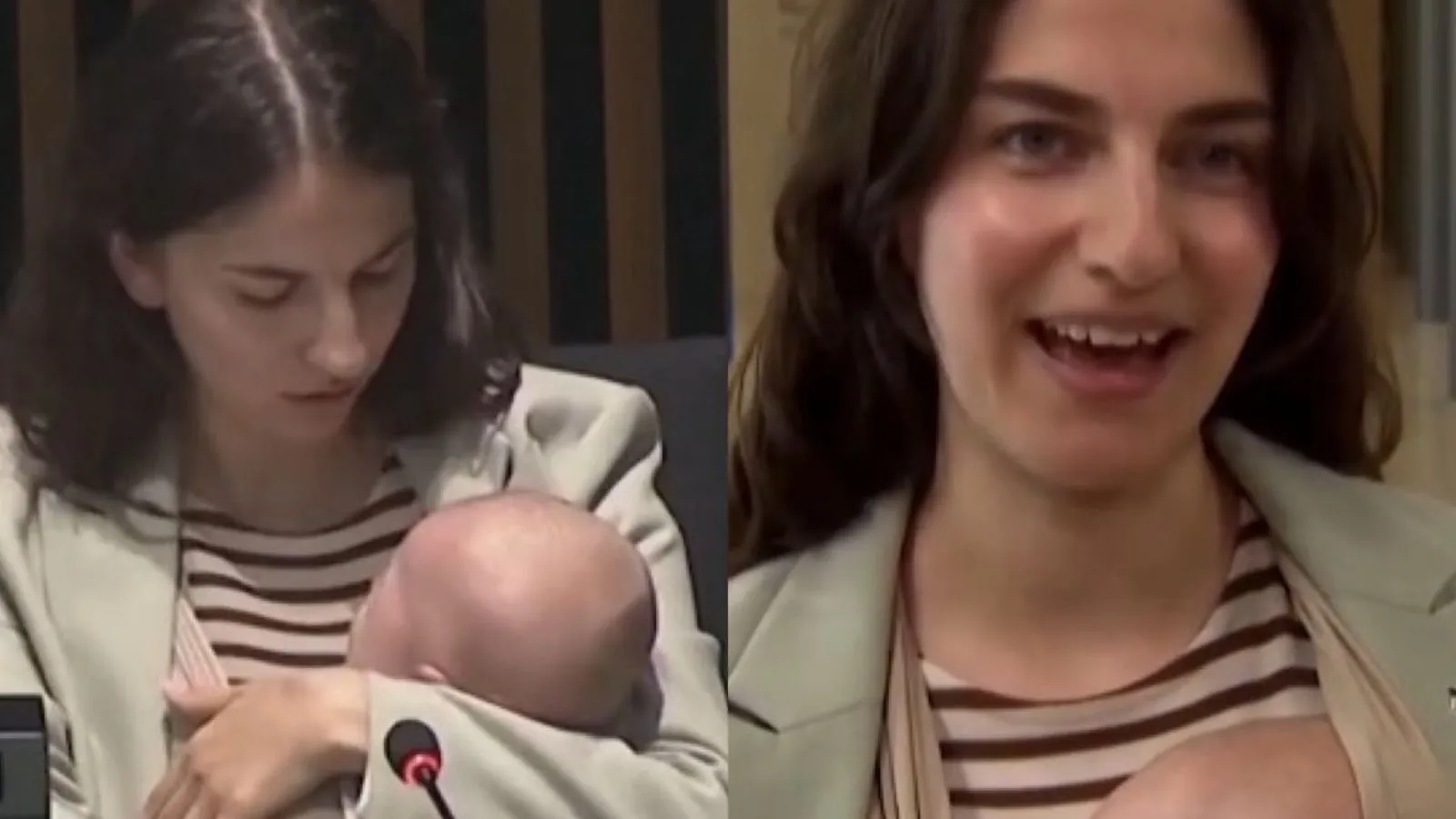
Sweden’s Climate Minister Romina Pourmokhtari arrived at a European Union climate ministers’ meeting in Luxembourg this week with an unusual companion — her infant son, Adam. While the moment drew widespread attention, the minister said it was intended to send a message about Sweden’s parental leave system and why parents, particularly women, should not have to choose between raising a family and pursuing a career.
Speaking to news agency Reuters, Pourmokhtari said bringing her baby to the meeting reflected a society where childcare responsibilities are shared and supported by public policy. “I wanted to showcase being an example of not having to make that choice,” she said, adding that it also required “having a partner that’s not a dinosaur” and who was willing to take on childcare responsibilities.
A first for the EU Council
According to an EU Council official, it was the first time in the institution’s history that a baby attended a ministerial meeting.
Pourmokhtari had recently returned from parental leave, while her husband is currently on leave until Sweden’s general election in September. He accompanied her to Luxembourg and cared for their son during the meeting.
She said Sweden’s parental leave system, along with support from her ministry, made it “much less controversial” for her husband to take on the primary caregiving role while she resumed official duties.
How Sweden’s parental leave works
Sweden has one of the world’s most generous parental leave systems, funded through high taxation and designed to encourage both parents to share childcare responsibilities.
Parents are entitled to 480 days (around 16 months) of paid parental leave per child. Of these, 90 days are reserved exclusively for each parent and cannot be transferred. If either parent chooses not to use those days, they are forfeited, a policy popularly known as the “dad months”, introduced to encourage fathers to spend more time caring for their children.
The remaining leave can be shared between parents, giving families greater flexibility while helping improve gender equality in the workplace.
Story continues below this ad
Value beyond economics
Pourmokhtari urged governments to introduce more flexible parental leave policies and make childcare more affordable, arguing that the benefits extend beyond individual families.
“It’s creating a lot of value that shouldn’t be underestimated,” she said. “Value that might not always be economic — but in the end, might also be economic, in not having burnt-out workers.”
Her remarks come as many European countries grapple with ageing populations, declining birth rates and persistent gender gaps in the labour market.
Support from fellow ministers
The minister’s decision received support from colleagues attending the meeting.
Story continues below this ad
Poland’s Deputy Climate Minister Krzysztof Bolesta told Reuters the presence of the baby had not disrupted proceedings.
“I think it’s great,” he said. “It’s not a handicap, it’s just a part of life.”
Sweden’s youngest minister
Pourmokhtari, now 30, made history when she joined Sweden’s government in 2022, becoming the youngest cabinet minister in the country’s history.
Her appearance at the EU meeting has revived discussion across Europe about family-friendly workplaces and whether governments should do more to make public life compatible with parenthood, particularly for women in leadership roles.
(With inputs from Reuters)
Story continues below this ad
(This story was written by Sneha Sharma, an intern at The Indian Express)