ActionAid Nigeria has raised the alarm over the worsening conditions confronting millions of Nigerians, warning that rising poverty, insecurity, debt servicing, food inflation and climate-related disasters are placing the country’s poorest and most vulnerable citizens under unprecedented pressure.
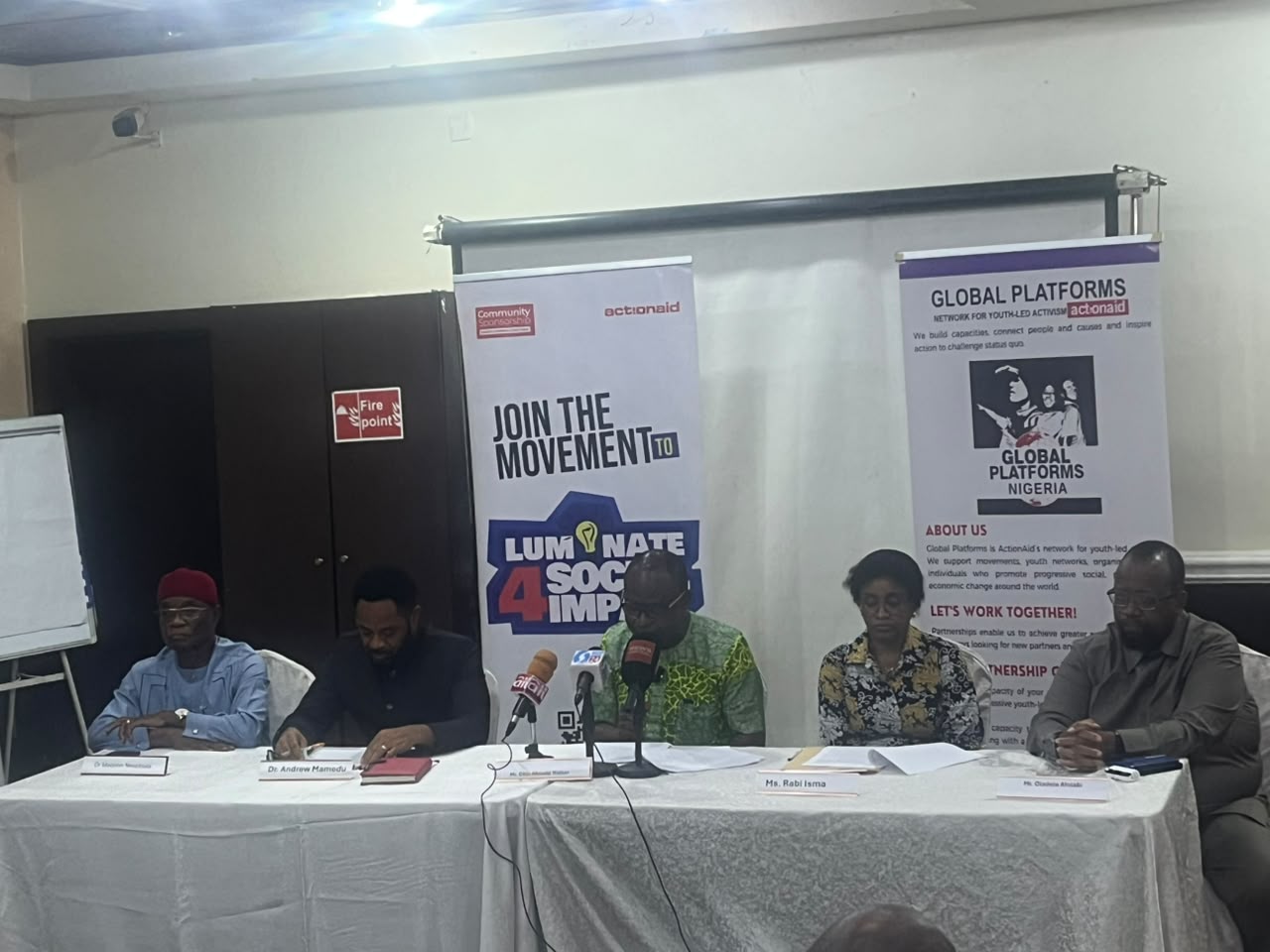
The organisation’s General Assembly and Board of Directors issued the warning in Abuja at the weekend after its Annual General Meeting, where they reviewed the state of the nation and expressed grave concern over developments they said continued to erode the welfare and security of ordinary Nigerians.
The group welcomed recent government initiatives, including the renewed legislative push for state police, the Federal Executive Council’s approval of comprehensive reforms of the National Youth Service Corps (NYSC), and the introduction of a community-level flood forecasting system.
However, it cautioned that Nigerians were still waiting to see whether the measures would translate into tangible improvements in protection, livelihoods and prosperity.
ActionAid said Nigeria’s external reserves had reportedly risen to about $51.5 billion, but warned that the country’s total public debt had also climbed to ₦156.28 trillion, with $11.6 billion earmarked for debt servicing in 2026 alone.
It said the debt servicing obligation was higher than the country’s combined expenditure on education, health and agriculture, raising serious questions about the sustainability of public finances and the government’s ability to invest in human development.
The organisation further cited a World Bank warning that 79 per cent of Nigerians remained poor or vulnerable to falling into poverty, while the National Bureau of Statistics had reported a June headline inflation rate of 15.91 per cent.
It said the continuing rise in food prices, petrol prices above ₦1,100 per litre, high transportation costs and the ₦70,000 minimum wage had combined to make it increasingly difficult for Nigerian families to meet their basic needs.
A major concern raised by the organisation was the worsening attacks on schools and children.
According to ActionAid, at least 124 schoolchildren and students were abducted between May and July 2026 alone in Oyo, Borno and Zamfara States, while many other children and teachers abducted in other parts of the country remained in captivity.
The organisation said the situation underscored the growing threat to education and the safety of learners, warning that the country could not afford to allow insecurity to destroy access to education.
It also raised concern over the 2026 flood outlook, noting that the Federal Government had placed 33 states and the Federal Capital Territory on high flood alert.
The organisation said more than 14,000 communities, nearly 5,000 health facilities and over 10,000 schools were at risk between July and September.
“Nigeria cannot keep responding to a disaster it predicts every single year,” ActionAid said, calling on state and local governments to clear blocked drainage channels and halt further construction on known floodplains.
The organisation urged the National Emergency Management Agency (NEMA) and state emergency agencies to be fully resourced and prepared throughout the high-risk period.
On security, ActionAid called for a fundamental shift from reactive military responses to a comprehensive strategy based on community intelligence, trust and accountability.
It said the spread of banditry into states including Oyo, Kogi, Lagos, Zamfara and Ogun, alongside recurring violence in Plateau State, demanded “honest structural rethinking, not incremental adjustments.”
The organisation also welcomed the renewed push for state police, noting that the Senate had passed a constitutional amendment bill while President Bola Tinubu had transmitted a fresh Constitution Alteration Bill to the House of Representatives.
It urged the National Assembly to act with urgency while preserving safeguards against political abuse and establishing a credible funding framework to ensure that poorer states were not left with the weakest security systems.
ActionAid further called on the Federal Government to plug revenue leakages and opaque deductions from allocations to states and local governments, publish full and auditable accounts of deductions at source, and develop a credible debt management framework capable of reducing the burden of debt servicing.