4 min readNew DelhiUpdated: Jul 3, 2026 07:29 PM IST
India has sent an official delegation to Iran as funeral ceremonies for slain Supreme Leader Ayatollah Ali Khamenei begin in Tehran, months after he was killed during the Iran-Israel-US conflict.
Minister of State for External Affairs Pabitra Margherita and Bihar Governor Lt Gen (Retd) Syed Ata Hasnain are attending the ceremonies on behalf of India.
The funeral was delayed for months after Khamenei was killed on February 28, as the conflict involving Iran, Israel and the United States was still underway.
According to the Associated Press, Khamenei’s body will be taken through several cities in Iran before crossing into neighbouring Iraq as part of days-long mourning ceremonies. Iranian authorities have urged citizens, government officials and members of paramilitary groups to participate in large public gatherings to pay their respects.
The visit by the Indian delegation coincides with the formal start of Iran’s state mourning ceremonies.
A delegation of Indian religious leaders paid tribute to the martyred Leader of the Islamic Republic of Iran, Ayatollah Ali Khamenei. pic.twitter.com/Ji1i3vNkGm
— Iran in India (@Iran_in_India) July 3, 2026
The Embassy of Iran in India shared images of the Indian delegation paying tribute to Khamenei on X, writing: “Indian Dignitaries Pay Tribute to the Martyred Leader of Iran, His Eminence Ayatollah Seyyed Ali Khamenei.”
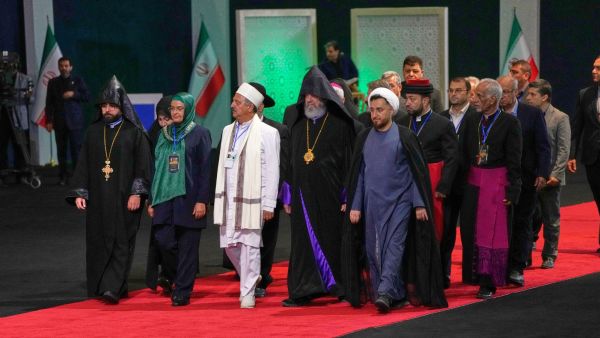 Foreign religious leaders and other mourners walk past the coffins of slain Iranian Supreme Leader Ayatollah Ali Khamenei and members of his family during a viewing ceremony ahead of the dayslong funeral ceremonies at the Imam Khomeini Mosalla Grand Mosque in Tehran, Iran, Friday, July 3, 2026. (AP Photo
Khamenei’s funeral: Full schedule
The funeral ceremonies begin on Saturday in Tehran and will continue over several days across Iran and Iraq.
Saturday-Sunday: Khamenei’s body will lie in state at Tehran’s Grand Mosalla for the public to pay their respects.
Story continues below this ad
Monday: A large funeral procession will take his body through the streets of Tehran.
Tuesday: The procession will move to Qom, Iran’s most important Shiite religious centre, for additional ceremonies.
Wednesday: The cortege will travel to Karbala in Iraq, home to the shrine of Imam Hussein, one of Shiite Islam’s holiest sites.
Final burial: Khamenei will be laid to rest in Mashhad at the Imam Reza shrine, one of the most revered pilgrimage sites in Shiite Islam.
Story continues below this ad
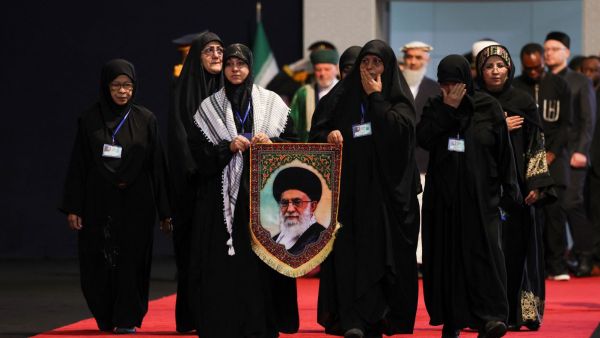 Women react as they walk to pay their respects near the coffins of Iran’s late Supreme Leader Ayatollah Ali Khamenei and his family members, on the day international delegates participate in a farewell ceremony for Khamenei, July 3, 2026, who was killed on February 28 during Israeli and US airstrikes on Iran, at the Imam Khomeini Grand Mosalla in Tehran. (AP)
A political test for Iran’s leadership
The funeral is widely seen as a major political test for Iran’s leadership, which is expected to use the ceremonies to project national unity following months of conflict and domestic unrest.
Authorities also face concerns over crowd management. Previous funerals of prominent Iranian leaders, including Ayatollah Ruhollah Khomeini and General Qassem Soleimani, were marred by deadly stampedes triggered by massive crowds.
Iranian President Masoud Pezeshkian urged people from all walks of life to participate in the funeral procession, describing Khamenei’s death as a moment to demonstrate national solidarity.
In a statement, Pezeshkian said, “This martyrdom is not the end of the journey, but the beginning of a new chapter of national unity, resilience, and progress,” adding that “this system rests on the firm foundations of faith, ideals, and the will of a great nation.”
Story continues below this ad
The scale of the funeral, stretching across multiple cities in Iran and into Iraq, underscores the significance Tehran attaches to the ceremonies.
Iranian state media Press TV reported that the first phase of the funeral ceremonies began on Friday, with foreign dignitaries, religious leaders and mourners gathering at Tehran’s Grand Mosalla to pay their respects.
Minister of State for External Affairs Pabitra Margherita and Bihar Governor Lt Gen (Retd) Syed Ata Hasnain are representing India at the ceremonies.
(The article was written by Paramita Datta, who is an intern with The Indian Express)
Stay updated with the latest – Click here to follow us on Instagram