In a bold move to strengthen food security and accelerate economic growth, Bauchi State Governor, Senator Bala Abdulkadir Mohammed, has rolled out a comprehensive agricultural reform agenda focused on irrigation development and livestock health management—positioning the state as a model for sustainable agrarian transformation in Nigeria.
Pioneering Irrigation with “Irrigate Nigeria”
At the national launch of the “Irrigate Nigeria” project in Gamawa Local Government Area, Governor Bala Mohammed described the initiative as a true testament to visionary leadership and responsive governance.
The programme, spearheaded by the National Agency for Science and Engineering Infrastructure (NASENI) and the Presidential Implementation Committee on Technology Transfer (PICTT), aims to reposition Nigeria’s agricultural sector through the adoption of modern irrigation technologies and sustainable farming practices.
Governor Mohammed noted that Bauchi’s vast arable land and water bodies make it a prime candidate for irrigated agriculture. He emphasized that “Irrigate Nigeria” is more than a farming intervention—it is a catalyst for economic empowerment, food sufficiency, and national stability. He lauded the Federal Government for implementing a Public-Private Partnership (PPP) model, which, according to him, guarantees accountability, innovation, and long-term project sustainability.
Dr. Mohammed Dahiru, Chairman of PICTT, highlighted that the PPP model protects the initiative from the pitfalls of previous government-led projects, by leveraging the efficiency and investment drive of the private sector to ensure continuity and impact.
Bauchi State Irrigation Agriculture Support Programme
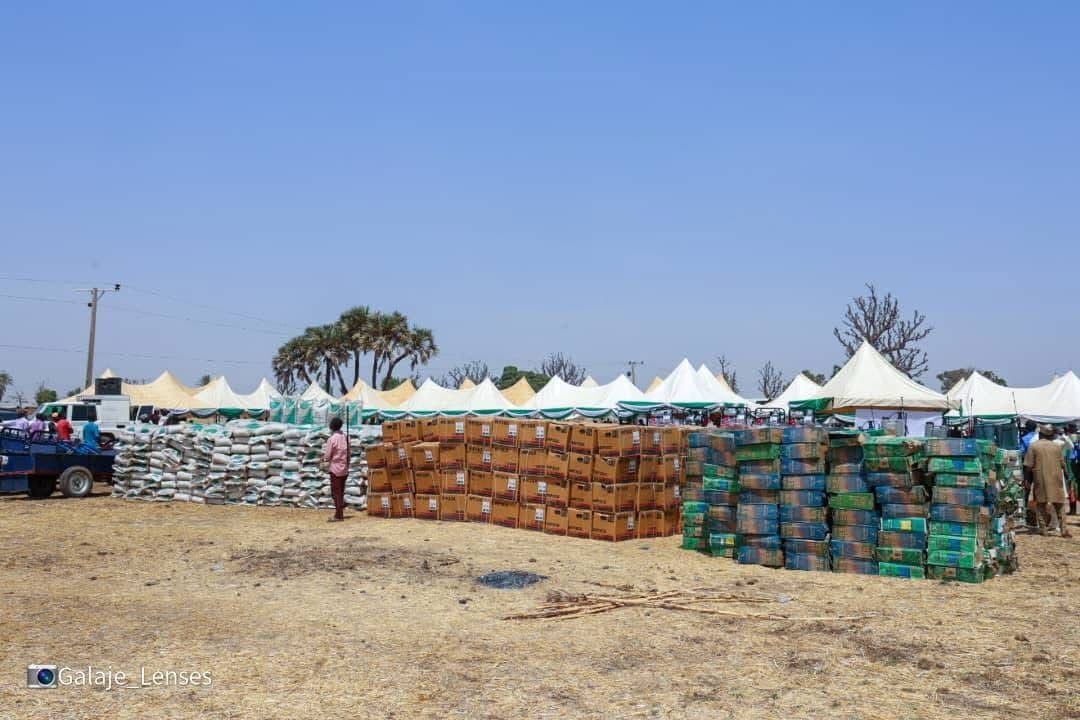
To complement the federal efforts, the Bauchi State Government also launched the Irrigation Agriculture Support Program at Zungur in Bauchi Local Government Area. The program, tailored to empower smallholder farmers, involves the direct distribution of high-yield crop varieties, fertilizers, solar-powered irrigation equipment, and mechanized farming tools to boost dry-season farming.
Represented by state Deputy Governor Mohammed Auwal Jatau, the Governor reiterated the state’s commitment to unlocking its agricultural potential by maximizing its rich natural resources. He called on traditional institutions, cooperatives, and financial institutions to support the implementation, assuring that the government is ready to partner with stakeholders to drive agricultural mechanization, enhance access to credit, and expand markets.
Expanding Livestock Health and Development
In a further boost to the agricultural sector, Governor Mohammed flagged off the 2025 Annual Livestock Vaccination Campaign, targeting over 1.5 million animals across Bauchi’s 20 local government areas. The campaign includes the administration of over 10,000 doses of anti-rabies vaccines following a spike in dog bite cases.
Speaking at the inauguration in Itas Gadau, the Governor highlighted Bauchi’s leading position in livestock population, which has been bolstered by the influx of pastoralists from conflict-affected regions in Nigeria’s North-Central and North-West. To institutionalize and sustain livestock growth, he announced the creation of a dedicated State Ministry of Livestock Development, a first in the state’s history, to coordinate animal health, pastoral systems, and herder support programmes.
This move aligns with the objectives of the National Livestock Transformation Plan (NLTP), which seeks to modernize the livestock sector, reduce conflicts, and improve productivity.
A Unified Agricultural Vision
Governor Bala Mohammed’s multi-pronged approach—anchored on sustainable irrigation, input support, mechanization, and livestock care—reflects a long-term vision to make agriculture the bedrock of Bauchi’s economy. These initiatives also align with the National Agricultural Technology and Innovation Policy (NATIP) and global efforts to address food insecurity, climate resilience, and rural poverty.
Experts and development partners have commended the Bauchi model for integrating innovation with inclusivity and for creating pathways for youth engagement, job creation, and investment opportunities in agro-enterprises.
Conclusion
Governor Bala Mohammed’s strategic interventions in agriculture, particularly in irrigation and livestock development, are redefining the agricultural landscape of Bauchi State. By embracing innovation, fostering partnerships, and investing in infrastructure and human capital, his administration is laying a solid foundation for sustained agricultural growth, rural transformation, and inclusive economic prosperity.