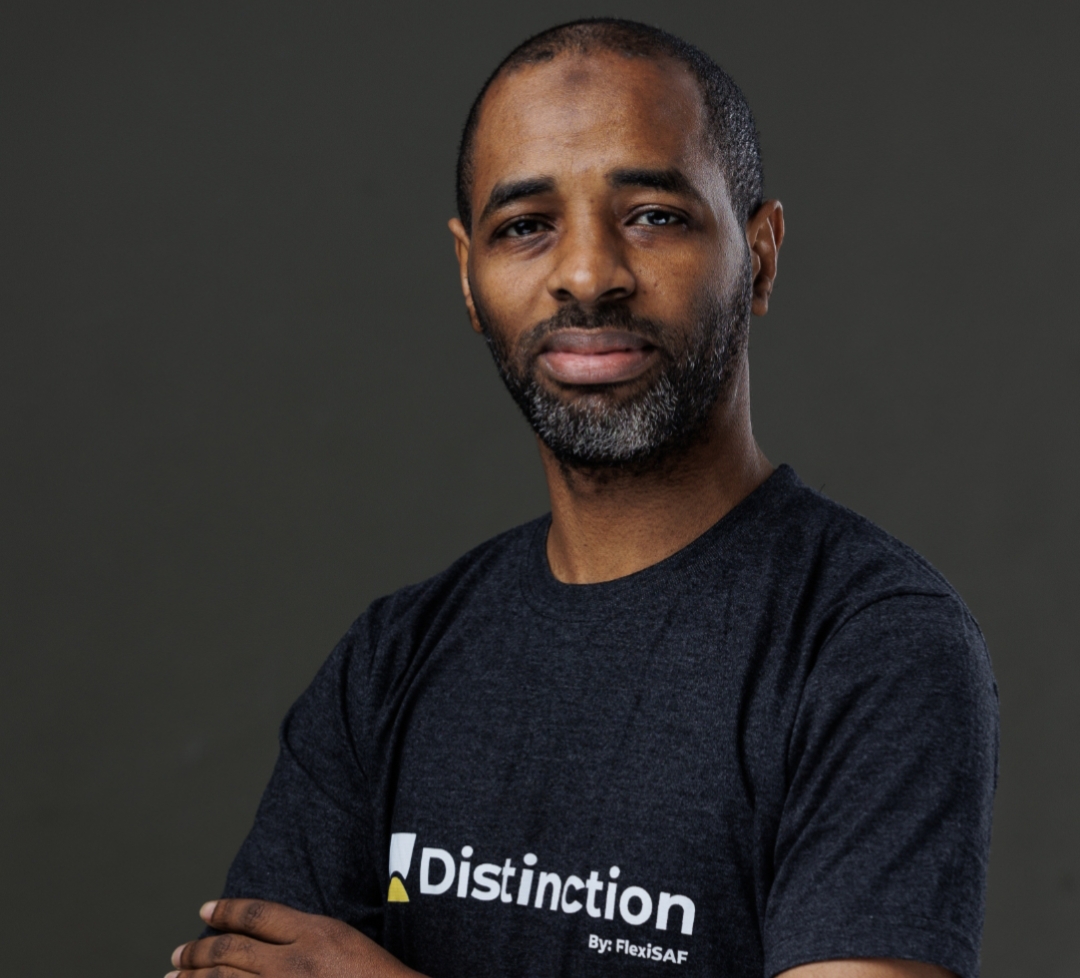
FlexiSAF’s rise has been packaged as a homegrown African success story an innovation journey from solving school administration problems to deploying artificial intelligence across universities. But behind the glowing narrative of scale, speed, and disruption, a different conversation is quietly gaining traction: are the claims outpacing reality?
Founded fourteen years ago by Faiz Bashir, FlexiSAF built its reputation on digitising enrolment, grading, and record systems in Nigerian schools. Today, it claims adoption across hundreds of institutions. Yet, education stakeholders say that while administrative efficiency improved, the deeper structural crisis—poor teaching quality, outdated curricula, and limited academic capacity remains largely untouched.
That unresolved gap is now being filled, the company says, by artificial intelligence.
With the launch of Distinction.app in April 2024, in partnership with Amazon Web Services (AWS), FlexiSAF has positioned itself at the forefront of Africa’s AI-driven education push. The platform promises near-instant course creation, automated grading, personalised learning paths, and large-scale deployment across universities.
But as adoption grows, so do the questions.
At the centre of the debate is the platform’s core promise: generating full academic content including lecture notes, videos, quizzes, and assessments—in under two minutes. For critics, that speed is not innovation—it is a potential red flag.
Education experts warn that meaningful learning cannot be compressed into algorithmic outputs without risking a decline in academic depth. The concern is not just about efficiency, but about whether AI-generated content can meet the standards required for higher education.
“There’s a difference between delivering content and delivering education,” one academic familiar with digital learning systems noted. “The danger is mistaking volume for value.”
FlexiSAF points to impressive usage metrics millions of AI-generated questions and hundreds of thousands of learners engaged. But analysts argue that such figures, while headline grabbing, do not necessarily translate into improved learning outcomes, critical thinking, or graduate readiness.
Beyond pedagogy, the company’s aggressive growth projections are also drawing scrutiny. FlexiSAF has set its sights on capturing 40% of Nigeria’s tertiary education market by 2030 a target some observers describe as ambitious, others as concerning.
The fear is not just about market dominance, but about centralisation. If a single private platform becomes deeply embedded in academic delivery, assessment, and data infrastructure, what happens to institutional independence?
Even more sensitive is the issue of data.
With FlexiSAF already handling large scale public sector deployments including millions of student records and examination registrations questions are being raised about data governance, privacy safeguards, and long-term control. The reliance on foreign cloud infrastructure through AWS adds another layer to the debate around digital sovereignty.
While the partnership has been celebrated as a model of “co-creation,” critics argue it also underscores Africa’s continued dependence on external technology ecosystems to power critical national systems.
FlexiSAF maintains that its model is designed for accessibility, with a subscription cost of $2 per student. But some stakeholders are asking whether affordability is being used as a lever for rapid adoption, potentially locking institutions into systems whose long-term academic and financial implications are not yet fully understood.
Internally, the pace of expansion has also raised eyebrows. Building and scaling AI systems capable of serving hundreds of thousands of learners across multiple countries is no small feat. While AWS infrastructure provides a backbone, questions remain about quality assurance processes, content validation, and human oversight at scale.
For all its promise, FlexiSAF now finds itself at a critical juncture.
Is it truly redefining education in Africa or simply digitising its existing weaknesses at a faster pace?
As governments, institutions, and students increasingly rely on technology to bridge educational gaps, the stakes are higher than ever. Innovation is necessary but without transparency, oversight, and measurable outcomes, it risks becoming another layer of complexity in an already fragile system.
FlexiSAF’s story is still being written. But as the spotlight intensifies, one thing is clear: the real test is no longer growth it is accountability.