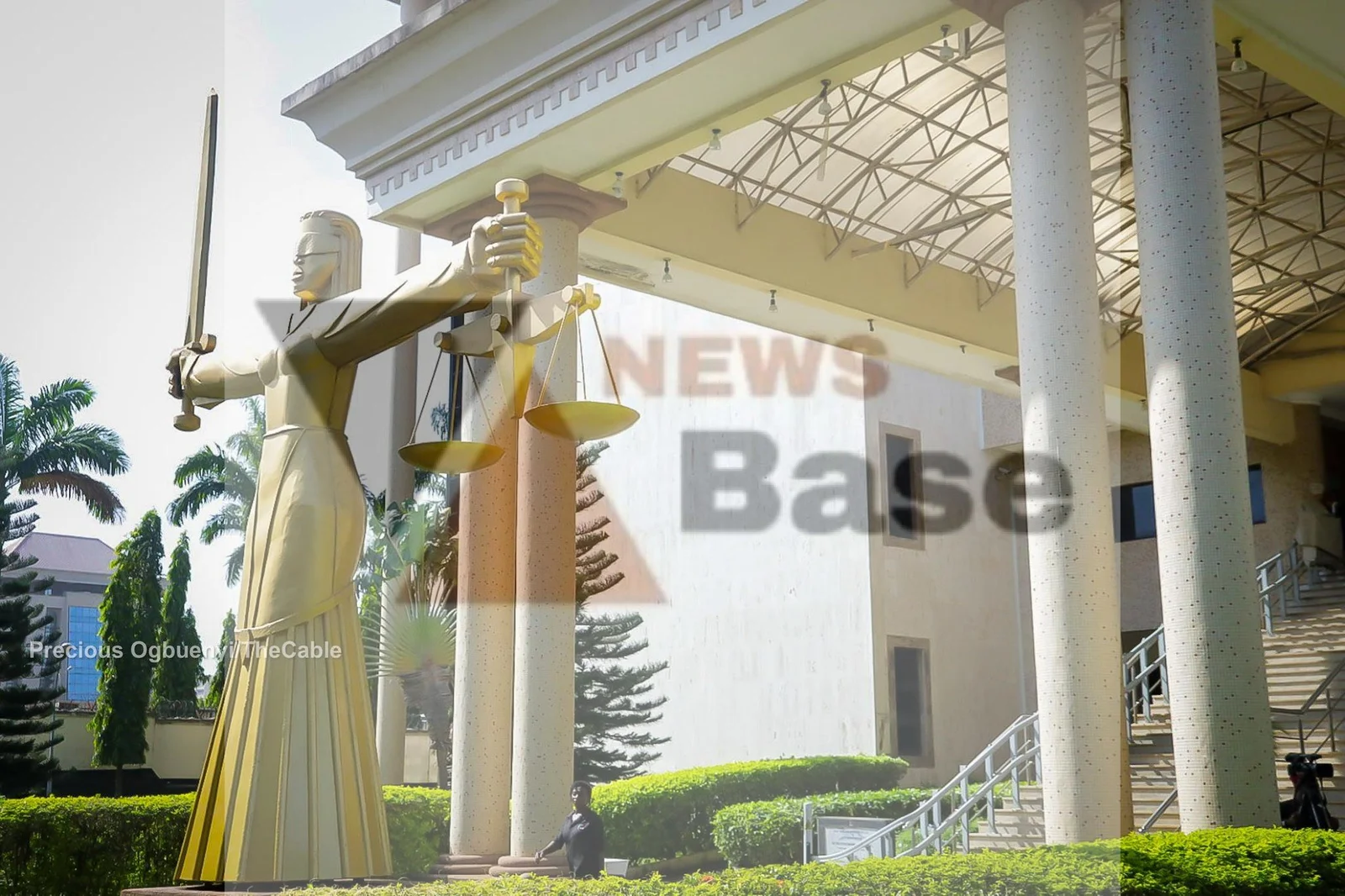
The Federal High Court in Abuja has awarded ₦200 million in damages to the widow of a truck driver, Mallam Kabiru Babai, who was unlawfully killed by a police sergeant in Osun State in 2021.
The judgment, delivered by Justice Peter Lifu on Thursday, held that the killing of Babai amounted to a violation of his constitutional right to life, as guaranteed under Section 33(1) of the 1999 Constitution and the African Charter on Human and Peoples’ Rights.
The court ordered the Nigeria Police Force, the Inspector-General of Police, and the Commissioner of Police in Osun State to jointly pay the ₦200 million compensation to Babai’s widow, Balkisu Kabiru Babai.
In addition to the monetary award, the court directed the police authorities to immediately commence the prosecution of the police sergeant accused of fatally shooting the truck driver during the incident.
According to court records, the incident occurred on December 3, 2021, in the Ota-Efun area of Osogbo, Osun State. Babai was reportedly repairing a broken-down truck when police officers arrived at the scene.
The court heard that an altercation followed after one of the truck occupants was allegedly shot in the hand by a police officer. Babai reportedly confronted the officers over the shooting before he was allegedly assaulted and later shot in the chest by the officer identified as Sergeant Moses Samuel. He died at the scene.
Following the incident, Babai’s widow instituted legal action against the Nigeria Police Force and other respondents, seeking justice for the alleged unlawful killing of her husband. Although she initially requested ₦2 billion in damages, the court awarded ₦200 million.
Justice Lifu ruled that the actions of the officer constituted an unlawful deprivation of life and emphasized the need for accountability among law enforcement personnel.
The judgment has been welcomed by human rights advocates, who say it reinforces the principle that security agencies must operate within the bounds of the law and can be held accountable for violations of citizens’ fundamental rights.
The ruling is expected to add to ongoing conversations about police accountability, the protection of human rights, and the need for justice for victims of alleged extrajudicial killings in Nigeria.