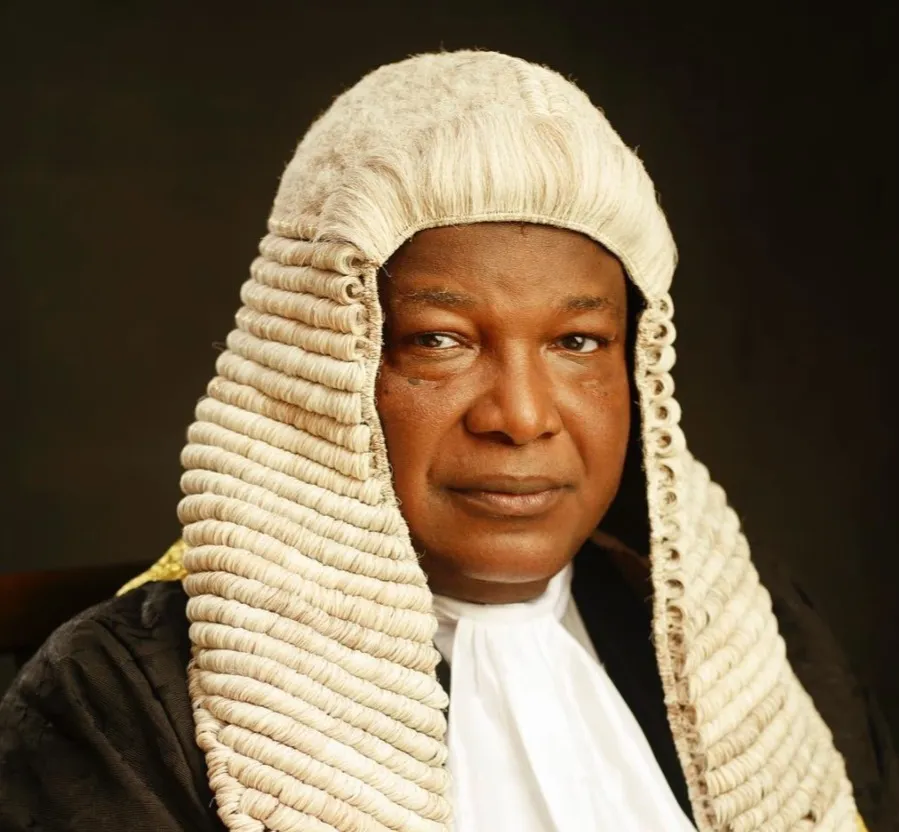
Senior Advocate of Nigeria (SAN) and Lecturer in the Department of Jurisprudence and International Law, Faculty of Law, University of Lagos, Dr. Wahab Shittu, has said the death penalty for convicted terrorists should remain a non-negotiable part of Nigeria’s legal framework, arguing that terrorism is a crime against humanity that deserves the maximum punishment where the law permits.
His position comes following the Federal High Court in Abuja’s sentencing of three suspects involved in the abduction of pupils and teachers in Oriire Local Government Area of Oyo State to life imprisonment, a judgment that has renewed calls for a review of Nigeria’s terrorism laws.
Speaking on Thursday during an interview on Frontline, a current affairs programme on Eagle 102.5 FM, Ilese-Ijebu, Ogun State, Dr. Shittu said the sentencing of the convicted terrorists should not be viewed as judicial leniency but as a reflection of the legal framework within which judges operate.
According to the Senior Advocate, terrorism remains “a crime against humanity” because it destroys lives, property, economies and critical national infrastructure, and therefore deserves the maximum punishment where the law permits.
Explaining the rationale behind the life sentences, he said:
“Judges cannot act outside statutory framework. What you can advocate for is perhaps for us to amend our terrorism Prohibition and Prevention Act in a way that will make all those who participate in terrorist activities, all those who participate by aiding and abetting, including those who actually engage in the terrorist act themselves, to be given the same, measure of punishment.”
The SAN maintained that while calls for tougher penalties are legitimate, judges are bound by existing laws and can only impose sentences provided under the current legal framework until the Terrorism Prevention and Prohibition Act is amended.”
“That is an advocacy that we can sustain. But until the law is amended, judges have no option than to work with the statutory framework available for the trial of these offenders.” he added.
Shittu also noted that the conviction of two citizens of the Republic of Niger among the five suspects highlights the transnational nature of terrorism, stressing that Nigeria must strengthen cooperation with neighboring countries and international partners, as the fight against terrorism cannot be left to the judiciary alone.
“For instance, two of the five countries that were recently convicted were found to be citizens of the Republic of Niger. That means that beyond the initial trial, our country must sustain national and international collaboration with our neighboring countries and international partners if we really want to combat this terrorism. It’s not something that the judiciary can fight alone” he said.
Dr. Shittu commended the Federal High Court judges designated to handle terrorism cases as well as the Attorney-General of the Federation for ensuring that terrorism suspects are brought before the courts rather than remaining in prolonged detention without trial.
“To that extent, what our judges are doing, is commendable, because you find dedicated judicial officers being assigned to try these cases.” he stated.
Shittu argued that crime flourishes where offenders face no consequences, stressing that terrorism-related offences must attract severe penalties capable of deterring future attacks. He maintained that the death penalty for convicted terrorists should remain a key consideration in Nigeria’s legal framework.
“Crime will continue to thrive if there are no consequences for infractions. What I’m saying is that consequences must be put in place to punish infractions of our laws, particularly by terrorists, then the punishment must be adequate and sufficient to deter the offenders” he said.
The senior advocate maintained that without meaningful consequences for criminal conduct, terrorism and other violent crimes would continue to persist. For that reason, he advocated punishments that would serve as a strong deterrent, including the death penalty for convicted terrorists.
“In some of our neighboring countries, when some of these terrorists are arrested, they cut their ear, cut their legs and all that, and render them, you know, demobilized. Those are still punishment, and we can recommend that. Death penalty for terrorists is something that should not be negotiable”
While acknowledging concerns raised by human rights organisations over the conduct of some terrorism trials, Dr Shittu stressed that any call for maximum punishment must be anchored on strict adherence to fair hearing and internationally recognised human rights standards.
“If fair trial is guaranteed, if human rights is respected, then they should get the maximum punishment for bringing humanity to ruin by their actions.”
The Legal expert maintained that punishment for terrorism should reflect the gravity of the offence.
“By maximum penalty, I mean sentences to death, or at worst, life imprisonment…These are the minimum, because these terrorists target lives, they target property, they target critical infrastructure. They also target a disruption of the entire economy.” he said.
The Senior Advocate argued that combating terrorism goes beyond prosecution, calling for stronger border security, enhanced international cooperation, greater investment in forensic and digital investigation, and improved intelligence gathering to dismantle terrorist networks and their financiers.
He also urged government to pay greater attention to victims of terrorism, noting that convictions alone do not amount to complete justice.
“Mass convictions without restitution or reparations framework is also inadequate in my view.”
He therefore advocated the establishment of a Victims Trust Fund to provide compensation and rehabilitation for victims and families affected by terrorist attacks.
“The government should consider institutionalizing a victim trust fund, from which funds can be drawn to pay compensation and restitution or reparation to those who find themselves as victims of some of these terrorist activities,” he suggested.
On the issue of negotiations with terrorists, Dr Shittu insisted government should not succumb to demands made by kidnappers or insurgents, saying doing so would undermine the state’s constitutional responsibility to provide security and welfare for citizens.
The legal scholar maintained that while Nigerians are entitled to demand tougher punishment for terrorism, such punishment can only be imposed after the relevant provisions of the Terrorism Prevention and Prohibition Act are amended by the National Assembly.
According to him:”Except we amend our laws, to provide safer penalties, our judges cannot be blamed if they apply the law the way it is, because judges are not supposed to manufacture law, they work within the framework of the law available.”