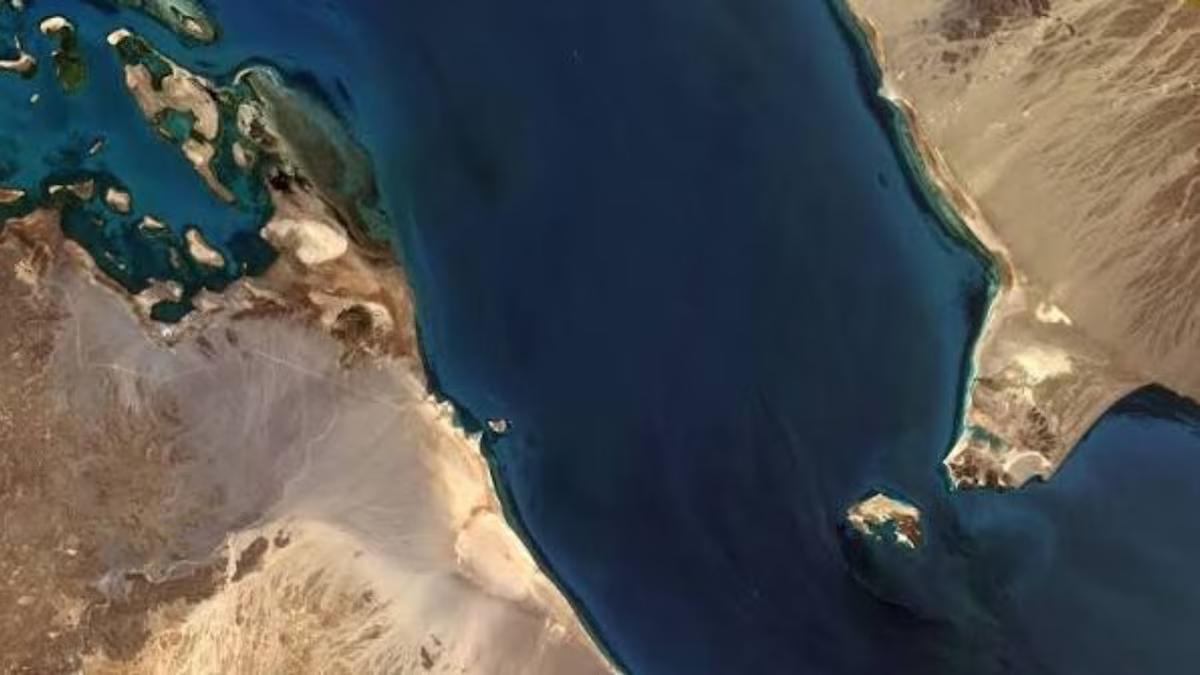
Yemen’s Houthi militia announced on Monday, July 20, that it is imposing an immediate “maritime embargo” on Saudi Arabia — an “eye for an eye,” in the words of military spokesman Yahya Saree — after a week of missile and drone exchanges that struck Sanaa’s international airport and Saudi Arabia’s Abha airport. The Houthis have not spelled out what the embargo actually involves, but the threat itself is significant: it raises the prospect of a second major chokepoint, the Bab al-Mandab Strait, being disrupted at the same time the Strait of Hormuz has been effectively shut for months by the US-Israel-Iran war.
Who are the Houthis?
The Houthis, officially known as Ansar Allah (“Partisans of God”), are an armed movement rooted in Yemen’s Zaydi branch of Shia Islam. They emerged in northern Yemen in the 1990s and fought a series of insurgencies against the Yemeni government before seizing the capital, Sanaa, in 2014.
Their takeover triggered a civil war that prompted a Saudi Arabia-led military intervention in 2015 in support of Yemen’s internationally recognised government. Although fighting has eased since a United Nations-brokered truce in 2022, the Houthis continue to control most of northern Yemen, including Sanaa, where the majority of the country’s population lives.
The group gained international attention after the Israel-Hamas war began in October 2023, when it launched missiles and drones towards Israel and began targeting commercial vessels in the Red Sea and the Gulf of Aden in what it said was support for Palestinians in Gaza. The attacks forced many global shipping companies to reroute vessels around Africa’s Cape of Good Hope, increasing transit times and freight costs.
What is Iran’s relationship with the Houthis?
Iran and the Houthis are both part of Tehran’s “Axis of Resistance,” alongside Hezbollah and Hamas. Western governments have long accused Tehran of supplying the Houthis with weapons, training and intelligence, allegations Iran has denied. Analysts generally view the Houthis as close allies rather than direct proxies, arguing that while the group receives Iranian support and shares many of Tehran’s regional objectives, it also pursues its own political and military agenda inside Yemen.
The relationship nevertheless gives Iran strategic influence along the Red Sea without requiring direct military involvement, making the Houthis an important part of Tehran’s regional security view.
Why does the embargo matter?
The maritime embargo raises concerns over shipping routes around the Arabian Peninsula, especially as the Houthis have previously demonstrated their ability to disrupt commercial maritime traffic. During the Gaza war, the group repeatedly attacked vessels in the Red Sea and the Gulf of Aden, forcing many shipping companies to reroute around the Cape of Good Hope instead of using the Suez Canal.
The latest threat could also affect Saudi Arabia’s western coast, including the Red Sea port of Yanbu, a key export terminal that has enabled Riyadh to ship millions of barrels of crude oil while avoiding the Strait of Hormuz during the Iran-United States conflict. Although the Houthis have not outlined how they intend to enforce the embargo, the announcement raises the risk of renewed attacks on commercial shipping and further escalation along one of the world’s busiest maritime corridors.
How its impacts India?
For India, any prolonged disruption could have economic consequences. India relies heavily on West Asian crude oil imports, while a large share of its exports to Europe transits through the Red Sea and the Suez Canal. Higher shipping insurance costs, longer voyage times and elevated freight rates could increase import costs, delay exports and add inflationary pressure if maritime tensions persist.