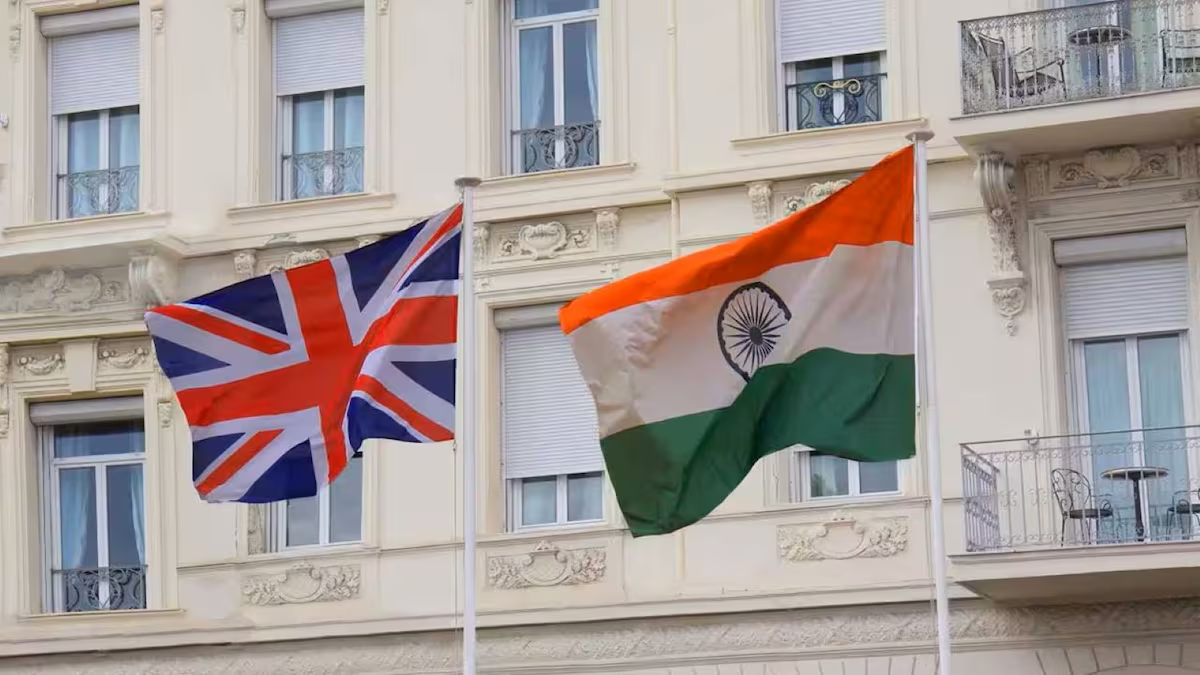
The India-UK Comprehensive Economic and Trade Agreement (CETA) is one of India’s most significant trade pacts in recent years. It aims to boost trade, simplify rules for businesses and improve the temporary movement of professionals. Together, the two countries expect the agreement to help increase bilateral trade from about $56 billion currently to nearly $100 billion by 2030.
Here’s what the agreement means, who stands to benefit and why it matters.
What is the India-UK CETA?
The Comprehensive Economic and Trade Agreement is a free trade agreement between India and the UK that lowers or removes tariffs on thousands of products, improves access to each other’s markets and simplifies trade rules for businesses.
Negotiations began in 2021 under then UK Prime Minister Boris Johnson, continued during Rishi Sunak’s tenure and were concluded under Prime Minister Keir Starmer. Britain views it as one of its biggest trade agreements since Brexit, while India secures improved access to one of Europe’s largest import markets.
Why is the UK an important market for India?
The UK is one of the world’s largest importing nations, yet India accounts for only a small share of its imports.
According to Jayant Krishna, former Global CEO of the UK India Business Council (UKIBC), the UK imported nearly $929 billion worth of goods last year, while India’s exports to Britain stood at only about $15.2 billion, representing just 1.6% of the UK’s total imports.
“The UK is a major importing country. Almost $929 billion worth of goods were imported by the UK last year, and India barely exported about $15.2 billion worth of goods to them, which is just about 1.6% of what the UK actually imports for its own consumption,” he told CNBC-TV18.
India’s market share also remains relatively low across several sectors where it is globally competitive. For instance:
- The UK imports around $21 billion worth of garments annually, but India accounts for only about 6%.
- Processed food imports are worth nearly $33 billion, with India’s share below 1%.
- The UK imports about $31 billion worth of pharmaceuticals, where India’s share is only around 3.2%.
- Chemicals worth roughly $36 billion are imported every year, while India’s share stands at about 2.6%.
- India’s presence in the UK’s auto component market also remains relatively modest.
These figures illustrate the untapped export opportunity that the trade agreement aims to unlock.
How will Indian exporters benefit?
The agreement provides duty-free access for 99% of Indian exports to the UK through phased tariff reductions.
Major beneficiaries include:
- Textiles and garments
- Leather products
- Engineering goods
- Chemicals
- Pharmaceuticals
- Marine products
- Auto components
Krishna believes this could significantly expand India’s presence in the UK market.
“I think this opens a floodgate of opportunities,” he said, adding that bilateral trade could eventually rise to “$100 billion or even $120 billion in a few years if this becomes fully operational.”
What changes for British cars entering India?
One of the most closely watched provisions relates to premium British automobiles.
India has agreed to reduce tariffs on a limited number of completely built-up British vehicles under a quota-based system over a long implementation period.
Electric vehicles, however, have been given greater protection. They remain outside the concessional tariff framework for the first five years before phased reductions begin, giving domestic EV manufacturers more time to expand before facing greater competition from imported premium electric vehicles.
Anant Swarup, Secretary General of FICCI and former Additional Commerce Secretary, said the agreement strikes a balance between opening markets and protecting domestic interests.
“In every FTA there has to be give and take. You cannot only export and say that you will not import. However, this FTA has a very good balance between the gives and the takes,” he said.
He added that Indian auto component manufacturers are also expected to benefit from improved access to the UK market.
Will Scotch whisky become cheaper?
Yes, but gradually.
Scotch whisky currently attracts a 150% customs duty in India. Under the agreement, this will immediately fall to 75% before being reduced in stages to 40% over the next decade.
However, consumers should not expect retail prices to fall by the same proportion. Besides customs duty, the final price of imported whisky also includes state excise duties, distributor margins and other taxes, meaning price reductions are likely to be gradual rather than dramatic.
Swarup said Scotch largely caters to the premium end of the market and is therefore unlikely to significantly affect India’s broader alcoholic beverages industry.
Why are tariffs only part of the story?
Lower tariffs make products more competitive, but they are only one part of international trade.
Exporters must also comply with product standards, certification requirements, customs procedures and regulatory rules before goods can enter overseas markets.
Krishna believes these non-tariff barriers will play a major role in determining how much Indian businesses ultimately benefit.
“Tariff rationalisation and reductions are important, but they are not everything. A lot of non-tariff barriers also need to be looked at very seriously,” he said.
He also highlighted the UK’s Carbon Border Adjustment Mechanism (CBAM), which could increase costs for certain carbon-intensive imports and will require continued discussions between the two countries.
How do the new rules of origin help businesses?
Rules of origin determine whether a product qualifies for preferential tariff treatment under a trade agreement.
Unlike many earlier FTAs that relied largely on standard value-addition rules, the India-UK agreement introduces product-specific rules of origin and allows exporters to self-certify compliance.
Swarup described this as a significant improvement.
“It is a trust-based approach that this FTA has adopted, and it will facilitate better FTA utilisation from the Indian side,” he said.
Simpler compliance requirements are expected to help more exporters, particularly small and medium-sized businesses, use the agreement.
What does the agreement mean for Indian professionals?
The agreement also makes it easier for business visitors, contractual service providers and certain professionals to work temporarily in the UK.
It also includes a social security arrangement under which around 75,000 Indian workers on short-term assignments in the UK will not have to pay UK social security contributions for up to three years. This prevents employees and employers from making social security payments in both countries during temporary assignments, reducing costs for Indian companies sending professionals overseas.
Swarup emphasised that this is about facilitating temporary business mobility rather than immigration.
“FTAs talk about the mobility of professionals, not immigration,” he said.
He added that ageing populations in many developed economies continue to create demand for skilled professionals, particularly in healthcare and elderly care services.
Will implementation be straightforward?
Not entirely.
As with any major trade agreement, businesses and government agencies will need time to adapt to the new rules.
Krishna said exporters are generally well equipped to understand tariff schedules and compliance requirements. The bigger challenge, he argued, is ensuring customs authorities and officials responsible for implementing the agreement receive adequate training so that businesses do not face unnecessary procedural delays.
Who stands to benefit the most?
The biggest winners are expected to be Indian exporters in sectors such as textiles, engineering goods, pharmaceuticals, chemicals, leather products and auto components, all of which gain improved access to the UK market.
Consumers in India could also benefit over time as tariffs on premium British products—including Scotch whisky, luxury cars, chocolates, cosmetics, fashion products and certain medical devices—are reduced in phases.
Some domestic industries, particularly in premium automobiles and imported spirits, may face greater competition over the long term. However, the phased tariff reductions and quota-based approach are intended to give Indian manufacturers time to adjust.
The bottom line
Cheaper Scotch whisky and luxury British cars may grab the headlines, but they are only a small part of the story.
The real significance of the India-UK trade agreement lies in the opportunity it creates for Indian exporters. By giving almost all Indian goods preferential access to one of the world’s largest consumer markets, the pact has the potential to expand exports, deepen economic ties and reshape bilateral trade over the next decade.
Whether it achieves the ambitious goal of lifting trade towards $100 billion by 2030 will depend not only on lower tariffs, but also on how effectively businesses navigate product standards, regulatory requirements and the practical implementation of the agreement.