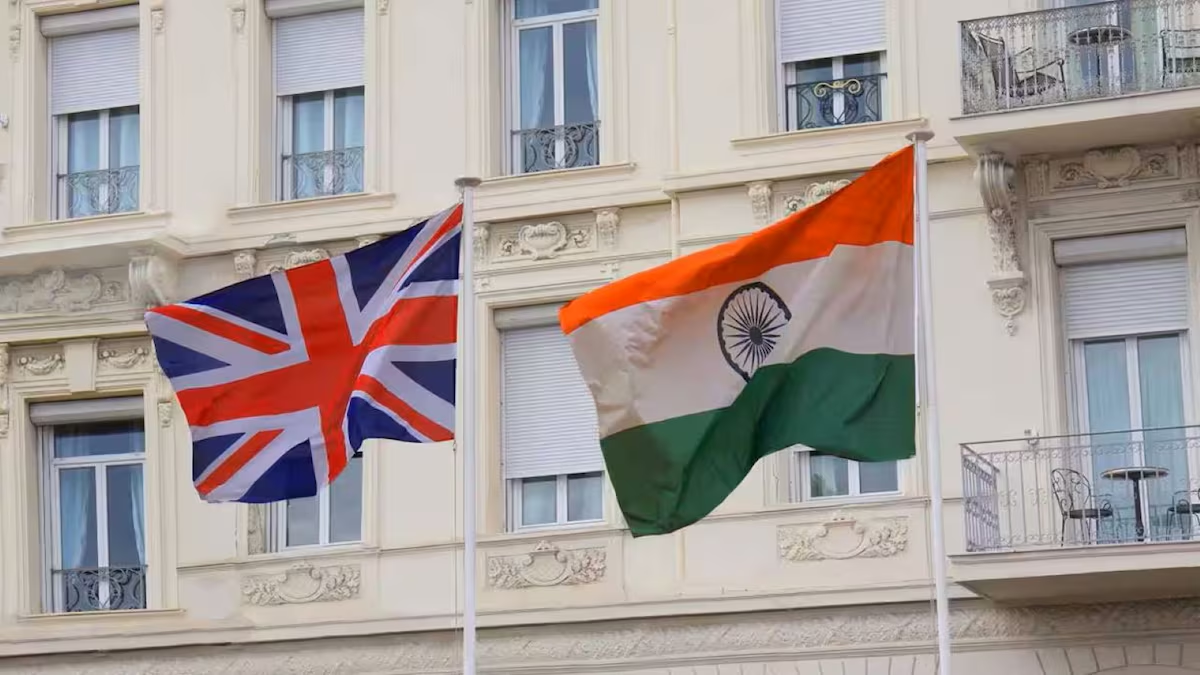
For India, the deal opens duty-free access for almost all exports to the UK, giving sectors such as textiles, footwear, engineering goods and gems and jewellery an opportunity to become more competitive. For the UK, it provides greater access to one of the world’s fastest-growing consumer markets through lower tariffs on a range of products.
So, what does the agreement actually change, and who stands to benefit the most?
Why is the India-UK FTA significant?
The agreement is one of India’s most comprehensive bilateral trade deals in recent years. It reduces the average tariff on UK exports to India from 15% to 3%, while 99% of Indian exports will now enjoy zero-duty access to the UK market.
The two governments expect the agreement to significantly increase bilateral trade over the coming years. It also comes at a time when many major economies are raising trade barriers, making the deal an important signal in favour of freer trade.
William Bain, Head of Trade Policy at the British Chambers of Commerce (BCC), believes the agreement could substantially increase trade between the two countries.
“The scope and potential of this exciting agreement is that we can raise our bilateral trade between the UK and India by around 22%.”
He also described the agreement as an important statement at a time when global trade has become increasingly protectionist.
“In a world where we’ve seen tariffs go up in the last 18 months, having a big statement from two of the world’s largest economies that tariffs can come down and trade can go up is an important statement to the world.”
How does an FTA actually work?
A Free Trade Agreement reduces or removes customs duties on goods traded between participating countries. Lower tariffs make imported products cheaper and improve the competitiveness of exporters by reducing the cost of selling into overseas markets.
However, lower tariffs are not automatic. Businesses must comply with rules of origin, certification requirements and customs documentation to qualify for preferential treatment.
Rules of origin are particularly important because they determine whether a product qualifies as being sufficiently manufactured in India or the UK to receive the lower tariff. Companies must demonstrate that their products meet these requirements before claiming FTA benefits.
Why are textiles and footwear among the biggest winners?
Labour-intensive industries are expected to benefit the most from the agreement.
Indian exporters have long competed with manufacturers in Bangladesh, Vietnam and China in the UK market. With tariffs on most Indian exports now eliminated, Indian manufacturers are expected to become more competitive on pricing, helping them win a larger share of the market.
The agreement is particularly significant because the UK does not have a free trade agreement with China, giving Indian exporters an additional competitive advantage.
Puneet Kaura, Chairman of CII Northern Region, believes the agreement could strengthen India’s export-oriented manufacturing industries.
“This India-UK FTA will create that differentiator, that kind of enabler for our textile sector and similar sectors where a lot of labour can benefit from the agreement.”
Besides textiles and apparel, footwear, leather products, engineering goods and gems and jewellery are also expected to benefit from duty-free access. Industry estimates suggest India’s gems and jewellery exports to the UK could double over the next two to three years as lower tariffs improve price competitiveness.
What changes for luxury cars?
Automobiles are among the most closely watched parts of the agreement because India has, for the first time, agreed to reduce duties on fully built-up imported cars under a free trade agreement.
The reductions will happen gradually and apply only within agreed import quotas. This means only a limited number of eligible vehicles can enter India at the lower tariff each year, allowing domestic manufacturers time to adjust while gradually opening the market.
As tariffs fall in phases, British luxury brands such as Aston Martin, Bentley, Jaguar Land Rover, McLaren and Rolls-Royce are expected to become more affordable for Indian buyers.
The agreement could also boost trade beyond finished vehicles. Jaguar Land Rover already assembles vehicles in India using imported kits, and lower trade barriers are expected to encourage higher exports of vehicle kits and components. Future tariff reductions on electric vehicles and EV components could further strengthen trade in the automotive sector.
According to Bain, UK automotive exports to India could increase by more than 300% over the long term under the agreement.
Why is everyone talking about Scotch whisky?
Scotch whisky has emerged as one of the most visible beneficiaries of the agreement because India is already the world’s largest market for Scotch by volume.
The current 150% import duty will be reduced in stages to 75% initially before eventually falling to 40% over the next decade. Lower duties are expected to make premium Scotch more affordable for Indian consumers while giving UK distillers greater access to a rapidly growing market.
Bain said producers had already begun preparing for stronger demand even before the agreement formally took effect.
“India is now the largest export market in the world for Scotch and gin.”
How will Indian SMEs benefit?
Although large exporters are likely to benefit first, the agreement could also create new opportunities for thousands of small and medium enterprises (SMEs).
Many SMEs already manufacture products for export but have lacked the pricing advantage needed to compete effectively in developed markets. Lower tariffs could improve their competitiveness, particularly in labour-intensive sectors.
However, businesses will also need to understand the agreement’s compliance requirements. Companies must maintain proper documentation and satisfy rules of origin before they can claim preferential tariff treatment.
Industry bodies such as the Confederation of Indian Industry (CII) are already helping businesses understand these requirements so that more companies can benefit from the agreement.
Are tariffs the whole story?
Not quite.
Lower tariffs make exports more competitive, but they are only one part of international trade. Businesses must also navigate product standards, customs procedures, certification requirements and regulatory approvals before goods can enter overseas markets.
These non-tariff barriers often determine how easily companies can access foreign markets. Exporters that understand regulatory requirements and build efficient compliance systems are likely to gain the greatest advantage from the FTA.
The bottom line
The India-UK Free Trade Agreement is about far more than cheaper luxury cars or lower-priced Scotch whisky. It gives Indian exporters preferential access to one of the world’s largest developed markets while creating new opportunities across manufacturing, consumer goods and services.
Its biggest long-term impact is likely to be felt in labour-intensive industries such as textiles, footwear, leather products, engineering goods and gems and jewellery, where lower tariffs can improve India’s competitiveness against rival exporting nations.
At the same time, businesses will need to look beyond tariff reductions. Understanding rules of origin, meeting regulatory standards and navigating non-tariff barriers will ultimately determine how much they benefit from the agreement. For companies that are prepared, the FTA has the potential to reshape India-UK trade for years to come.