The Lagos State Government has begun another effort to ensure that assistance reaches the most vulnerable residents by strengthening how Ministries, Departments and Agencies (MDAs) plan and deliver social protection programmes.
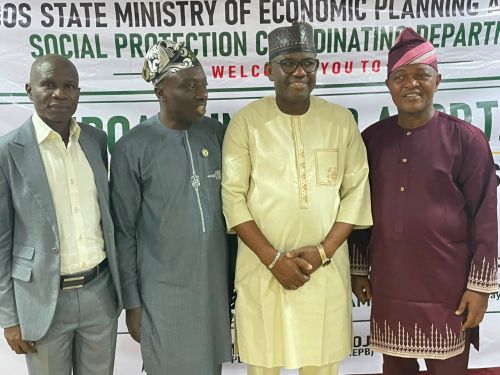
The Permanent Secretary, Ministry of Economic Planning and Budget, Olayinka Ojo stated this at the Social Protection Policy Measures Onboarding and Adoption Workshop, organised by the Social Protection Coordinating Department at the weekend.
She said the initiative would help government agencies integrate social protection principles and global best practices into their programmes.
The workshop engaged Focal Persons from MDAs, Local Government LASOCU Coordinators and development partners, held at LCCI in Alausa, Ikeja.
Represented by Director, Monitoring and Evaluation Department, Fouad Oyede, she said the workshop is designed to deepen participants’ understanding of the State’s approved Social Protection Policy Measures while equipping them with practical skills to design and implement interventions that reduce poverty, protect vulnerable residents and promote social inclusion.
She stressed that the success of social protection depends on collaboration among government agencies, improved targeting and accountability to ensure that support gets to those who need it most.
“Our interventions will only be effective when we work together, improve our targeting and ensure that government support reaches the most vulnerable members of society,” she said.
Ojo urged participants to see the workshop as more than a routine training exercise, describing it as another important step towards building a more coordinated, inclusive and resilient social protection system in Lagos State.
In his goodwill message, Director of the Social Protection Coordinating Department, Yusuf Semiu, acknowledged the progress made so far but noted that more work lies ahead in aligning Lagos’ social protection programmes with global standards.
He challenged representatives of participating MDAs to assess the impact of their programmes by asking critical questions: Are interventions improving access to education? Are communities becoming more resilient to economic shocks and climate-related emergencies such as flooding? Are government programmes inclusive and gender-responsive?
According to him, answering these questions will help shape the next phase of the State’s social protection policy, which is due for review after completing its current five-year cycle.
Also speaking, Director of the Lagos Bureau of Statistics, Temitayo Oseni-Ope, described social protection as one of the pillars of sustainable development, alongside education, healthcare and economic growth.
He encouraged implementing agencies to take ownership of the initiative and maximise the State’s Single Social Register to identify and support residents who require government assistance.
For many Lagos residents facing economic hardship, these policy conversations represent more than government meetings. They are the foundation for programmes that can provide food, education, healthcare, livelihoods and protection during difficult times.
As the workshop continues, the State Government says its ultimate goal remains ensuring that no vulnerable resident is left behind and that social protection becomes a practical tool for improving lives across Lagos.