Two U.S.-based advocacy groups sued the Trump administration Wednesday, accusing it of using sanctions against the International Criminal Court to muzzle Americans who want to support the court’s investigations.
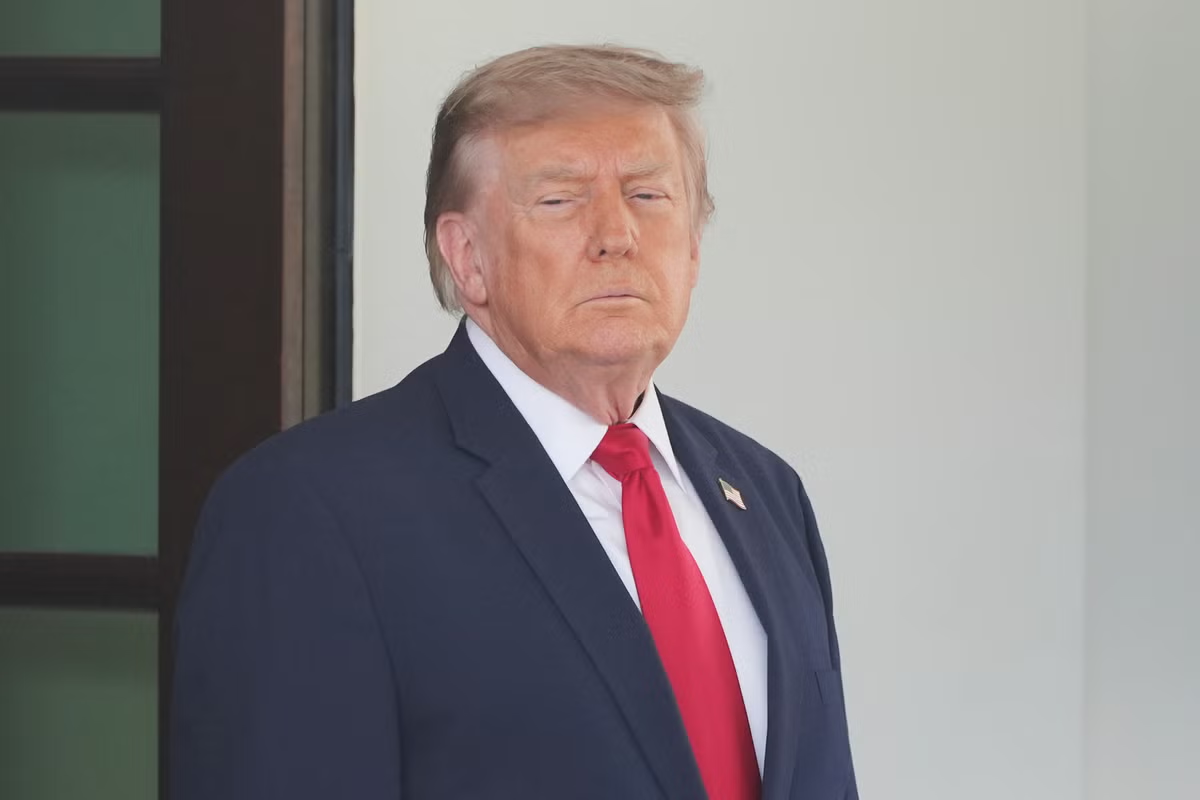
The lawsuit, filed in federal court in New York, challenges President Donald Trump’s February 2025 executive order targeting ICC judges, prosecutors and others who assist the Hague-based tribunal.
Democracy for the Arab World Now and the Taxpayer Alliance Against Genocide argue the sanctions violate the First Amendment by threatening Americans with fines or prison if they communicate or coordinate with people placed under U.S. restrictions.
The legal clash comes days after the administration launched a fresh diplomatic offensive against the ICC, calling the court a threat to U.S. sovereignty and promising broader sanctions and travel bans against its staff.
Trump and other U.S. officials have long rejected the ICC’s authority to investigate Americans, particularly military personnel. The latest campaign has also focused on the court’s actions involving Israel, drawing criticism from European allies.
According to the complaint, the two groups have avoided submitting material to the ICC and working with sanctioned advocates because they fear prosecution. Those affected include Francesca Albanese, the United Nations special rapporteur on the Palestinian territories.
“The Trump administration is using the blunt instrument of economic sanctions not only to punish human rights defenders but to police the political expression of millions of Americans,” Omar Shakir, executive director of Democracy for the Arab World Now, said in a statement.
The groups are asking a judge to block enforcement of Trump’s order.
The administration imposed sanctions after the ICC issued an arrest warrant for Israeli Prime Minister Benjamin Netanyahu, a close Trump ally. The warrant concerns alleged crimes during the war in Gaza. Israel has rejected the accusations.
Three ICC judges have filed a separate lawsuit challenging the sanctions.
Trump pursued a similar policy during his first term. A federal judge blocked parts of a 2020 executive order after finding it likely violated the First Amendment. President Joe Biden revoked that order in 2021.
The ICC opened an investigation into Afghanistan in 2020 that included possible crimes by U.S. troops. Since 2021, however, prosecutors have deprioritized that part of the inquiry and focused on alleged crimes committed by Taliban and former Afghan government forces. The court has taken no recent steps to investigate U.S. personnel.
European officials rallied behind the ICC this week.
The European Union said threats against the court, its staff or those who cooperate with it were unacceptable and rejected the administration’s claim that the tribunal threatens national sovereignty.
The Netherlands, which hosts the ICC, also expressed concern over Washington’s increasingly combative language.
“We have noted the U.S. statements,” the Dutch Foreign Ministry said. “The position is not a new one, but we are worried about the hardened tone.”