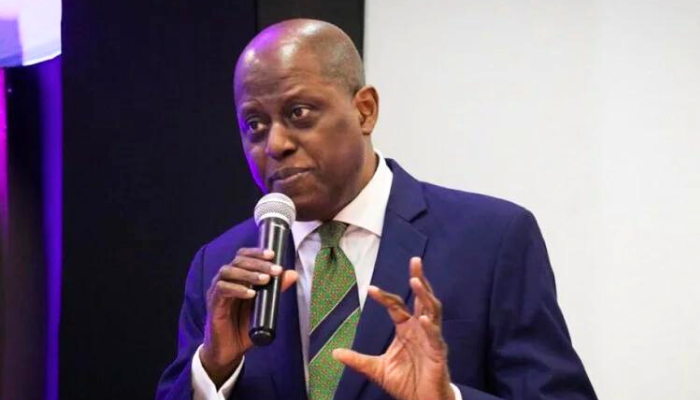
The Governor of the Central Bank of Nigeria, Olayemi Cardoso, has said the country’s external reserves, which have climbed above $52 billion, are being strategically built to shield the economy from external shocks and excessive exchange rate volatility rather than to finance routine government spending or meet daily foreign exchange demand.
Cardoso said the reserves had strengthened Nigeria’s ability to withstand global economic uncertainties while boosting investors’ confidence in the country’s capacity to meet its external obligations.
Speaking at the BusinessDay CEO Forum in Lagos, the CBN governor explained that the apex bank’s reserve accumulation strategy was designed to ensure long-term stability in the foreign exchange market rather than sustain continuous intervention.
According to him, Nigeria’s gross external reserves rose to more than $52 billion as of July 15, 2026, while net reserves increased significantly from about $3 billion at the inception of the current CBN leadership to over $40 billion.
He noted that the improved reserve position had enhanced the country’s resilience against unexpected external shocks capable of destabilising the naira.
Cardoso dismissed suggestions that the reserves should be routinely deployed to satisfy foreign exchange demand, stressing that such an approach would weaken the country’s financial buffer.
He explained that in a properly functioning foreign exchange market, buyers and sellers should obtain foreign currency through market forces without relying on the Central Bank as the primary supplier of dollars.
“The reserves are meant for exceptional circumstances, particularly when external shocks threaten market stability, not for routine intervention,” he said.
Cardoso added that the unification of multiple exchange-rate windows, improved market liquidity and the narrowing gap between official and parallel market rates had reduced the need for constant intervention by the apex bank.
He warned that using external reserves to defend an artificial exchange rate or meet regular market demand could provide only temporary relief while exposing the economy to greater risks.
According to him, once market participants lose confidence in the CBN’s ability to sustain such interventions, pressure on the naira could intensify.
He said preserving the reserves allows the apex bank to intervene only when excessive volatility threatens financial stability without distorting normal market operations.
The CBN governor attributed the improvement in the reserve position to ongoing foreign exchange reforms, which he said had restored confidence in the market.
He also highlighted efforts to boost foreign currency inflows through diaspora remittances and other sustainable sources.
According to Cardoso, monthly diaspora remittances have exceeded $600 million, with the CBN projecting inflows to rise to about $1 billion monthly by the end of 2026.
He said the bank would continue to strengthen the reserve position through recurring inflows rather than temporary funding measures.
Cardoso further disclosed that Nigeria’s current reserves provide an estimated 10 months of import cover, describing the development as a strong indicator of improved external sector stability.
He, however, clarified that higher reserves do not imply the CBN would maintain a fixed exchange rate or prevent the naira from responding to market forces.
“The value of the reserves lies in giving the Bank sufficient room to manage disruptions while allowing the foreign exchange market to determine prices under normal conditions,” he said.
He stressed that sustaining the gains would require a transparent and efficient foreign exchange market where businesses and investors can access foreign currency through market-based transactions instead of administrative allocation.