By Daniel Oluwatobiloba Popoola
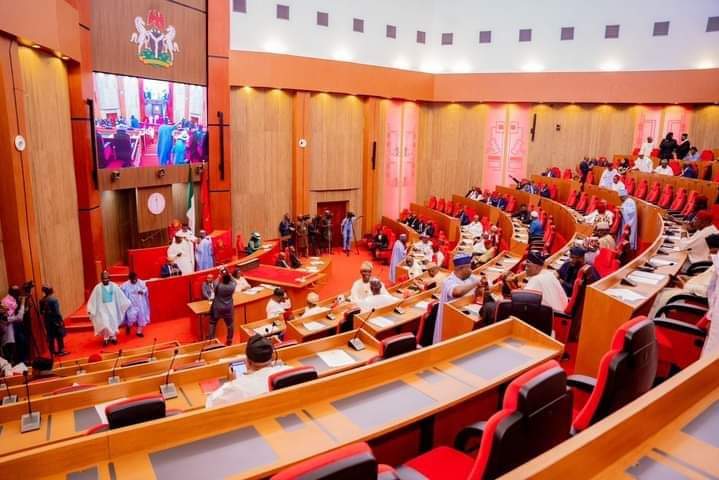
The Senate has expanded the scope of its ongoing investigation into the Safe Schools Initiative to include the Tertiary Education Trust Fund (TETFund), the Nigerian Education Loan Fund (NELFUND), the Universal Basic Education Commission (UBEC), the Federal Ministry of Humanitarian Affairs and Poverty Alleviation, and the National Social Investment Programme Agency (NSIPA), while extending the lifespan of the ad hoc committee handling the probe by three weeks.
The resolution was adopted on Tuesday, 21 July, 2026 during plenary following a motion moved by the Chairman of the Senate Ad hoc Committee on the Safe Schools Initiative, Senator Orji Uzor Kalu (APC, Abia North). Kalu, relying on Orders 41 and 51 of the Senate Standing Orders, 2026 (as amended), sought the expansion of the committee’s terms of reference and additional time to conclude its assignment.
The Senate said the decision would enable a comprehensive investigation into the funding, implementation and accountability of education and social intervention programmes linked to the safety and welfare of students across the country.
Presenting the motion, Kalu informed lawmakers that preliminary findings had established strong connections between the Safe Schools Initiative and several government agencies responsible for educational funding, student welfare, humanitarian interventions and social investment programmes.
He explained that restricting the investigation to the Safe Schools Initiative alone would prevent the Senate from carrying out a holistic assessment of issues affecting school security and educational interventions nationwide.
According to him, student safety, educational infrastructure funding and social intervention programmes targeted at vulnerable learners are closely interconnected, making it necessary for the committee to examine all relevant institutions before arriving at its conclusions.
Kalu further stated that expanding the committee’s mandate would enable the Senate to produce a comprehensive report capable of strengthening accountability, improving transparency in the management of intervention funds and enhancing the protection of students across the country.
Under the expanded terms of reference, the committee will examine financial disbursements, operational challenges and accountability mechanisms within the Safe Schools Initiative and the affected agencies.
The panel is also expected to review social safety net allocations connected to school feeding programmes, emergency interventions for displaced students and educational rehabilitation initiatives implemented through the Federal Ministry of Humanitarian Affairs and Poverty Alleviation and the National Social Investment Programme Agency.
In addition, the committee will audit infrastructure and security-related intervention projects financed by TETFund in tertiary institutions, assess NELFUND’s loan disbursement process, operational readiness, administrative efficiency and students’ access to education loans, as well as evaluate UBEC’s interventions in basic education.
Seeking the Senate’s approval for an extension, Kalu said the committee required additional time because some critical aspects of the investigation remained incomplete due to the extensive workload and other legislative responsibilities.
Following a voice vote conducted by Senate President Godswill Akpabio, lawmakers unanimously approved the request, granting the committee an additional three weeks to complete its assignment and submit its report.
The Senate inaugurated the ad hoc committee in December 2025 following growing concerns over persistent attacks on schools despite years of government funding and policy interventions aimed at protecting educational institutions.
The investigation gained further momentum after the abduction of 25 female students of Government Girls Comprehensive Secondary School, Maga, in Kebbi State, during which bandits reportedly killed the school’s Vice Principal, raising fresh concerns over the safety of students and teachers in vulnerable communities.
The Safe Schools Initiative was established in May 2014 following the abduction of 276 schoolgirls from Chibok, Borno State. The programme, created through a partnership involving the Federal Government, the United Nations and private sector stakeholders, was designed to strengthen security infrastructure around schools, particularly in conflict-affected areas.
The Senate’s investigation has already raised concerns over the utilisation of funds allocated to the initiative.
During earlier public hearings, the committee examined the disbursement of the N15 billion released for the programme in 2023, with the Nigerian Police Force receiving the highest allocation of N6.225 billion.
Other allocations reviewed by the panel include N3.362 billion released to the Nigeria Security and Civil Defence Corps, N2.250 billion to Defence Headquarters and N519 million to the Federal Ministry of Education, while the amount released to the Department of State Services was not publicly disclosed.
The committee also queried alleged financial irregularities and consultancy payments under the programme and directed the Safe Schools Financing Office to submit a reconciled breakdown of all funds released, expenditures, contractors and supporting documents relating to the Central Bank of Nigeria Trust Fund account.