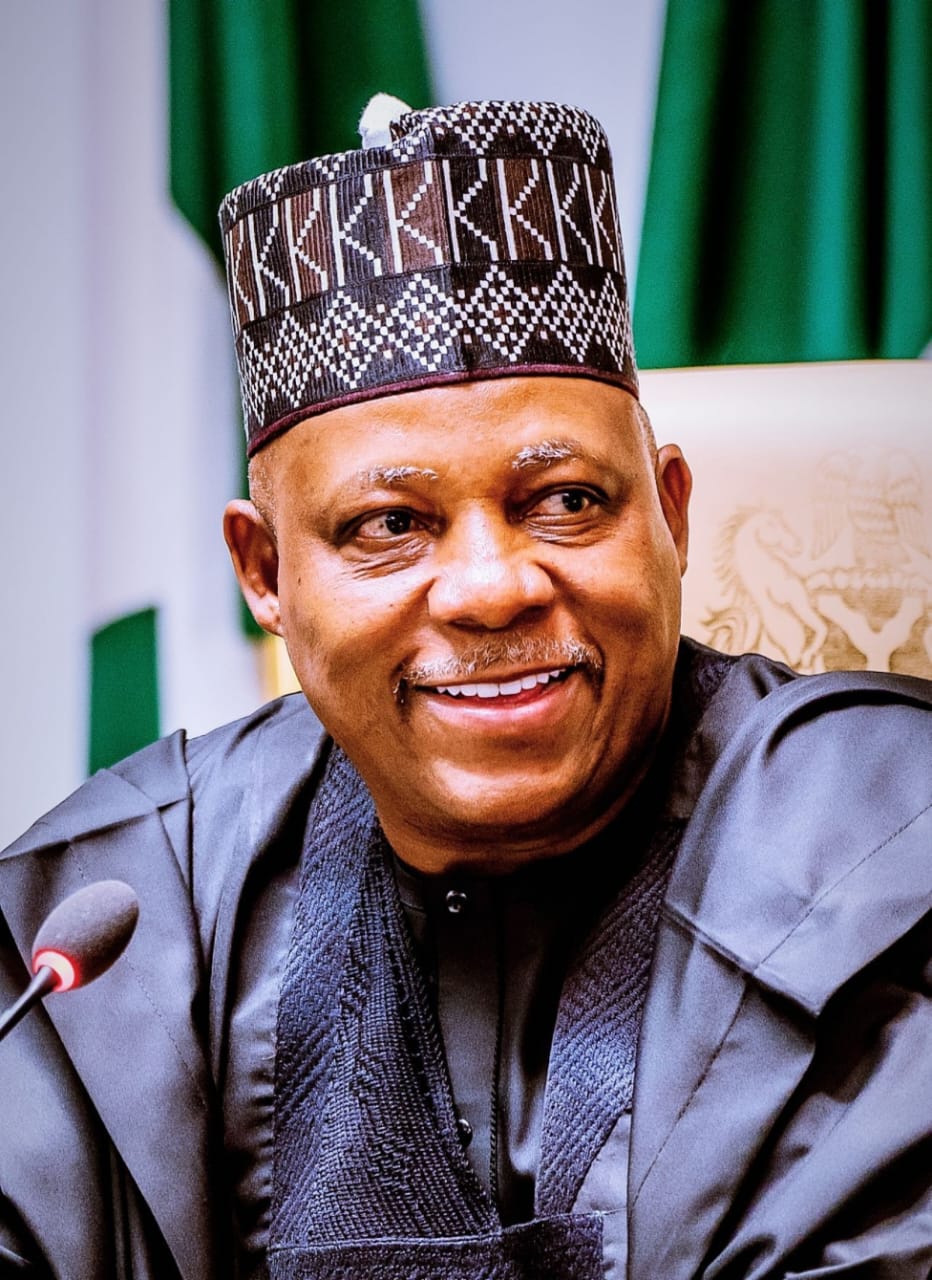
Vice President Kashim Shettima has disclosed that procurement reforms saved the nation over N1.1 trillion .
The vice president made the disclosure on Friday in his keynote address as the special guest of honour at the Office of the Head of the Civil Service of the Federation (OHCSF)-Bureau of Public Procurement (BPP) Permanent Secretaries Retreat held in Ikot Ekpene, Akwa Ibom State. The retreat with the theme “Strengthening Procurement Leadership and Accountability for Effective Budget Execution and National Development” will end on July 12, 2026.
Shettima whose speech was delivered by his representative, the Chairman, Federal Civil Service Commission , Prof. Tunji Olaopa, said that ongoing transformation at the BPP remains one of the most important institutional reforms in the government national development agenda.
He stated that so, far, 23 strategic initiatives and reforms aimed at improving transparency, accountability, and fiscal discipline in Nigeria have been introduced. And as at the last count, some of the reforms saved the federal government over ₦1.1 trillion in 2025 alone.
He listed some of these reforms as threshold adjustments, which allow contracts below ₦5 billion for goods/services and ₦10 billion for works to be managed by ministerial tender boards rather than the Federal Executive Council; local empowerment that is aimed at the implementation of the Nigeria First Policy, which prioritises locally made goods and services that meet international standards; and institutional expansion which is the approval of seven new zonal offices with a view to deepening compliance enforcement across the country.
According to him , public procurement occupies a central place in the nation’s life as it accounts for a substantial proportion of public expenditure.
” Every road constructed, every hospital equipped, every school rehabilitated, every agricultural intervention implemented and every digital platform deployed passes through the procurement process. Therefore, the reforms reinforce the Federal Government’s commitment to fiscal discipline, transparency, and value for money under the Renewed Hope Agenda. Our administration will follow through these reforms religiously and ensure that all MDAs comply”, he said.
Thus, for him the government will not shy away from applying appropriate sanctions to defaulters, including prosecuting anyone who runs foul of the law.
To him , procurement is no longer simply an administrative or compliance function. It is a strategic instrument for economic growth, a driver of industrial development, a tool for promoting local content, an enabler of infrastructure delivery, a mechanism for ensuring value for money, and above all, it is an instrument of public trust.
He said: “When procurement works well, government delivers. When procurement fails, development suffers. The challenge before us, therefore, is not merely compliance with procurement procedures but strengthening procurement leadership.
“Leadership means ensuring that procurement planning begins early and aligns with approved budgets. Leadership means insisting on professionalism throughout the procurement cycle. Leadership means resisting undue influence, protecting institutional integrity and making decisions solely in the public interest. Leadership means ensuring that contracts are completed on schedule, within cost and according to specification.
” Leadership means building institutions that outlive individuals.”
Noting what he identified as an irreplaceable responsibility of permanent secretaries, he said that ss accounting officers they are the custodians of financial discipline within their Ministries and Agencies. They are responsible not only for ensuring compliance with the Public Procurement Act and extant Financial Regulations but also for creating institutional cultures that reward transparency, professionalism and ethical conduct.
Noting weak procurement planning as one of the greatest obstacles to effective budget implementation, Shettima said that far too often, procurement activities commence long after budgets have been approved, thereby making project designs remain incomplete, needs assessments inadequate, and market intelligence insufficient.
“All these delays compress implementation timelines, increase project costs and ultimately reduce the developmental impact of public expenditure”, he said.
Thus, for him, improving budget performance requires procurement to move from being reactive to becoming strategic. It requires stronger collaboration between finance, planning, procurement and technical departments. It requires greater use of data, technology and evidence in procurement decision-making. It also requires stronger contract management to ensure that government receives full value for every naira spent.
Technology in procurement, according to the vice president, offers enormous opportunities such as electronic document management, integrated financial management platforms and data analytics that can significantly improve transparency, reduce processing time, minimise human discretion and strengthen public confidence.
He said that Nigeria must continue to embrace these innovations as part of the government broader public sector modernisation agenda.
However, he stated that institutional reforms succeed only when they are driven by values as Integrity remains the most valuable asset in public administration.
To him, no amount of technology can substitute for ethical leadership. No legal framework can replace personal accountability. No reform programme can succeed without leaders who consistently place national interest above personal interest.
Shettima commended
the Head of the Civil Service of the Federation, Mrs. Didi Esther Walson-Jack and the Director-General of the BPP Dr. Adebowale A. Adetokun for their foresight in convening the strategic gathering. He also acknowledged the dedication of all permanent secretaries who continue to provide administrative leadership across Ministries and Extra Ministerial Departments and Agencies of Government.