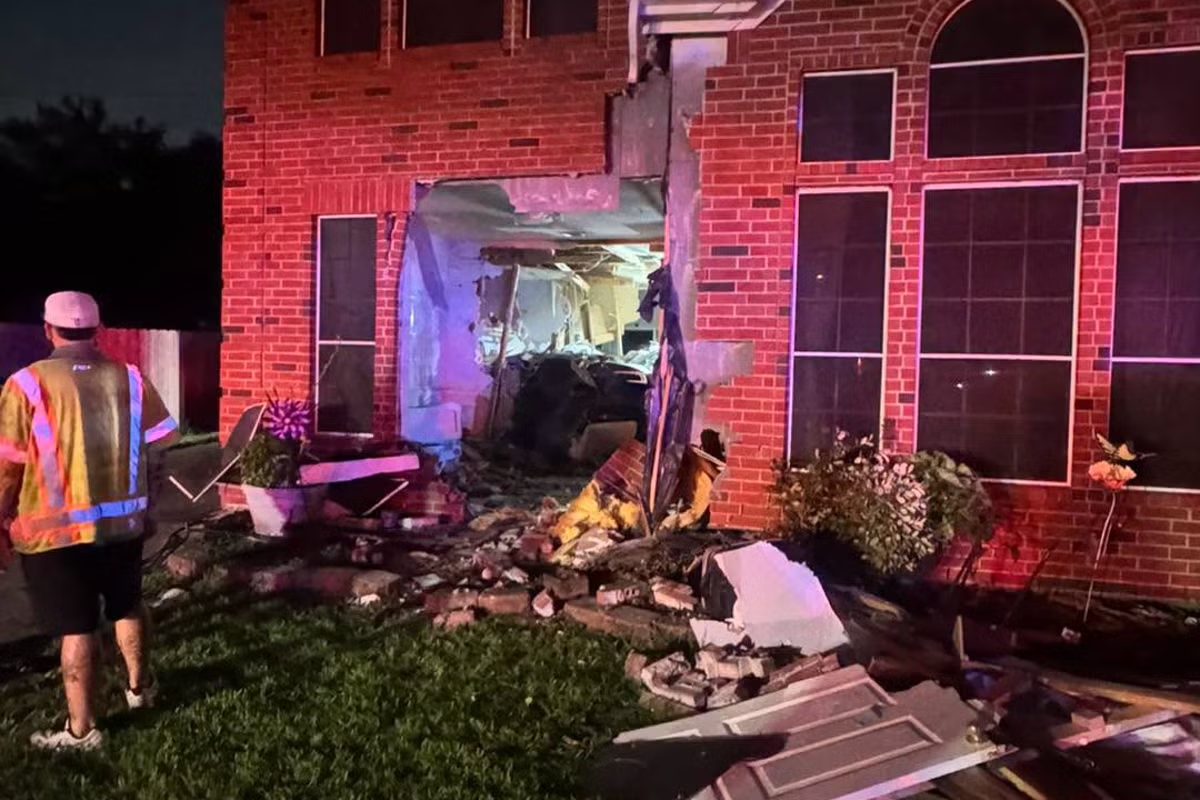
The driver of a Tesla Model 3 that crashed into a Texas home at more than 70 mph, killing a 76-year-old woman, had overridden the vehicle’s Full Self-Driving system moments before impact, federal investigators said Wednesday.
A preliminary report from the National Transportation Safety Board found the 44-year-old driver had activated Tesla’s Full Self-Driving (Supervised) system but then manually overrode it by fully depressing the accelerator before the June crash in Katy, Texas.
Electronic data recovered from the 2025 Model 3 showed the car was traveling faster than 70 mph on a residential street with a 30 mph speed limit when it slammed into the home.
The findings bolster Tesla’s position that the driver’s actions, rather than the driver-assistance system, caused the crash.
Martha Avila, 76, died from her injuries after the car tore through the front wall of her home. Her daughter, Jennifer Barbour, and son-in-law, Justin Barbour, previously said the driver, Michael Butler, told investigators he had engaged Autopilot before the crash.
The NTSB’s findings also align with comments made last month by Tesla’s vice president of AI software, Ashok Elluswamy, who said the driver “manually overrode self-driving by pressing the accelerator all the way to 100%.”
The National Highway Traffic Safety Administration is conducting a separate investigation into the crash.
Federal regulators have closely scrutinized Tesla’s driver-assistance technology for years. Since 2016, NHTSA has opened nearly 50 special investigations into Tesla crashes believed to involve Autopilot or Full Self-Driving systems, including incidents linked to about two dozen deaths.
In March, the agency expanded an investigation covering 3.2 million Tesla vehicles equipped with Full Self-Driving over concerns the system may fail to adequately detect hazards or warn drivers in poor visibility.
Tesla says Autopilot can steer, accelerate and brake within a lane, while Full Self-Driving can perform more advanced tasks such as obeying traffic signals and changing lanes. The company says both systems require a fully attentive driver with hands on the wheel and do not make its vehicles autonomous.