By MK Ibrahim
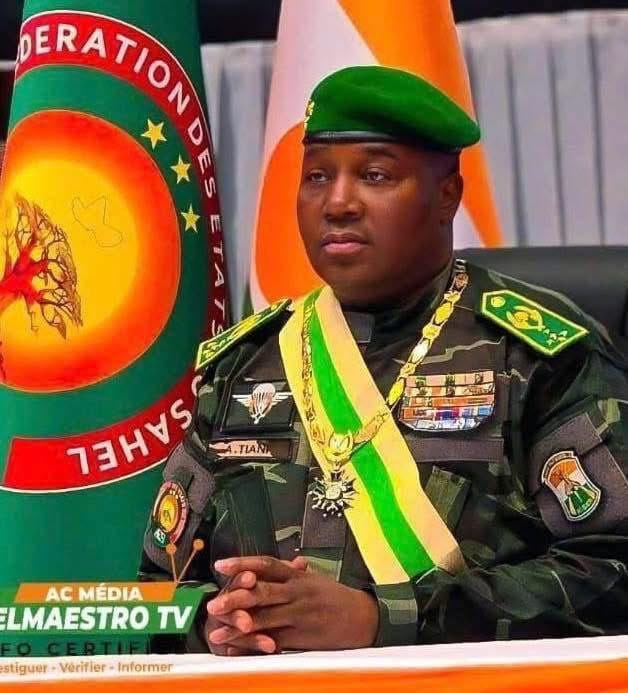
Three years ago, on July 26, 2023, soldiers led by General Abdourahamane Tchiani overthrew the democratically elected government of President Mohammed Bazoum, plunging Niger into its deepest policy crisis in decades. The coup not only ended one of the Sahel’s few remaining constitutional governments but also triggered an unprecedented confrontation with the Economic Community of West African States (ECOWAS), testing the regional bloc’s commitment to its zero tolerance policy against unconstitutional changes of government.
ECOWAS responded swiftly. Niger was suspended from the regional body, member states were directed to close their borders with the country, and President Bazoum’s immediate release and reinstatement were demanded. Nigeria, under President Bola Ahmed Tinubu, also halted electricity export to Niger as part of the sanctions regime. At a subsequent summit, ECOWAS warned that it could deploy its standby force if constitutional order was not restored.
Three years on, Bazoum remains out of office, the military authorities remain in control, Niger has withdrawn from ECOWAS alongside Mali and Burkina Faso, and the regional order envisioned by the bloc in 2023 has been fundamentally altered. The anniversary, therefore, offers an opportunity to assess not only the collapse of constitutional rule in Niger but also the limits of ECOWAS’s capacity to defend democratic governance in West Africa.
ECOWAS, under the chairmanship of President Bola Ahmed Tinubu, ultimately did not follow through on its threat to deploy the regional standby force to restore constitutional order in Niger. The inability of the ECOWAS standby force to intervene enabled General Abdourahamane Tchiani to consolidate his hold on power, while the sanctions regime gradually weakened. Within months, amid growing domestic pressure and concerns over the humanitarian and economic consequences of the sanctions, Nigeria restored electricity exports to Niger.
Determined to entrench military rule, Niger, Mali and Burkina Faso subsequently announced their withdrawal from ECOWAS and formalized the Alliance of Sahel States (AES), marking one of the most significant realignments in West Africa’s regional politics.
Although the ECOWAS sanctions regime on the AES countries was a collective decision of the Authority of the ECOWAS Heads of State and Government, Niger in particular, has continued to hold Nigeria responsible for its plight. The junta’s conduct suggests that it views countries maintaining close ties with France with considerable suspicion. From this perspective, Nigeria’s decision to deepen cooperation with France has become another source of tension in the bilateral relationship between Nigeria and Niger.
The level of mistrust between Abuja and Niamey became even more apparent in December 2024, when General Tchiani accused Nigeria of allowing France to establish military bases on its territory for the purpose of destabilizing Niger and overthrowing the junta. He further alleged that France was training armed groups in northern Nigeria for operations against his government. The allegations were not accompanied by publicly available evidence and were emphatically denied by Nigeria. Nevertheless, they underscored the extent to which bilateral relations had deteriorated from the close partnership that had characterised the two countries before the July 2023 coup.
Three years after the military coup, the junta’s continued imprisonment of former President Bazoum and his wife without trial has prompted mounting international condemnation, with bodies like the African Union and the UN Working Group on Arbitrary Detention repeatedly demanding their immediate release. Their continued detention serves as a sobering reminder that the constitutional crisis which began on 26 July 2023 has not been fully resolved, and any lasting normalization of relations between Niger and the international community will remain incomplete while the fate of the country’s democratically elected former president and his wife remains unresolved.
Despite the persistent diplomatic strains, Nigeria has continued to demonstrate its commitment to preserving bilateral cooperation with Niger. Abuja has deliberately insulated several areas of mutual interest from the political disagreements that followed the July 2023 coup. Most notably, Nigeria has continued to finance the Kano-Maradi standard gauge railway project, a strategic infrastructure initiative intended to deepen economic integration between the two neighboring countries. Suspending the project would have been an easy political option; instead, Nigeria chose to maintain its commitment.
Nigeria has adopted a similar pragmatic approach in other areas of bilateral cooperation. When Niger experienced acute fuel shortages in 2025, Nigeria came to its assistance by providing 300 truckloads of petroleum products. Likewise, despite the deterioration in political relations, Nigeria donated patrol vehicles to Niger in order to support the expected joint efforts against terrorism, banditry and transnational crimes along their common frontier. In addition to these, several Nigerian high level delegations, including the current Minister of Defence, Gen. Christopher Musa (Rtd), visited Niger but it was not reciprocated by his Nigerien counterpart.
These measures underscore Nigeria’s determination to prevent political disagreements from undermining the broader strategic relationship between the two countries. Yet, despite these confidence-building gestures, there has been little indication that the authorities in Niamey are prepared to reciprocate by restoring the level of trust that characterized the bilateral relations before the July 2023 coup.
Of particular concern for Nigeria is Niger’s effort to expand the irrigation capacity of the Kadandji Dam beyond the initial capacity envisaged in the original design, which was unanimously agreed by the two countries when they were the best of friends. An expansion of the irrigation capacity of Kadandji could have serious implications for downstream water flows into Nigeria, raising concerns about the long-term operation of Kainji and Jebba dams. However, from all indications Niger wants to go ahead with this project.
A very interesting development is that, while official relations between Abuja and Niamey remain strained, the people living along the Nigeria-Niger border have largely continued with their everyday interactions. Cross-border trade, family visits, religious activities, cultural exchanges and intermarriages have persisted, reflecting social and economic realities that predate both countries’ independence. In many respects, the border communities have continued to behave as though the diplomatic quarrel between their respective governments does not exist. Political disagreements may strain official relations, but they cannot erase centuries of kinship, shared culture, religious affinity and economic interdependence. In international relations, the factors of history and geography are not easily suppressed!
One of the most enduring consequences of the coup, is no longer the survival of the junta itself, but the strategic rupture in Nigeria-Niger relations and the exposure of the limits of ECOWAS as a guarantor of democratic governance. Going forward, Nigeria may need to complement its policy of reassurance with a more deliberate strategy of engagement – one that protects Nigeria’s strategic interests while keeping open channels for dialogue and future reconciliation. How Abuja manages its relationship with Niger in the years ahead may prove to be one of the defining tests of Nigeria’s foreign policy in West Africa.
*Ambassador M.K. Ibrahim, a retired career diplomat, was Nigeria’s Ambassador to Libya. He also served in several countries in Asia, Europe and Africa.