Canberra:
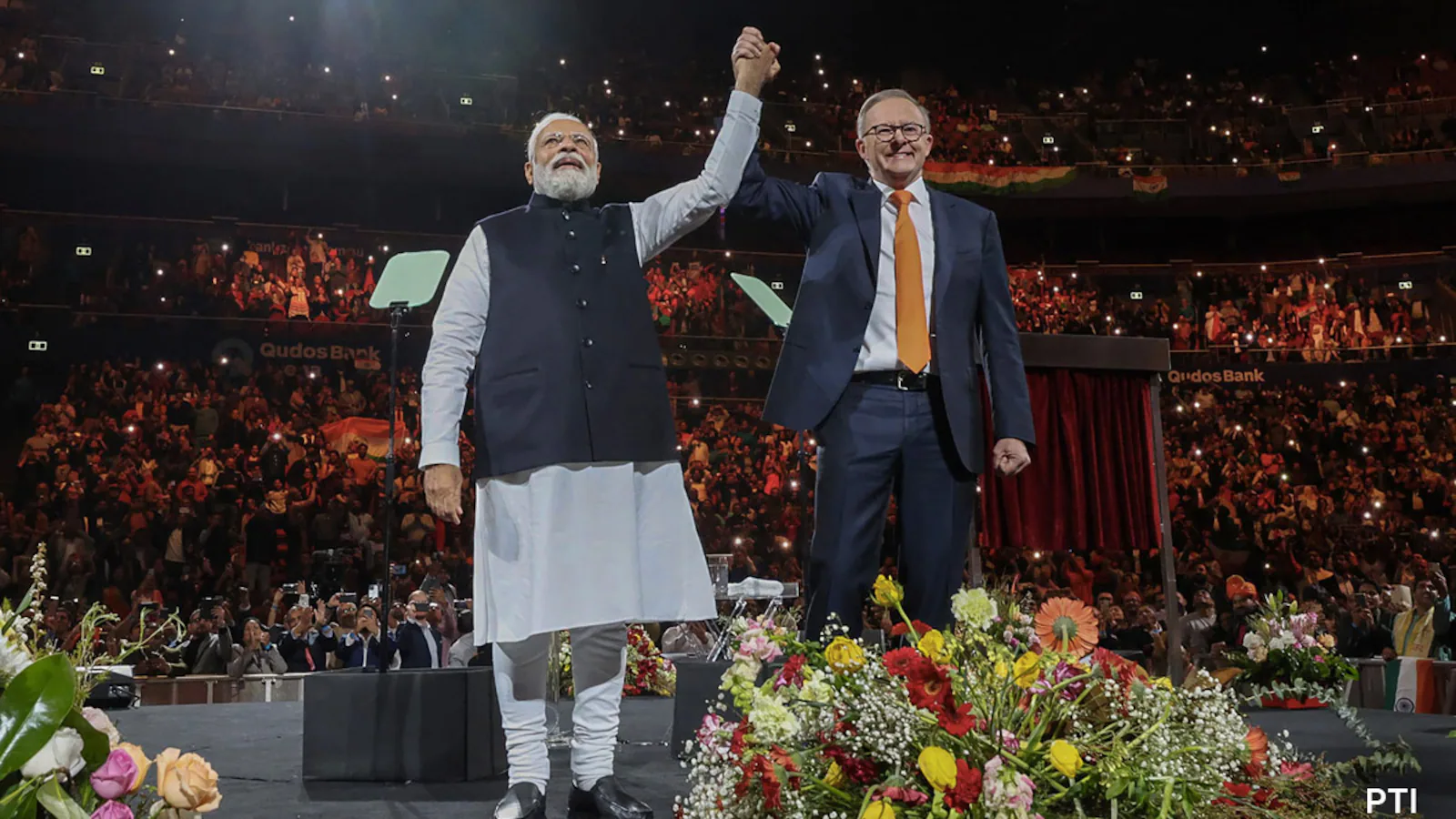
Prime Minister Narendra Modi’s visit to Australia is set to provide fresh momentum to one of the Indo-Pacific’s fastest-growing strategic partnerships, with trade, defence cooperation, critical minerals, technology, counter-terrorism, and the welfare of the Indian community expected to dominate his discussions with his Australian counterpart, Anthony Albanese.
In an exclusive interview with NDTV, Australian High Commissioner to India Philip Green described the visit as a significant milestone in bilateral ties. He underlined the strong personal chemistry between the two leaders and the rapid expansion of India-Australia cooperation across strategic and economic sectors.
“This is the third time Prime Minister Narendra Modiji has visited Australia as prime minister, and he is taking time for a substantial visit to Melbourne,” Green said. “The relationship between our two leaders has always been strong, but it has really been galvanised. Prime Minister Albanese is enormously looking forward to meeting his friend, Narendra Modiji.”
The visit comes as India and Australia have elevated their relationship into a comprehensive strategic partnership, with both nations emerging as key players in maintaining a free, open, and inclusive Indo-Pacific amid growing geopolitical uncertainties.
Trade Relationship Witnessing Unprecedented Growth
Trade is expected to remain the centrepiece of the bilateral agenda as both countries continue negotiations for a Comprehensive Economic Cooperation Agreement (CECA), building upon the success of the India-Australia Economic Cooperation and Trade Agreement (ECTA). Highlighting the remarkable growth in bilateral commerce, Green said India’s exports to Australia have significantly outpaced its global export growth.
“If you look at India’s exports to the world, they have increased by 40 per cent over the last five years. But India’s exports to Australia in the same period have increased by 200 per cent,” he said.
Calling the two economies “complementary,” Green attributed the surge to mutual trust and the implementation of ECTA.
“Our first phase free trade deal is already driving trade on both sides. We are already in an extremely good place with trade worth more than 50 billion dollars.”
He also underscored Australia’s commitment to open markets, revealing that from January 1 this year, every good exported from India to Australia enters duty-free.
“Zero across the board. No carve-outs, no exceptions. Australia is a free-trading nation. We don’t believe in tariffs,” he said.
Critical Minerals, Resilient Supply Chains In Focus
As both countries seek to diversify supply chains and reduce dependence on vulnerable global networks, critical minerals are expected to feature prominently during the summit.
While declining to reveal possible announcements, Green acknowledged that Australia and India need deeper engagement in strategic minerals that are essential for electric vehicles, clean energy technologies, and advanced manufacturing.
He also highlighted energy security and resilient supply chains as emerging priorities amid ongoing global disruptions.
“All of us have been focused in recent months about where our energy comes from. Australia benefits from energy supplies from India and India benefits from energy supplies from Australia. The two sides will talk about ensuring that partnership remains in the best possible shape.”
Defence Cooperation And Indo-Pacific Strategy
Defence cooperation has become one of the strongest pillars of India-Australia relations, with both countries conducting increasingly sophisticated military exercises and expanding maritime cooperation in the Indian Ocean.
Green indicated that leaders would provide further strategic guidance for defence collaboration.
“We live in an uncertain moment in global affairs, which is affecting the security and prosperity of our shared region, the Indo-Pacific,” he said.
“Australia and India can do a lot together in defence, but perhaps where it matters most is where our strategic geographies intersect in the maritime domain of the Indian Ocean.”
The High Commissioner also dismissed suggestions that the Quad had lost relevance, pointing to the recent Quad Foreign Ministers’ Meeting in New Delhi.
“We feel in the best of spirits about the Quad,” Green said, adding that the leaders were expected to discuss the grouping during their meeting.
Technology, Education And Innovation
Beyond strategic and security cooperation, technology partnerships are expected to receive renewed attention.
Green praised India’s National Education Policy for opening the doors to foreign universities and noted that Australian institutions had responded enthusiastically.
“Australia was the first country to establish foreign branch campuses in India, and you will see more of them discussed during the visit,” he said.
He also highlighted expanding research partnerships, dual-degree programmes and collaboration in emerging technologies, including artificial intelligence, as important future drivers of the bilateral relationship.
Counter-Terrorism Remains A Shared Priority
Counter-terrorism cooperation will also feature in bilateral discussions as both countries continue to strengthen intelligence sharing and cooperation against radicalisation and violent extremism.
“Counter-terrorism is an important shared enterprise where Australia and India work very closely together,” Green said.
Indian Community Strengthens Bilateral Ties
Green described Australia’s more than one million-strong Indian-origin community as one of the greatest strengths of the relationship, saying Prime Minister Modi’s visit had generated enormous excitement among the Indians in Australia.
“The Indian community makes a very big contribution to our multicultural society. They are welcome, they should feel safe, and they are big contributors to our economy and many fields of our life,” he said.
“There are more than a million people of Indian origin in Australia who will warmly welcome Prime Minister Narendra Modiji.”
As Prime Minister Modi arrives in Melbourne after engagements in Jakarta, the visit is expected not only to consolidate existing cooperation but also chart the next phase of one of the Indo-Pacific’s most consequential strategic partnerships. With growing convergence on trade, defence, critical minerals, technology, maritime security and regional stability, New Delhi and Canberra appear determined to transform political goodwill into long-term strategic outcomes.