Atiku Abubakar rejected claims that he had quit the presidential race after former supporters endorsed Peter Obi. Bola Tinubu urged greater voter mobilisation in Lagos, where fewer than one in five registered voters cast a presidential ballot, while SERAP sued over suspicious photographs in INEC’s voters’ register.
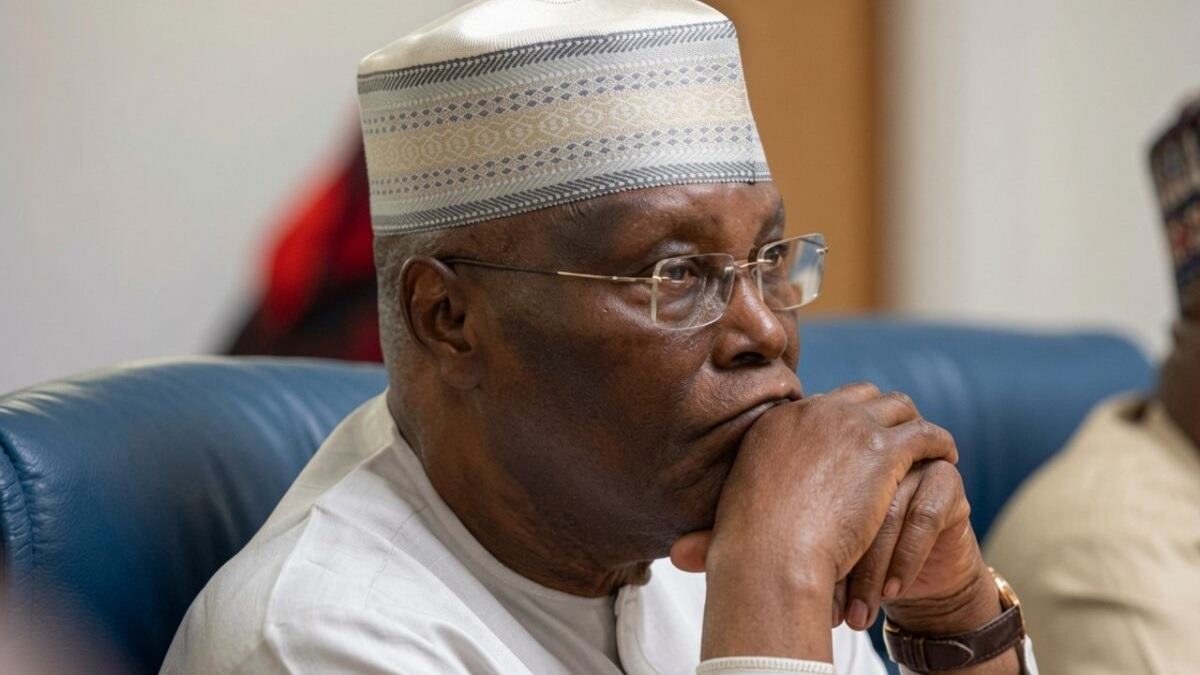
Atiku Abubakar rejected claims on Sunday that he had withdrawn from the presidential race after a coalition that once campaigned for him endorsed Peter Obi. The former vice-president said the group could speak for its members but had no authority to announce his withdrawal.
In Lagos, President Bola Tinubu urged supporters to mobilise voters in the state he once governed but lost to Mr Obi in 2023. He also instructed his political adviser to reconcile with the governor of Katsina State before extending the effort to Jigawa.
The Socio-Economic Rights and Accountability Project (SERAP) disclosed that it had sued the electoral commission and Nigeria’s data protection regulators over suspicious photographs in the preliminary voters’ register. It wants an independent examination of the records while the commission continues its own checks.
At a press conference in Abuja on Saturday, the Coalition of Atiku Support Groups Initiative backed Mr Obi and his running mate, Rabiu Kwankwaso, of the Nigeria Democratic Congress (NDC). The group said the presidency should remain in the South and urged opposition parties to cooperate. Its position was not new: its national coordinator, Obinna Okorie, had called for Atiku to support Mr Obi in May, saying the group had backed the former vice-president since 2019.
However, in a statement issued through Phrank Shaibu, director of strategic communication of the African Democratic Congress (ADC) Presidential Campaign Council, Atiku asked supporters to continue campaigning.
“I do not need anyone to step down for me, and I am stepping down for no one,” he said. He accused those circulating the withdrawal claim of advancing Mr Tinubu’s interests but provided no evidence linking them to the ruling All Progressives Congress (APC).
Section 31 of the Electoral Act 2026 requires candidates seeking voluntary withdrawal to deliver a signed notice and affidavit personally to their sponsoring party. The party must forward the documents to the Independent National Electoral Commission (INEC) at least 90 days before polling. For the presidential election scheduled for 16 January 2027, that deadline fell on 18 October.
INEC’s October presidential candidate list names Atiku and former Rivers State governor Rotimi Amaechi as the ADC’s presidential and vice-presidential candidates. The validity of that nomination is the subject of a separate case.
The ADC leadership, led by David Mark, has appealed the 5 November Federal High Court judgment that invalidated decisions affecting its presidential ticket and has applied for a stay of execution.
The rival faction aligned with Nafiu Bala Gombe maintained on 19 November that the judgment remained in force. The reports did not say whether a stay had been independently established by Sunday.
In Kogi State, the ADC was preparing for an Atiku–Amaechi rally scheduled for Tuesday, 24 November. A statement attributed to the party’s state chairman, Tom Zakari, and reported by Treasure Times, said he had inspected Muhammadu Buhari Square in Lokoja and reviewed preparations for the event.
Opposition parties pursuing a cooperation agreement have moved their proposed summit from 23 to 30 November. They have discussed political coordination and electoral reforms but have not announced a common presidential candidate.
On Sunday, Mr Obi endorsed SmartBallot, urging NDC candidates and supporters to use the platform for grassroots organisation, polling-unit coordination and election monitoring. Its terms of use distinguish independent monitoring and submitted observations from official electoral processes, which remain INEC’s responsibility.
The NDC also faced a funding dispute. Vanguard reported that some members of its National Campaign Council alleged that more than ₦6 billion raised through nomination forms and contributions had been kept in a fixed-deposit account while campaign activities struggled for funding.
The party’s National Publicity Secretary, Osa Director, rejected the allegation as misleading, saying party administration and presidential campaign financing involved different responsibilities.
At an executive meeting on 24 October, treasurer Peter Onigah reported revenue of approximately ₦8.53 billion, expenditure of ₦2.40 billion and a balance of ₦6.13 billion. Those are party-disclosed figures rather than independently audited accounts, and the allegation does not establish diversion or a breach of campaign-finance law.
SERAP named INEC and the Nigeria Data Protection Commission as defendants in a lawsuit it said was filed the previous week at the Federal High Court in Abuja.
In its statement on suit FHC/ABJ/CS/2863/2026, the organisation said it had asked the court to compel the regulator to independently assess allegations involving suspected AI-generated photographs and questionable registration records.
It also wants the regulator to obtain and examine relevant INEC records and determine whether Nigeria’s data protection law was breached. Where violations are established, SERAP seeks corrective measures, sanctions and remedies for affected voters, including compensation. The filing does not establish that INEC deliberately manipulated the register or that any particular official committed an offence.
On 9 November, INEC Chairman Joash Amupitan said the commission had removed 1,608,660 invalid registrations from the 2025–26 exercise. That total covers several categories of irregularities and is not a confirmed count of AI-generated photographs.
Mr Amupitan also said 54 people across 10 states had been identified for disciplinary action and possible prosecution.
On Friday, Mr Amupitan said INEC would continue reviewing flagged entries but could not complete comprehensive revalidation of the register before the January election.
SERAP wants the data regulator to establish the nature and extent of the suspected irregularities and whether the reported handling of voters’ personal information violated the law.
A separate concern is whether voters can reach polling units safely. PUNCH and THISDAY reported on Sunday, citing SARI Global’s October 2026 security assessment, that an armed-group leader had warned community leaders in parts of Anka Local Government Area, Zamfara State, against holding elections.
The assessment also described roadblocks, attacks on travellers, and restrictions on movement. The warning was attributed to an incident in October, and the available reporting did not independently establish whether security agencies or INEC had investigated it.
INEC’s nationwide mock accreditation scheduled for 28 November will test accreditation and electronic result-transmission procedures. SERAP said no hearing date had been fixed for its case.
At a family prayer gathering at the Yoruba Tennis Club in Onikan, Lagos, Mr Tinubu questioned how a state with approximately seven million registered voters could produce only 100,000 or 200,000 votes.
He urged supporters to knock on neighbours’ doors and encourage them to collect their permanent voter cards.
“To me, Lagos is the big deal,” he said, according to PUNCH’s report. The reported passage did not specify whether the smaller figures referred to votes for a particular candidate or overall participation.
The 2023 presidential election provides a broader measure. Lagos recorded 1,335,729 ballots cast from 7,060,195 registered voters, about 18.9 per cent of the register. The state collation figures reported at the time gave Mr Obi, then of the Labour Party, 582,454 votes against Mr Tinubu’s 572,606, a margin of 9,848.