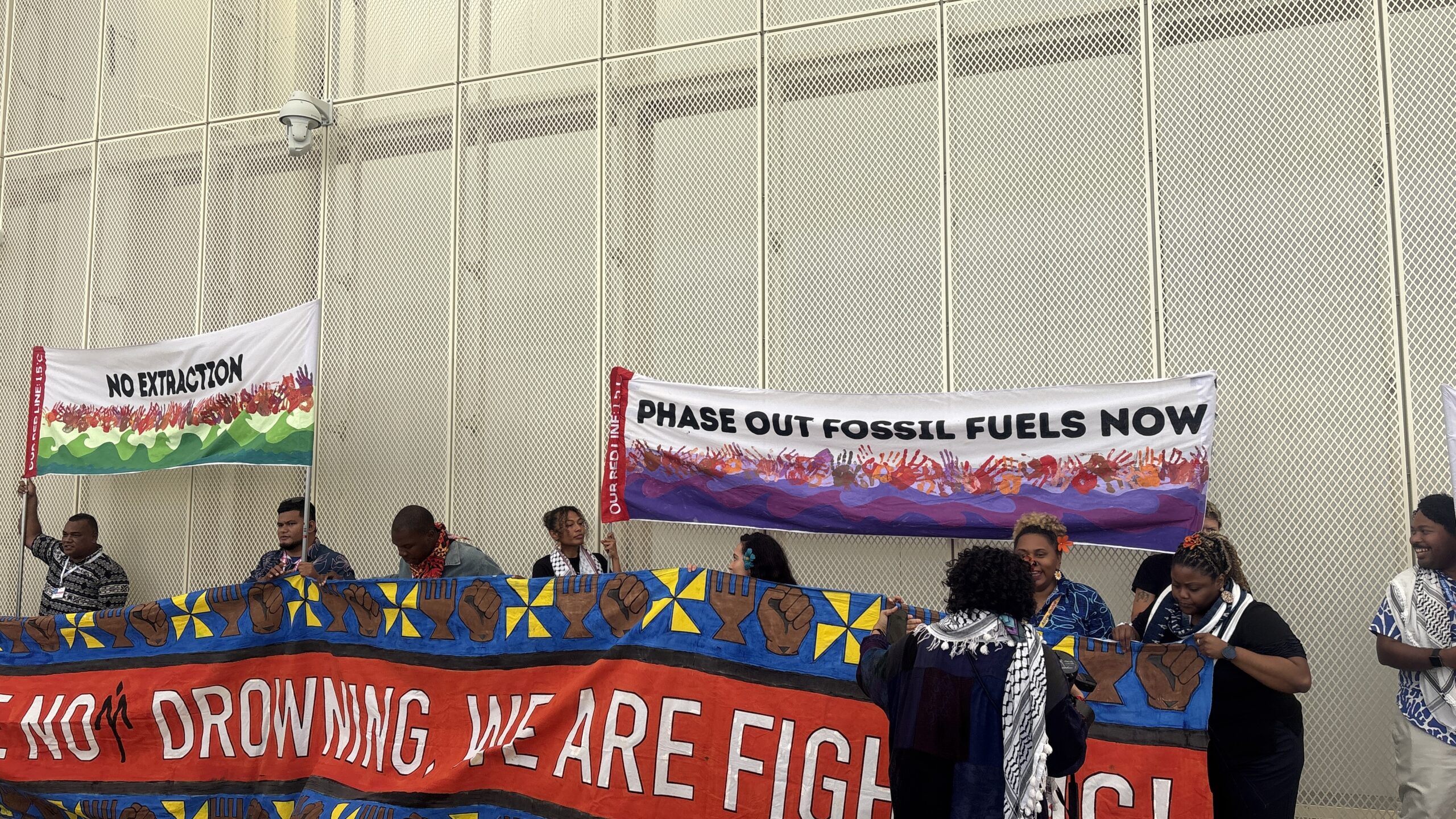
Chanting “Phase out fossil fuels now” and “No extraction”, the protesters carried banners demanding a people-centred approach to electrification as negotiations continued over the conference’s proposed 35-by-35 target
African climate campaigners have challenged the proposed global electrification target at the ongoing COP31 climate conference, warning that its current formulation could allow countries to expand fossil fuel-powered electricity generation while claiming progress towards the energy transition.
The campaigners, who staged a demonstration at the conference venue on Tuesday, called for an electrification agenda that prioritises renewable energy, expands access to electricity and addresses the needs of communities rather than commercial interests.
Chanting “Phase out fossil fuels now” and “No extraction”, the protesters carried banners demanding a people-centred approach to electrification as negotiations continued over the conference’s proposed 35-by-35 target.
The target, championed by the COP31 Presidency, seeks to increase electricity’s share of global final energy consumption from about 23 per cent currently to 35 per cent by 2035.
It is intended to accelerate the replacement of direct fossil fuel use in sectors such as transportation, buildings and industry with electricity, thereby reducing emissions and improving energy efficiency.
However, campaigners say the ambition could fall short of its climate objectives if governments are not required to ensure that the additional electricity comes from clean sources.
The demonstration was organised by African members of Climate Action Network (CAN) Africa as part of activities marking Africa Electrification Day.
Türkiye’s COP31 Presidency introduced the Global Electrification Pledge in September, presenting it as a major initiative to accelerate electricity use across sectors of the global economy.
The initiative recognises the importance of clean power, energy storage, modern electricity grids and international cooperation, particularly to support developing countries.
However, it does not explicitly require countries to meet the additional electricity demand with renewable energy.
The issue became more contentious following the release of the first draft of the COP31 cover decision on Monday.
The draft calls on countries to work towards increasing electricity’s share of global final energy consumption to 35 per cent by 2035, taking national circumstances into account.
However, its language also recognises the benefits of electrification regardless of the electricity mix, raising concerns among climate campaigners that countries could pursue the target without sufficiently reducing their reliance on fossil fuels.
The difference is important because electrification does not automatically translate into emissions reductions if the electricity being used is generated from coal or gas.
For instance, replacing petrol-powered vehicles with electric vehicles can reduce direct emissions from transportation. But the overall climate benefit depends partly on how the electricity used to charge those vehicles is generated.
The same applies to electric heating systems and industrial processes.
A briefing published on Tuesday by Climate Analytics, a climate science and policy institute, warned that achieving the 35-by-35 target without specifying that the additional electricity must come from clean sources could add between 0.11 and 0.14 degrees Celsius to global warming by 2050.
The institute’s analysis found that the target would increase global electricity demand by about 50 per cent from current levels.
However, if renewable energy deployment does not keep pace with that demand, gas-fired electricity generation could increase.
Comparing a scenario based on the electricity mix implied by current policies with one in which additional demand is met through clean electricity, the analysis estimated that the difference could amount to between 234 and 317 gigatonnes of additional carbon dioxide emissions by 2050.
Climate Analytics said governments committed to the Paris Agreement’s 1.5-degree Celsius temperature limit should ensure that the COP31 outcome explicitly refers to clean electrification.
Speaking to PREMIUM TIMES during the demonstration, Kapwani Kavenuke, an energy campaigner with Power Shift Africa, said the protest was organised to challenge the different interpretations of electrification emerging at COP31.
She said discussions among private sector representatives and developed countries often focused on industrialisation, transportation and the growing electricity requirements of artificial intelligence infrastructure.
However, she argued that the priorities of African countries should be different, given the continent’s substantial electricity access challenges.
“What the world actually needs is renewable-based electrification,” she said.
Ms Kavenuke described the promotion of electrification alongside continued investments in fossil fuels as a dangerous distraction from the transition towards renewable energy.
She also questioned the growing emphasis on technologies such as carbon capture and storage, arguing that their development remains heavily dependent on fossil fuel energy.
Beyond electricity generation, she said African governments must develop the technical knowledge, skills and industries required to benefit from the global transition.
She warned that although the continent possesses significant mineral resources needed for renewable energy technologies, it risks remaining dependent on foreign companies if it fails to develop local manufacturing capacity.
“We need the education, we need the skilling, we need the industries on the ground,” she said.