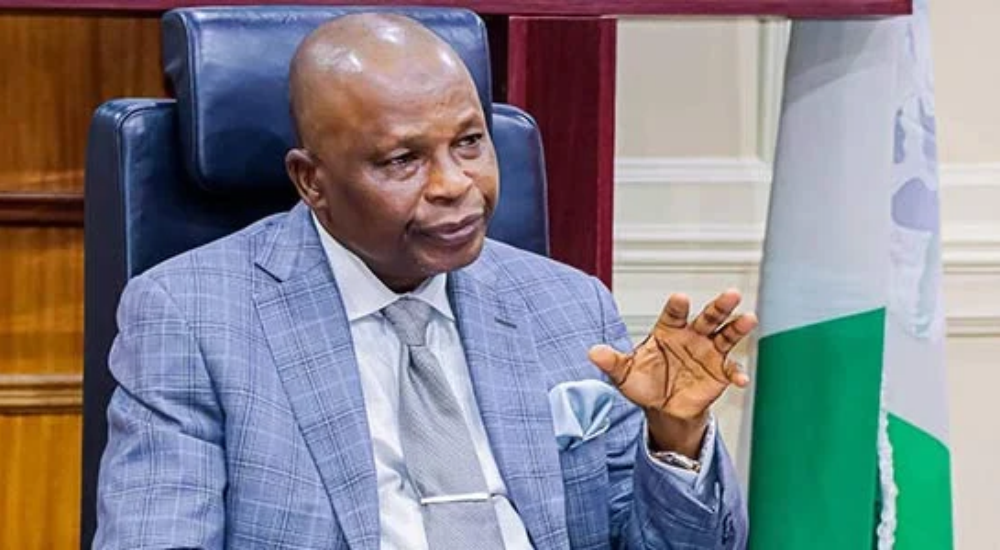
Fagbemi said the growing concealment of illicit wealth across jurisdictions required stronger cooperation among African countries, warning that no country could effectively tackle the problem in isolation.
He made the call on Tuesday while delivering a welcome address at the maiden General Assembly of the African Asset Recovery Practitioners’ Forum (AARP-F), held in Abuja.
The Attorney-General proposed the development of a continental Standard Operating Procedure that would establish common minimum standards for asset tracing, seizure, confiscation, repatriation, management and disposal of recovered assets.
He said the proposed framework should also provide clear channels for mutual legal assistance, secure information-sharing protocols and safeguards for due process and third-party rights while respecting the domestic laws and sovereignty of member states.
Fagbemi described illicit financial flows as a major threat to Africa’s development, arguing that resources stolen from the continent could otherwise have been invested in education, healthcare, infrastructure and other essential public services.
“Illicit financial flows eat away at the roots of our development. Asset recovery is therefore not simply a technical exercise in tracing bank accounts or securing forfeiture orders. It is a struggle for accountability, economic sovereignty and the restoration of public trust,” he said.
The Attorney-General said the Assembly’s theme, “From Commitment to Action,” should translate into concrete results rather than another round of political declarations.
“History will not judge this Assembly by the beauty of our declarations, but by the assets we recover, the obstacles we remove and the difference we make in the lives of our people,” he added.
Fagbemi noted that the African Union adopted the Common African Position on Asset Recovery (CAPAR) on February 10, 2020, following efforts to address the continent’s loss of wealth through corruption and illicit financial flows.
He explained that CAPAR provides a continental framework built around four major pillars: detecting and identifying stolen assets, recovering and returning them, ensuring transparent management of recovered assets, and strengthening international cooperation and partnerships.
He said the forum, conceptualised in Addis Ababa in May 2024 and formally launched in Nairobi in April 2025, was established to bridge the gap between continental anti-corruption commitments and the practical work required to recover stolen wealth.
According to him, the four-day maiden Assembly will transition the forum from an interim body into a fully established, practitioner-led continental institution with a defined mandate, budget and programme.
The meeting is expected to constitute the Steering Council, establish key working groups, validate the CAPAR Reporting Tool, review a continental study on Mutual Legal Assistance and approve the forum’s roadmap and work plan.
Fagbemi also warned that recovering stolen assets would amount to little if the funds were subsequently mismanaged, dissipated or diverted into other illicit financial channels.
He said the success of asset recovery efforts should not be measured solely by the monetary value of confiscated properties and funds but also by the transparency of the process and the developmental benefits delivered to citizens.
“In Nigeria, our experience in pursuing the recovery and return of illicitly acquired assets across multiple jurisdictions has reinforced the necessity of relentless legal rigour, inter-agency synergy, and strict statutory accountability under our Proceeds of Crime (Recovery and Management) framework,” he said.
He added that the Federal Ministry of Justice would continue working with relevant national institutions and international partners to strengthen mutual legal assistance mechanisms and ensure recovered funds were transparently deployed to projects that benefit Nigerians.
The minister further urged the forum to expand its collaboration beyond traditional law enforcement and anti-corruption agencies to include ministries of finance, tax authorities and revenue-generating institutions.
He also called for improved beneficial ownership transparency, stronger digital asset-tracing capabilities, professional training and independent reporting on how recovered assets are utilised.
Fagbemi said the Assembly should produce measurable outcomes, strengthen professional networks and generate practical recommendations capable of helping African countries reclaim resources essential to their development.
He commended the African Union Commission and the African Union Advisory Board on Corruption for championing the initiative, while acknowledging the Independent Corrupt Practices and Other Related Offences Commission (ICPC), led by Dr Musa Adamu Aliyu (SAN), for serving as the national secretariat and co-hosting the Assembly.
The Attorney-General subsequently declared the maiden General Assembly of the African Asset Recovery Practitioners’ Forum open.