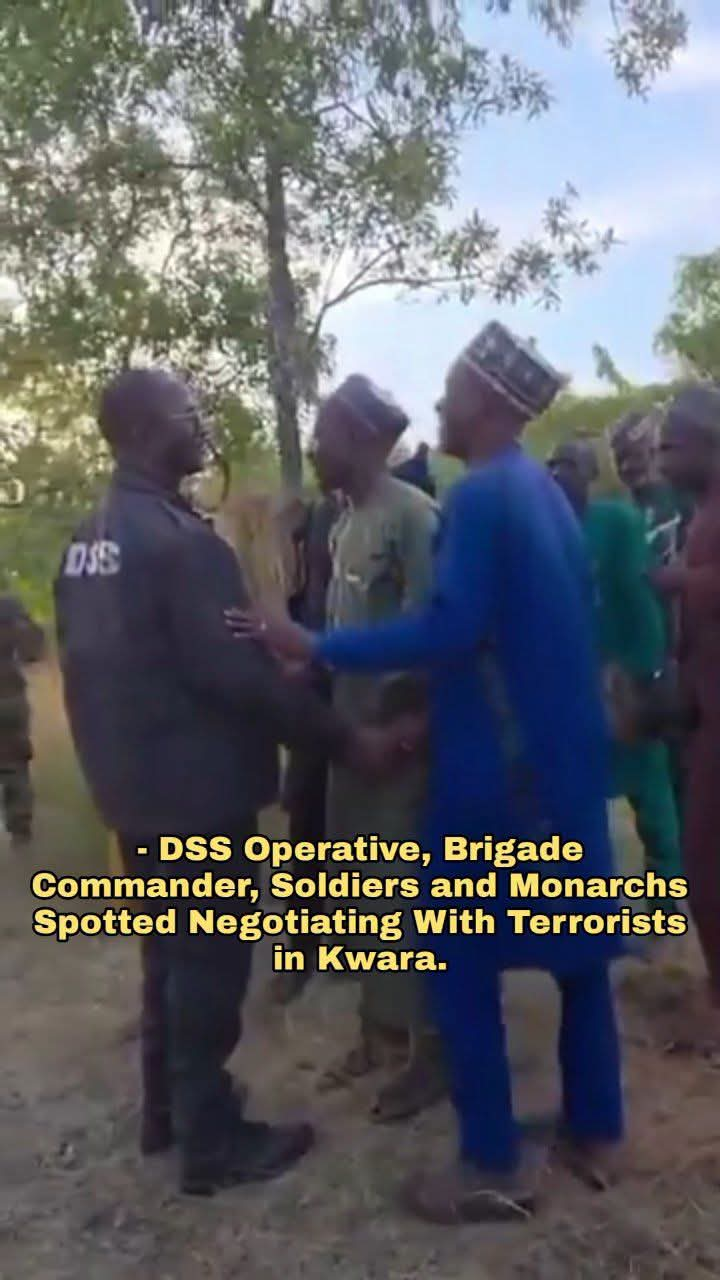
Footage showing security officials, traditional rulers, and heavily armed men in a Kwara forest has fueled competing claims about whether the encounter was part of a hostage-recovery effort or a wider attempt to negotiate stability in areas plagued by militant violence.
By Suleman Ayuba
ILORIN, Nigeria — A video showing security officials, traditional rulers, and armed men gathered in a forest in Kwara State has triggered debate over Nigeria’s approach to dealing with violent groups operating across rural communities. While some security sources told TruthNigeria the meeting may have been linked to efforts to secure stability ahead of future elections, counterinsurgency analyst Zagazola Makama described the engagement as a non-kinetic operation that contributed to hostage releases and the surrender of weapons. The conflicting accounts have raised broader questions about how authorities balance immediate security concerns with long-term counterterrorism objectives.
Captured on video, the encounter shows state officials and local monarchs seated with heavily armed bandits—a spectacle that has raised urgent questions about the integrity of counter-terrorism operations and the broader security crisis engulfing the state. Security sources confirmed to TruthNigeria that the meeting happened in Gbugbu Forest in Edu Local Government Area. During the recorded parley in video obtained by TruthNigeria and also circulated by Military News.
The terrorists displayed a familiarity with the military personnel present. Speaking directly to the government delegation, one of the terrorists openly boasted on camera that he recognized several of the soldiers sitting across from him, reminding them of past firefights in which troops had pursued and opened fire on his fighters.
Rather than an interrogation or surrender ceremony, the exchange unfolded as a negotiation between equals, underscoring how deeply armed non-state actors have penetrated the political and security landscape of Kwara State. SaharaReporters has also reported on the incident, identifying a Kwara Fulani leader in the same video as DSS operatives and Army personnel meet with bandits.
Security sources who spoke exclusively to TruthNigeria on condition of anonymity alleged that the clandestine talks were directly tied to electoral calculations contrary to the rescue mission narrative. According to these insiders, political actors and security officials are seeking an informal truce with the armed groups to guarantee peaceful voting in contested corridors—effectively prioritizing ballot-box stability over the dismantling of terror networks.
Counter-insurgency expert Zagazola Makama described the incident as non-kinetic rescue operations.
However, security sources disputed Zagazola Makama account. Speaking to TruthNigeria an intelligence source who did not want his name to be mentioned, told TruthNigeria it is a decoy for negotiations ahead of elections. Many people across Kwara and Niger states remain in captivity without a rescue.
Non-kinetic engagements without clear disarmament benchmarks risk normalizing the presence of armed groups and eroding public trust in the military’s mandate, a retired senior officer familiar with northern operations told TruthNigeria.
He added that while hostage recovery is legitimate, seating traditional rulers and DSS personnel opposite heavily armed fighters on camera projects parity rather than state authority and may embolden further demands.
For residents and former community defenders on the front lines, the footage confirms long-held suspicions of state complicity.
“The government has turned terrorism into a business venture; they don’t want it to end,” said Kabiru Usman, a former member of a local vigilante security outfit, told TruthNigeria. Recalling why he abandoned his post, he added, “I was part of the local security, but when I saw armed Fulani militias carrying weapons with government tags on the guns, I resigned because they have sponsors who gave them those government guns.”
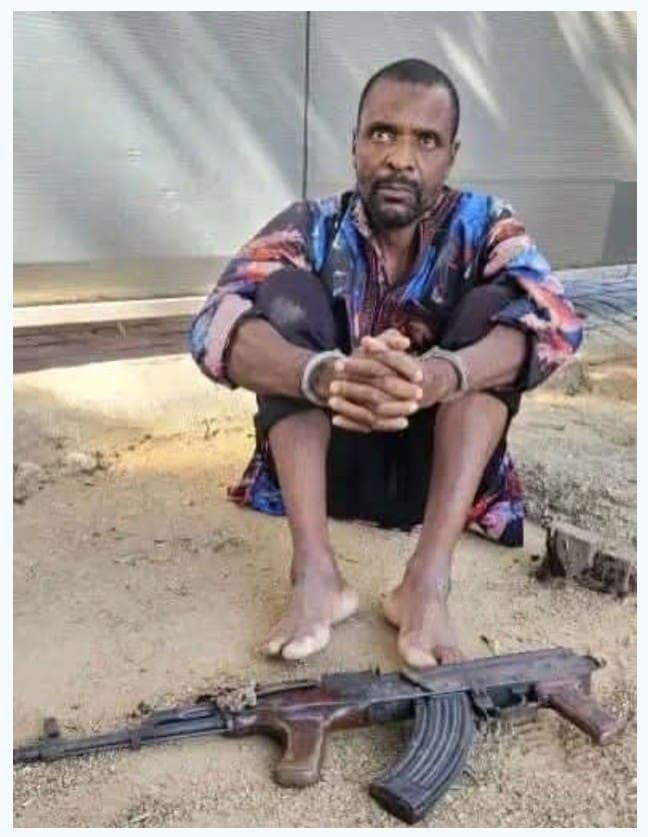
Usman’s account echoes a documented controversy involving a Miyetti Allah member apprehended in Kwara State while in possession of DSS-issued rifles bearing tags from the Office of the National Security Adviser (ONSA). Although the National Security Adviser’s office denied authorizing terrorists to bear state arms, the detained suspects confessed during interrogation that the weapons had been supplied to them. Details of that scandal and the broader controversy surrounding armed militia integration were documented by TruthNigeria. Parallel coverage of the arrest of a Miyetti Allah member with an NSA-issued rifle and the subsequent official denials was also published by Sahara Reporters.
The Office of National Security Adviser Nuhu Ribadu denied the claims details were published by The NationOnline.
Across rural Kwara, the human cost of appeasement continues to mount.
“The Kwara State government is not ready to end the killings; our people have been displaced and the communities are occupied by the terrorists,” stated community elder Hamza Adebayo, told TruthNigeria.
He noted that local youths face a grim ultimatum: “Some of our youth who refused to join them and didn’t welcome the jihadist ideology were regarded as infidels and targeted.”
Observers tracking the insurgency warn that the violence is driven by an ideological objective rather than random criminality.
A local missionary, Faith Aaron who is familiar with the pattern of attacks across the region told TruthNigeria that the assaults represent a calculated campaign of territorial conquest. According to the missionary, the primary goal is to impose Sharia law across Yoruba-speaking territories and expand jihadist influence into predominantly Christian communities. He said this is done through sustained intimidation and displacement.
That campaign struck at the heart of Christian worship when terrorists stormed the Christ Apostolic Church (CAC) in Eruku, Kwara State, during a live church service, opening fire on congregants, killing worshippers, and abducting the pastor alongside dozens of members. The assault exposed the vulnerability of border communities linking Kwara, Kogi, and Ekiti states, where forest corridors have become transit routes for armed Islamic militias. A full account of the church invasion was reported by TruthNigeria. The same incident was widely reported by international and national media, including accounts of the attack during a thanksgiving service, the deaths, and the abductions.
Advocates for displaced communities warn that southern Nigeria faces an imminent spillover if the current trajectory goes unchecked.
“I feel for the Church in the south who is still sleeping; the danger is at their doorstep already,” said Gavvs Katiya, Chairman of the Gwoza Refugees Resettlement Initiative, told TruthNigeria. “We have been telling the Pentecostal churches in the south, and they didn’t hear. Now the jihadists are expanding to their corridors.”
A second independent security researcher who tracks Middle Belt dynamics noted that short-term electoral calm achieved through informal deals rarely survives the next electoral cycle and often leaves communities more exposed once political attention shifts. As covert negotiations replace decisive military action, critics warn that legitimizing armed groups for short-term political calm risks permanently surrendering rural communities—and opening a wider front of instability across Nigeria’s Middle Belt and southern heartland.
Suleman Ayuba is a conflict reporter for TruthNigeria.