Former Lagos State commissioner for tourism, arts and culture, Steve Ayorinde, has urged Nigerian journalists to move beyond celebrity stories and entertainment gossip to investigate the business structures, financial arrangements and intellectual property rights shaping the country’s creative economy. Ayorinde said media coverage of the creative industry had largely focused……
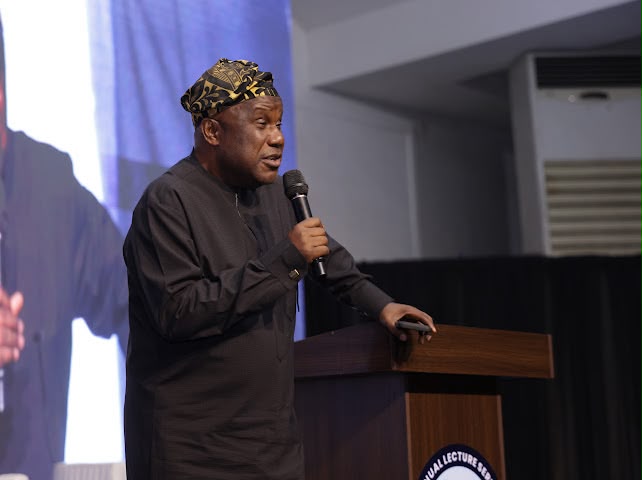
Former Lagos State commissioner for tourism, arts and culture, Steve Ayorinde, has urged Nigerian journalists to move beyond celebrity stories and entertainment gossip to investigate the business structures, financial arrangements and intellectual property rights shaping the country’s creative economy.
Ayorinde said media coverage of the creative industry had largely focused on celebrities, performances and artistic achievements, leaving critical business issues that determine the financial success of creators largely unexplored.
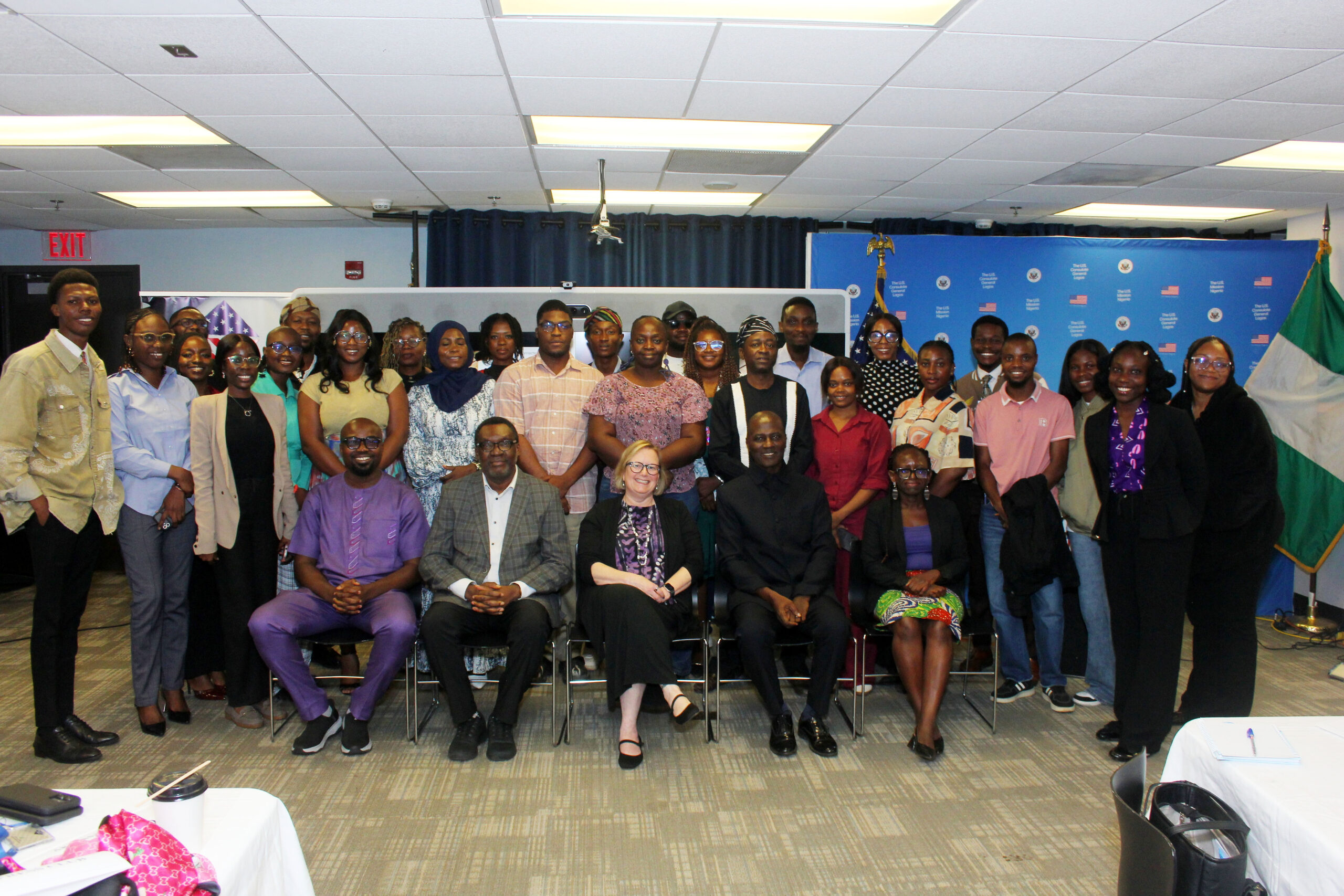
He spoke at a journalism clinic organised by Media Career Development Network (MCDN), in collaboration with the United States Consulate, themed “Reporting the Creative Economy”, held in Lagos.
The training brought together selected journalists from different media organisations, including two journalists from TVC Communications, Ayooluwa Ayobami and Naomi Otaigbe, for an interactive session.
The former commissioner observed that entertainment-related stories dominated coverage of the creative sector, despite the growing commercial value of the industry.
“There will be the art aspect of the creative economy, the performances, and the celebrity aspect of it, which I am sure will probably take 70 to 80 per cent of the coverage if you do a content analysis of what comes across these days as creative economy, but of course there is also the business aspect of it,” he said.
He challenged journalists to investigate the financial arrangements behind box-office successes, particularly how revenue generated from blockbuster films is shared among filmmakers, investors, distributors and cinema operators.
Using the reported box-office earnings of filmmaker Funke Akindele as an example, Ayorinde questioned how much of the revenue announced publicly eventually goes to the creators.
“What does it mean that Funke Akindele made N3.5 billion, how much of it goes to her as the creator, and what percentage goes to the investor, the distributor, and the exhibitors, who take the larger chunk of what they are making, so when we are celebrating creators for making a certain amount of money, we must interrogate how much of that money actually comes into their accounts,” he said.
READ ALSO: MCDN, US Consulate Train Journalists on Tech Reporting
According to him, journalists often avoid asking critical questions for fear of damaging the careers or public image of entertainment personalities, thereby overlooking important stories about the industry’s economic realities.
“We are leaving out good questions to ask, and we are leaving out the big stories to do, because in saying we do not want to destroy their careers, we fail to interrogate the creator economy adequately,” he added.
Ayorinde also stressed the importance of intellectual property rights, describing them as central to the commercial value of creative works.
He explained that the creative economy extends beyond entertainment to include the creation, production, distribution and commercialisation of intellectual property and cultural products across sectors such as film, music, fashion, publishing, visual arts, photography, gaming, advertising and digital media.
The former commissioner also criticised the tendency of Nigerian journalists to allow social media conversations to dictate their coverage of major events, citing the encounter between Nigerian streamer Habeeb Hamzat, known as Peller, and American internet personality Darren Jason Watkins Jr., known as IShowSpeed, during the latter’s visit to Nigeria.
IShowSpeed, who was on his ‘Speed Does Africa’ tour and celebrating his 21st birthday in Lagos, attracted large crowds during his visit.
Viral footage showed Peller attempting to approach the American streamer during a livestream but being stopped by his bodyguard.
In another incident, Peller reportedly chased IShowSpeed’s convoy on horseback in an attempt to get his attention.
During the encounter, the Nigerian streamer was heard pleading: “Please I’m a streamer. I’m big. Please let’s do something. I have suffered because of you.”
Ayorinde argued that the incident offered a broader story about Nigeria’s creative industry and the country’s growing digital entertainment culture, but said many journalists became distracted by the social media reactions surrounding the encounter.
He maintained that the incident, alongside the American streamer’s 21st birthday celebration in Nigeria, was a significant part of IShowSpeed’s visit and deserved broader coverage within the context of the country’s creative economy rather than being reduced to viral entertainment content.
He urged journalists to take the lead in shaping public conversations through informed reporting instead of allowing social media trends to determine the direction of their stories.
Ayorinde further advised media professionals to build their individual professional identities, stressing that journalists must recognise the value of their names and reputations while respecting the contractual obligations of their respective organisations.
Also speaking at the event, Executive Director of the Media Career Development Network (MCDN), Lekan Otufodunrin, said the training clinic was part of efforts to strengthen journalism practice in Nigeria, particularly in specialised reporting areas.
Welcoming participants, Otufodunrin acknowledged the support of the United States Consulate in Lagos, which facilitated the organisation’s journalism training programmes.
He said MCDN trained more than 150 journalists last year through six training sessions covering different aspects of journalism and new media practice.
“Last year, our media support organisation, Media Career Development Network, had the privilege of organising six bimonthly journalism training sessions supported by the consulate, during which over 150 journalists were trained in various aspects of journalism and new media practice,” he said.
He explained that the sessions covered technology reporting, development reporting, ethics and law, multimedia reporting, investigative journalism and business reporting.
Otufodunrin announced that the organisation had commenced another year-long training initiative featuring 12 monthly sessions across different cities in Nigeria, including Lagos, Ibadan, Benin City, Port Harcourt, Calabar, Awka and Enugu.
“With the extended support of the US Consulate, we are today commencing another year-long journalism training to strengthen the capacity of emerging Nigerian journalists in various categories,” he said.
He added that the programme would take participants beyond classroom instruction by providing practical skills and opportunities to interact with experienced journalists and subject matter experts.
According to him, the initiative would also strengthen journalists’ capacity to report issues shaping Nigeria-US relations.
“The initiative will equip journalists with knowledge and skills to report more effectively on issues shaping the US-Nigeria relationship, particularly trade, investment, technology, creative economy, and other areas of bilateral cooperation,” he said.
Otufodunrin also emphasised the importance of sustaining professional relationships beyond the training sessions, noting that MCDN had established a platform for previous participants to remain connected.
He said, “So it’s just not one-time engagement. Beyond the training, there are other things that will continue to engage together.”