The state’s Gross Domestic Product rose from N9.08trn in 2024 to N10.13trn in 2025, according to the Katsina State Gross Domestic Product Report 2024–2025, compiled by the National Bureau of Statistics (NBS).
The report, produced in collaboration with the state Bureau of Statistics and the World Bank, was made available to the News Agency of Nigeria on Thursday.
It showed that the state’s economy had maintained a steady growth trajectory, rising from N8.26trn in 2023 to N9.08trn in 2024 before reaching N10.13trn in 2025.
Trade accounted for 29.29 per cent of the state’s Gross Value Added (GVA), increasing from N2.74trn in 2024 to N2.95trn in 2025.
Agriculture contributed 23.88 per cent to the state’s GVA, with its nominal value rising by 12.31 per cent from N2.14trn to N2.41trn.
Crop production remained the dominant agricultural activity, accounting for 64.02 per cent of the sector’s value added, while livestock recorded N753.73bn.
Manufacturing also expanded by 15.17 per cent, rising from N1.49trn in 2024 to N1.72trn in 2025. Its contribution to the state’s GVA increased from 16.48 per cent to 17.02 per cent, driven largely by food and beverages, textiles, apparel and footwear.
Information and communication recorded the highest growth among the highlighted sectors, expanding by 21.81 per cent from N786.76bn to N958.35bn, representing 9.50 per cent of the state’s GVA.
Public administration grew by 17.02 per cent, with its value added reaching N588.61bn, while professional, scientific and technical services expanded to N124.17bn.
The report showed that the services sector accounted for 53.60 per cent of Katsina’s economy in 2025, followed by agriculture with 23.88 per cent and industry with 22.52 per cent.
However, it stressed that translating the economic expansion into higher productivity, investment, employment opportunities, household incomes and improved living standards remained critical to ensuring residents benefit from the growth.
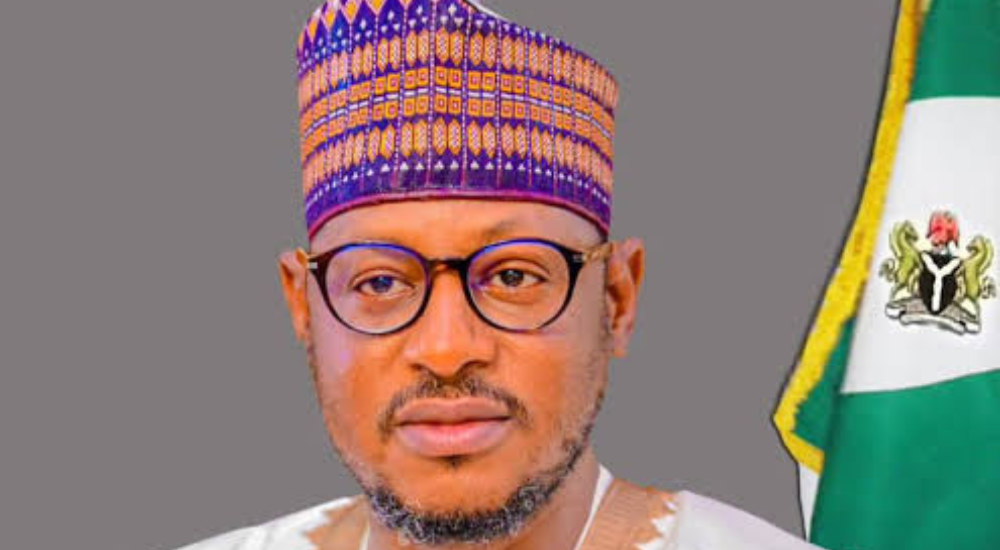
Reacting, Governor Dikko Radda described the performance as heartwarming and reaffirmed his administration’s commitment to sustaining the state’s economic transformation.
Radda said his administration had prioritised agricultural development, support for micro, small and medium enterprises, infrastructure expansion, human capital development and improved public-sector performance.
He described the GDP estimates as an important statistical benchmark for assessing the economy and guiding future development interventions.
The governor, however, stressed the need to consolidate the gains while addressing structural challenges affecting productivity, investment, employment generation and the competitiveness of local businesses.
Also speaking, the state Statistician General, Prof. Saifullahi Sani, described the report as an important addition to the state’s statistical infrastructure.
He said the estimates would support economic monitoring, identification of investment opportunities, sectoral planning, resource allocation and evidence-based policymaking.
Sani added that sustained investment in data production, statistical coordination and regular measurement of economic activities would be essential to tracking development outcomes and assessing government policies.