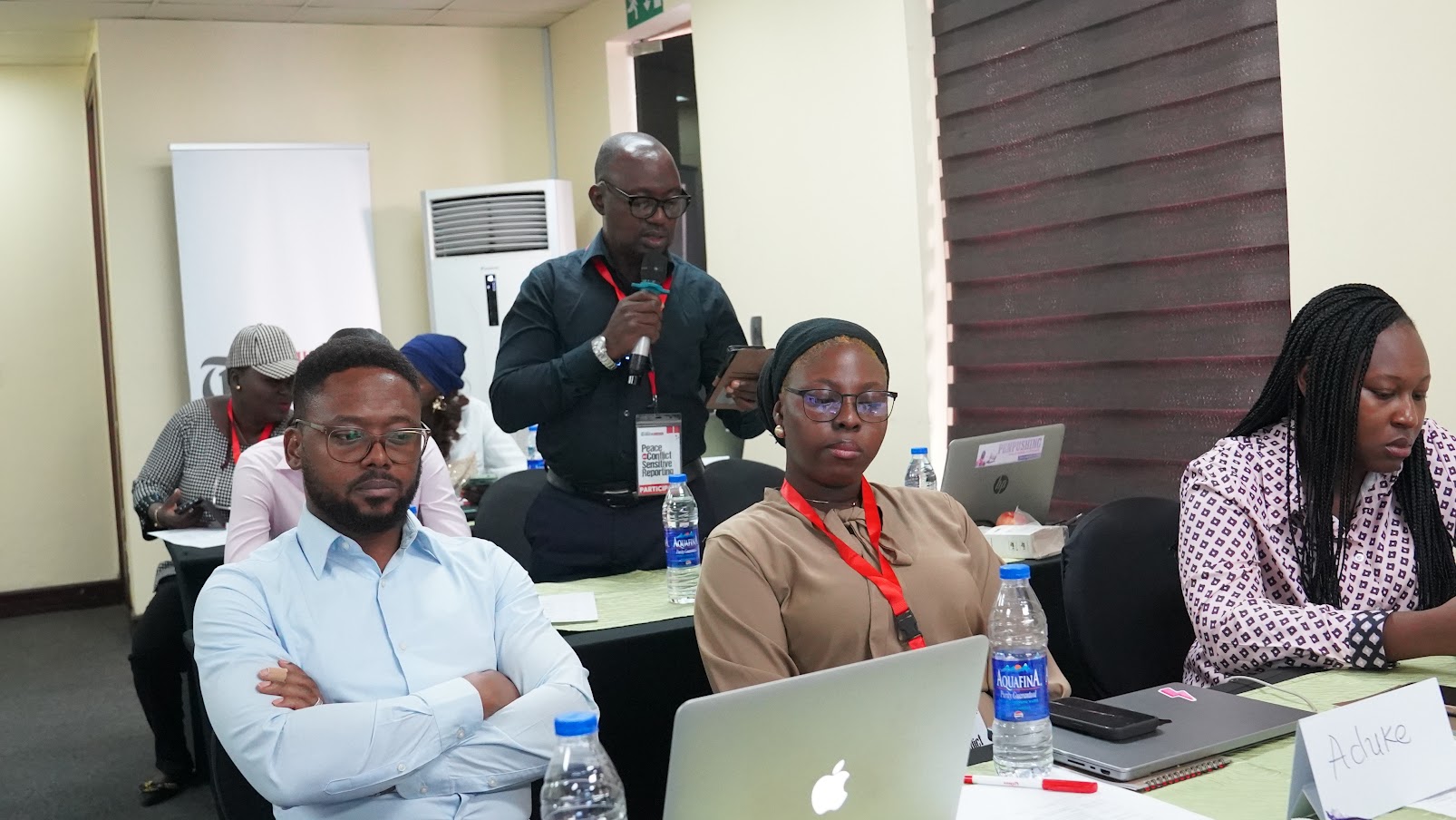
The training equipped journalists with the skills and ethical frameworks necessary for reporting on conflict and sensitive issues.
The Premium Times Training Academy (PTTA), the capacity-building arm of PREMIUM TIMES Group, has held a two-day workshop in Lagos to strengthen journalists’ capacity for ethical, responsible and conflict-sensitive reporting.
The workshop, held on 23 and 24 November, brought together more than 30 journalists from different media organisations for sessions on conflict dynamics, hate speech, misinformation, verification, humanitarian reporting and ethnic profiling.
It is the second edition of the academy’s peace and conflict-sensitive reporting workshop, following an earlier session held in Abuja in September.
Tunde Akanni, a professor of journalism and development communication at Lagos State University, opened the discussions by examining the nature, causes and dynamics of conflict.
Mr Akanni defined conflict as a relationship in which two or more parties perceive incompatible goals, interests, values or needs. He explained that conflict was not necessarily destructive, noting that it could also catalyse social change and pressure for government accountability.
He urged journalists to distinguish between conflict, violence and mere disagreement, stressing that their responsibility went beyond reporting events to explaining their wider implications.
“Journalists act as observers and interpreters who must explain the implications of developments to the public,” he said.
Abigail Ogwezzy-Ndisika, a professor of mass communication at the University of Lagos and director of the Institute of Continuing Education, also examined the relationship between journalism ethics and conflict-sensitive reporting.
She warned that the way journalists frame stories could either help de-escalate tensions or worsen divisions, particularly amid the spread of hate speech and information disorder.
“The way a story is framed can either reduce tension or act as a megaphone for hate speech,” she said.
She urged journalists to apply professional and ethical standards that promote social stability rather than amplify tensions.
PREMIUM TIMES publisher Dapo Olorunyomi examined the consequences of insensitive and injurious reporting, drawing lessons from Rwanda, Sierra Leone and Kenya.
Mr Olorunyomi, represented by the newspaper’s Editor-in-Chief, Musikilu Mojeed, distinguished between disputes and conflicts, explaining that conflicts often involve deeper, more enduring issues relating to identity, belonging, historical grievances, and state legitimacy.
He highlighted the devastating consequences of inflammatory media coverage, citing the role of a radio station in Rwanda whose broadcasts contributed to the genocide in the country.
The session examined how irresponsible reporting and inflammatory language can deepen existing divisions and contribute to violence.
Idris Akinbajo, PREMIUM TIMES’ managing editor, led sessions on applying conflict-sensitive principles to practical reporting situations and gathering and writing news in an era of hate speech.
Mr Akinbajo urged journalists to look beyond the visible manifestations of violence, such as protests and armed conflicts, to investigate the underlying grievances and conditions that fuel them.
He warned that failure to understand these root causes could turn media organisations into instruments of propaganda.
He also stressed the importance of minimising harm to the public, journalists, their colleagues and their families.
During the practical sessions, he examined how journalists could unintentionally amplify hate speech through their reporting and discussed ways to avoid doing so.
Oladeinde Olawoyin, an award-winning journalist and editor with PREMIUM TIMES, addressed the challenges of identifying, sourcing and verifying news in the rapidly changing social media environment.
He noted that the growing volume of information on platforms such as TikTok and Instagram had made it increasingly difficult to distinguish news from ordinary online content.
He urged journalists to assess potential stories using factors such as timeliness, prominence, significance, novelty and localisation while maintaining professional standards.
David Ajikobi, an editor with Africa Check, also demonstrated techniques and tools for verifying social media posts in the age of artificial intelligence.
He outlined steps journalists could take within the first 15 minutes after a claim emerges to establish its authenticity and prevent the spread of false information.
Mr Mojeed, in another session, examined the role of journalists in reporting humanitarian crises through accurate, contextual and data-supported journalism.
He cautioned that conflict sensitivity should not come at the expense of factual accuracy, warning journalists against compromising the truth to appear sensitive.
He also questioned the reliability of some official figures released by law enforcement agencies, urging journalists to present independently established findings alongside official accounts.
For instance, he said that if a reporter independently counted 20 bodies while the police reported six, the story should reflect both accounts.
Mr Mojeed also drew attention to underreported issues, including internal human trafficking and the effects of inadequate education on vulnerable young people.