….Demand Unified Framework For Rail, Aviation, Waterways, Agriculture, Power, Digital Connectivity
… Propose Odu’a House Dialogue Platform, Integrated Amotekun, State Police Network
Daud Olatunji
The Association of Retired Heads of Service and Permanent Secretaries, South-West, Nigeria (ARHOSPS-SWN), has called on the six governors in the region to prioritise the development of integrated rail, air and water transportation networks to boost economic activities and strengthen regional connectivity.
The association also urged the governments of Lagos, Ogun, Oyo, Osun, Ondo and Ekiti states to establish stronger partnerships with the South-West Development Commission (SWDC), Development Agenda for Western Nigeria (DAWN) Commission and other regional development agencies to accelerate infrastructure development and economic integration.
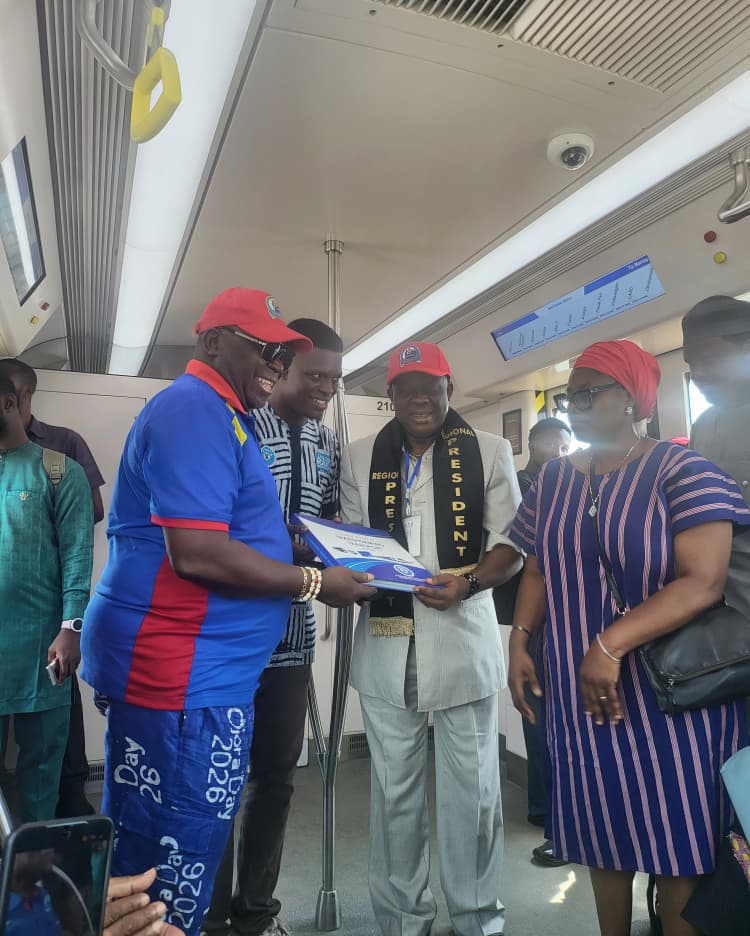
The retired senior public servants made the demands in a 15-point communiqué jointly signed by The communiqué was signed by the Regional President of the association, Barrister Demola Badejo, and its Secretary, Pastor (Mrs.) Adenike Olufadewa and issued at the end of their 13th Quarterly General Meeting, held between November 17 and 19, 2026, in Lagos.
The meeting, themed, “Regional Integration in the South-West: The Journey So Far,” brought together delegates from the six South-West states to deliberate on the progress, challenges and prospects of regional integration, with particular emphasis on infrastructure, economic cooperation, security and sustainable development.
The association called for the expansion of rail networks, air links and water transportation connecting state capitals and major commercial centres across the region, describing integrated transportation as critical to unlocking the South-West’s economic potential.
It further recommended that DAWN Commission, SWDC and other regional development agencies adopt a unified South-West Regional Integration Delivery Framework, jointly owned by the governors and implemented through a formal DAWN-SWDC partnership.
According to the association, the framework should clearly define flagship programmes, lead institutions, responsibilities, implementation milestones, funding arrangements and measurable outcomes to prevent duplication of efforts and unhealthy competition among regional development institutions.
It also urged the state governments to give serious consideration to its authored document, Proposed Plan of Action for the Socio-Economic Development of the South-West Region of Nigeria, and incorporate relevant recommendations into their respective development priorities.
Emphasising the need for stronger intergovernmental cooperation, the association called for coordinated regional approaches to tackling common challenges, particularly economic development, infrastructure deficits and insecurity.
It identified integrated transport and logistics, food and agro-industrial value chains, regional power and digital connectivity, security and emergency response, as well as human-capital development, health and education partnerships as priority areas requiring collective attention.
The association also proposed the publication of an Annual Regional Integration Scorecard to measure the performance of regional development initiatives.
It said the scorecard should track travel and freight times, interstate trade, food losses and price differences, jobs created, private-sector investments attracted, project completion rates, security outcomes and access to essential services.
On public participation, the retired bureaucrats stressed the importance of involving citizens and private-sector stakeholders in regional development, rather than restricting integration efforts to government institutions.
They recommended the institutionalisation of platforms for business councils, farmers’ organisations, universities, traditional institutions, local governments, youth and women groups to ensure that the benefits of regional integration reach ordinary residents.
On public service administration, the association urged political leaders to rebuild trust and mutual respect with career civil servants, describing the public service as an indispensable partner in governance and national development.
It called on political office holders to respect established administrative procedures and protect the office of the Head of Service to guarantee effective coordination, professionalism and efficient management of the public service.