By Gboyega Akosile The latest Phillips Consulting State Performance Index places Lagos at the summit of Nigeria’s state rankings, reaffirming the state’s position as the […]
Category: Reports
ITH Holdings, OED Foundation Support FACADO Orphanage, Sponsor Education of 14 Children
Sunday Ehigiator ITH Holdings and the OED Foundation recently extended support to the Fatherless and Motherless Children Aid Organization (FACADO) in Abuja, providing financial assistance […]
Moghalu Calls for Constitutional Overhaul, Regional Governance to Strengthen Nigeria
Funmi Ogundare Former presidential candidate and political economist, Prof. Kingsley Moghalu, on Monday called for a fundamental restructuring of Nigeria’s constitutional framework, arguing that the […]
How Enhanced Boating Culture Can Position Nigeria as Africa’s Next Global Aqua-tourism Destination
Nigeria’s extensive coastline, inland waterways and rich cultural heritage provide a strong foundation for the development of a world-class aqua tourism industry. To this end, Chairman […]
UNAFFORDABLE COOKING GAS AND NIGERIA’S CLIMATE GAINS
Climate-wise, the many policies and actions recently announced and committed to by government bodies in Nigeria — the launch of the various components of the […]
MEMO TO PRESIDENT BOLA TINUBU
OLUSEGUN OLORUNTOBA pleads for reparation and restoration of dignity of victimised officers We find great delight that you and several other democracy fighters in the […]
SURVIVING BIAFRA: COINCIDENCE OR CHOREOGRAPHY?
It is both: coincidence in production, choreography in historical effect, argues PAT ONUKWULI Nearly 60 years after the first shots of the Nigerian Civil War tore through the fragile fabric of a young republic, Biafra has returned to public conversation, not as an apology, a restitution, or a national reckoning, but as a memoir and a documentary. General Yakubu Gowon released My Life of Duty and Allegiance, his account of a war he led from the summit of state power in Abuja on May 19, 2026. Almost simultaneously, the BBC released Surviving Biafra, directed by Meji Alabi, on BBC iPlayer and YouTube on June 1, 2026. Coincidence may explain the timing. It cannot erase the symbolism. The question is stark: is Biafra being remembered, or managed? This question is not paranoia. It is prudence. Meji Alabi is an accomplished filmmaker, having worked on major visual projects such as Beyoncé’s Black Is King. His competence is not in doubt. But competence is not neutrality. A gifted director may still be shaped by vantage, inheritance, and proximity. His familial connection to the Nigerian military, his grandfather, a former Nigerian Army commando, gives the film intimacy; it also burdens it with suspicion. Intimacy may illumine, but it may also prejudice. Even the title is uneasy. Surviving Biafra belongs, first, to those who endured starvation, bombardment, displacement, bereavement, and post-war humiliation. For them, survival was not metaphor. It was bone, hunger, terror, and memory. When such a phrase is handled from a vantage associated with the side that prosecuted the war, it risks sounding less like empathy than appropriation. The film therefore carries contrasting meanings: witness and revision; remembrance and erasure; balance and flattening; survival and evasion. The BBC’s role compounds the unease. It is respected, but respectability is not innocence. It is professional, but professionalism is not neutrality. Britain was no bystander in the war. It backed the federal government, defended Nigeria’s unity, and had strategic interests in the outcome. The BBC cannot now approach Biafra as if it floated above that imperial architecture. Frederick Forsyth remains the uncomfortable witness; this does not make him a saint of neutrality. He came as a BBC correspondent, broke with the corporation, and later accused it of failing to tell the full truth about Biafran suffering and Britain’s role. His own position was pro-Biafran, but his rupture matters because it came from inside the British media establishment. Therefore, before the BBC frames the wound, it must confront its proximity to the blade. Again, this is where the language of “balance” becomes morally thin. Yes, both sides suffered casualties. Federal soldiers died. Biafran soldiers died. Families everywhere mourned. But “both sides suffered” is not analysis when it avoids responsibility. There is a difference between casualties and catastrophe; between battlefield losses and mass civilian starvation; between soldiers dying in combat and children dying under blockade; between grief and policy; between pain and power. False balance counts bodies but ignores causes. It weighs tears but forgets weapons. It says everyone suffered while avoiding the essential questions: who controlled the ports, who enforced the blockade, who commanded the state, who received foreign support, and who shaped the global narrative? To some, the film feels less like remembrance than reductionism: not dangerous because it exists, but because it may turn Igbo suffering into archival spectacle while sidestepping the forces that produced it: pogroms, failed federalism, broken negotiations, oil politics, propaganda, and state power. The Biafran War was not simply “a tragic conflict”; it was born from Nigeria’s fractured politics, with the collapsed Aburi Accord standing as one of its great missed bridges. In today’s season of military memoirs, from Babangida’s challenge to the “Igbo coup” label to Gowon’s wartime account, the BBC documentary enters not neutral ground. However, a national wound is still struggling to heal. If the BBC seeks moral seriousness, it must go beyond documentary sympathy. It should investigate Britain’s role: arms, diplomacy, oil interests, humanitarian obstruction, media framing, and the blockade. It should open its archives. It should allow Igbo historians, survivors, jurists, and victims’ families to shape the story’s moral grammar. Gowon, too, should go beyond memoir. He should offer a clear apology to civilian victims, support a Truth, Memory, and Restitution Commission, and call for the declassification of Nigerian and British records. History cannot rest on the recollections of generals alone. The issue is not whether Biafra should be remembered. It must be remembered. The issue is whether it will be remembered truthfully or conveniently; as confession or choreography; as justice or content. If Surviving Biafra preserves testimony, it has value. But if it turns atrocity into atmosphere, dispossession into texture, and starvation into “complexity,” it becomes part of the machinery of minimisation. Biafra is not merely a war to be narrated. It is a debt to be acknowledged. A people who survived Biafra do not need Britain to package their pain, Gowon to footnote their dead, or Nigeria to balance their graves against federal discomfort. They need truth, apology, restitution, and a country courageous enough to admit that what it called victory may have been its deepest moral defeat. So, is Surviving Biafra coincidence or choreography? Perhaps it is both: coincidence in production, choreography in historical effect. It arrives at the precise moment when old generals are polishing their medals and arranging their memories before the court of posterity. It arrives when Britain still has unanswered questions. It arrives when Nigeria is suffocating under the same overcentralised structure that the war helped entrench. Dr. Onukwuli is a legal scholar and public affairs analyst [email protected]
RESHAPING GOVERNANCE IN DELTA
Delta State government is making giant strides in critical road infrastructure, writes JACKSON EKWUGUM Just a little over three years ago, travelling from Asaba, the […]
Cultural Reclaimation in Pelumi Folajimi’s Mother Africa
Yinka Olatunbosun Mother Africa (2026), a collection of poems highlighting Pelumi Folajimi’s astute understanding of Yoruba indigenous traditions and rituals, was borne out of the […]
Warri Train Accident: Dafinone, Ukah Not Involved – NRC
The Nigerian Railway Corporation has clarified that Senator Ede Dafinone, representing Delta Central Senatorial District in the National Assembly and former Secretary to the Delta […]
IMF Warns Nigeria On Risk of $5bn Abu Dhabi Swap Deal
Despite the Nigeria’s improved access to international capital markets, he International Monetary Fund(IMF) resident representative for Nigeria, Christian Ebeke, on Tuesday, 9 June, 2026 warned […]
2027: ACF Says Atiku, Obi Not Credible Alternatives To North
2027: ACF Says Atiku, Obi Not Credible Alternatives To North Ahead of the 2027 presidential election, Arewa Consultative Forum (ACF) on Monday, 8 June, 2026 […]
I’m Ready To Forgive, Reconcile With Kano Gov – Kwankwaso
Former Kano State Governor and National Leader of the Kwankwasiyya movement, Senator Rabiu Kwankwaso, on Monday, 8 June, 2026 disclosed he remains willing to forgive […]
11th Senate To Consider 6-yr Single Term For President, Govs After 2027 Elections – Bamidele
The are plans by the 11th Senate to sponsor a bill seeking to introduce a single six-year tenure for presidents and governors after the 2027 […]
TikTok Removes 4m videos, Disrupts 86,000 Live Sessions In Nigeria
As part of efforts to strengthen safety and integrity on the platform, TikTok, on Tuesday, 9 June, 2026 disclosed that it has removed more than […]
Police Ban Use of Vehicles with Unregistered or Concealed Number Plates
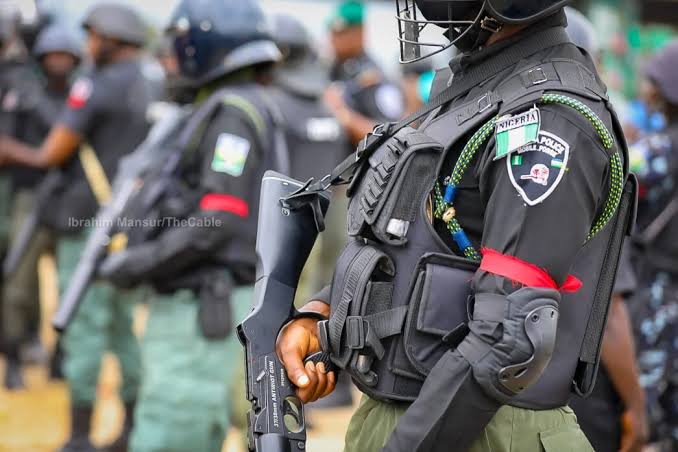
Linus Aleke in Abuja The Nigeria Police Force has announced an immediate ban on the use of vehicles with unregistered or concealed number plates, warning […]
Flush Out Bandits, Kidnappers From Their Hideouts, Reps Tells Tinubu
President Bola Tinubu has been urged to immediately deploy a comprehensive and aggressive security strategy to flush out bandits and kidnappers from their hideouts and […]
Five Persons Killed as Gunmen Attack Ogun Dredging Site
James Sowole in Abeokuta Five persons comprising a soldier and four hostages, were reportedly killed when gunmen during a kidnapping incident targeting Chinese expatriates at […]
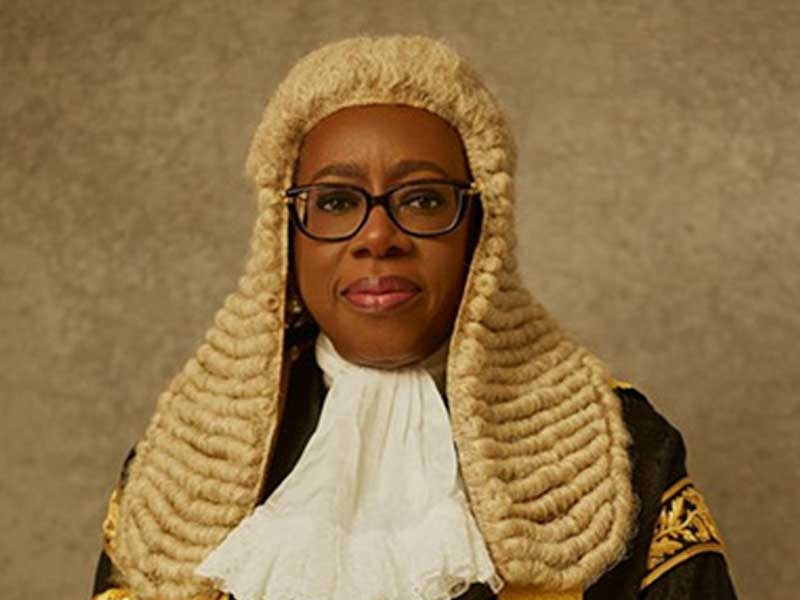
First Lady Urges Women in the Judiciary to Anchor Transparent Judicial System in Africa
The First Lady of Nigeria, Senator Oluremi Tinubu has said that the judiciary remains central to sustaining the Rule of Law in a democratic society. […]
NDDC Fast Tracks Work on Okrika-Borikiri Bridge, Pays Compensation
The Niger Delta Development Commission, NDDC, has assured that the pace of work on the 3.75-kilometre Okrika-Borikiri Road, with three bridges linking Okrika and Port […]