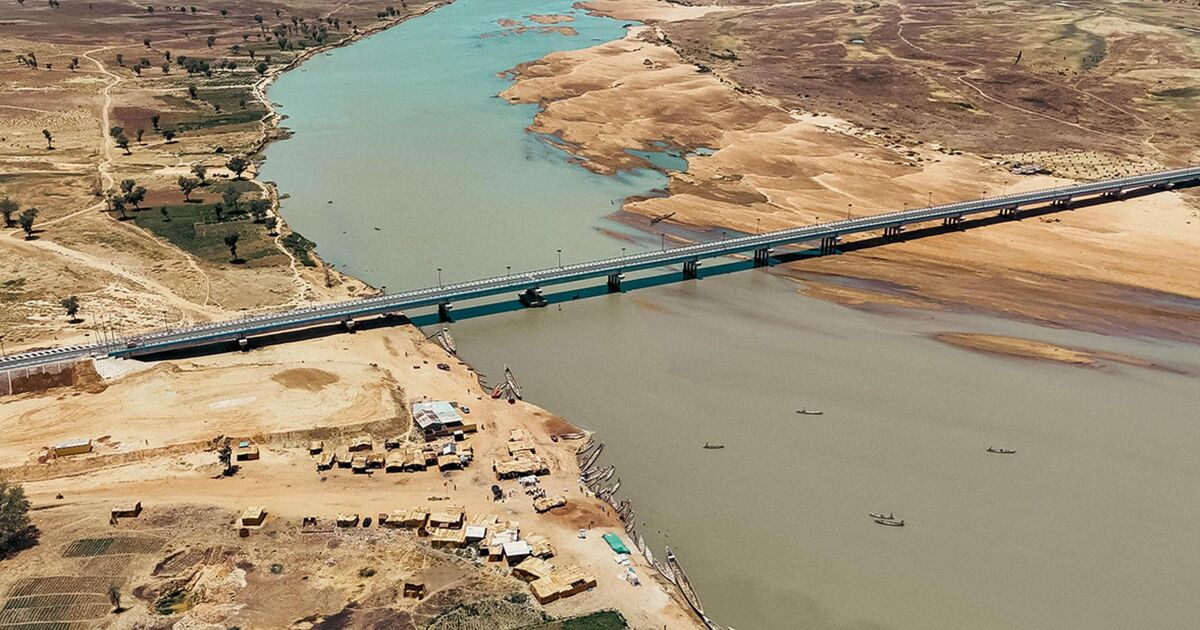
A huge new bridge in Africa has transformed travel and trade by physically linking two major countries for the first time in the region. The over 2,000-foot (620m) structure spans the Logone River and forms part of an international border, connecting the city of Yagoua in Cameroon with Bongor in Chad.
Before its construction, crossing the waterway was far from simple. According to Pierre Fissou, a teaching adviser in the Mayo Danay departmental delegation for basic education in Yagoua, “it has caused a lot of risks and sometimes tragedies”. For centuries, the only way to cross the Logone was via a canoe – a ferry service was sometimes available but often out of service. Often, people had no choice but to swim, risking drowning or being attacked by hippos.
“There were too many dangers. Bad things happened and people lost their lives, including some people close to me,” Mr Fissou told the African Development Bank Group (AFDB).
However, the new Bongor-Yagoa Bridge (Logone Bridge) across the river has revolutionised travel in the region and will save countless lives. Having cost over €578million (£499million) in investments, the bridge is expected to benefit more than 4.7 million people by making it far easier to cross the border for work, healthcare, education and trade. It took five years to complete and opened in May last year.
When Mr Fissou crossed the bridge for the first time, he described it as “unbelievable”: “The crossing that used to take 45 minutes or an hour took just a few moments. It was as if we were living on the same piece of land.”
Officials have said the project will also significantly increase the flow of goods between the two countries, opening up new business opportunities and strengthening regional connections. It’s also designed to improve stability in an area where infrastructure has historically been limited.
“Now we will be able to reach new markets, without risking our lives or our goods,” local trader Fatimé Mahamat said last year.
The bridge forms part of a broader trend across Africa, where major cross-border projects, like the Kazungula Bridge linking Botswana and Zambia, are helping slash travel times and replace outdated ferry routes. The wider international infrastructure push is largely backed by the EU and partner nations.