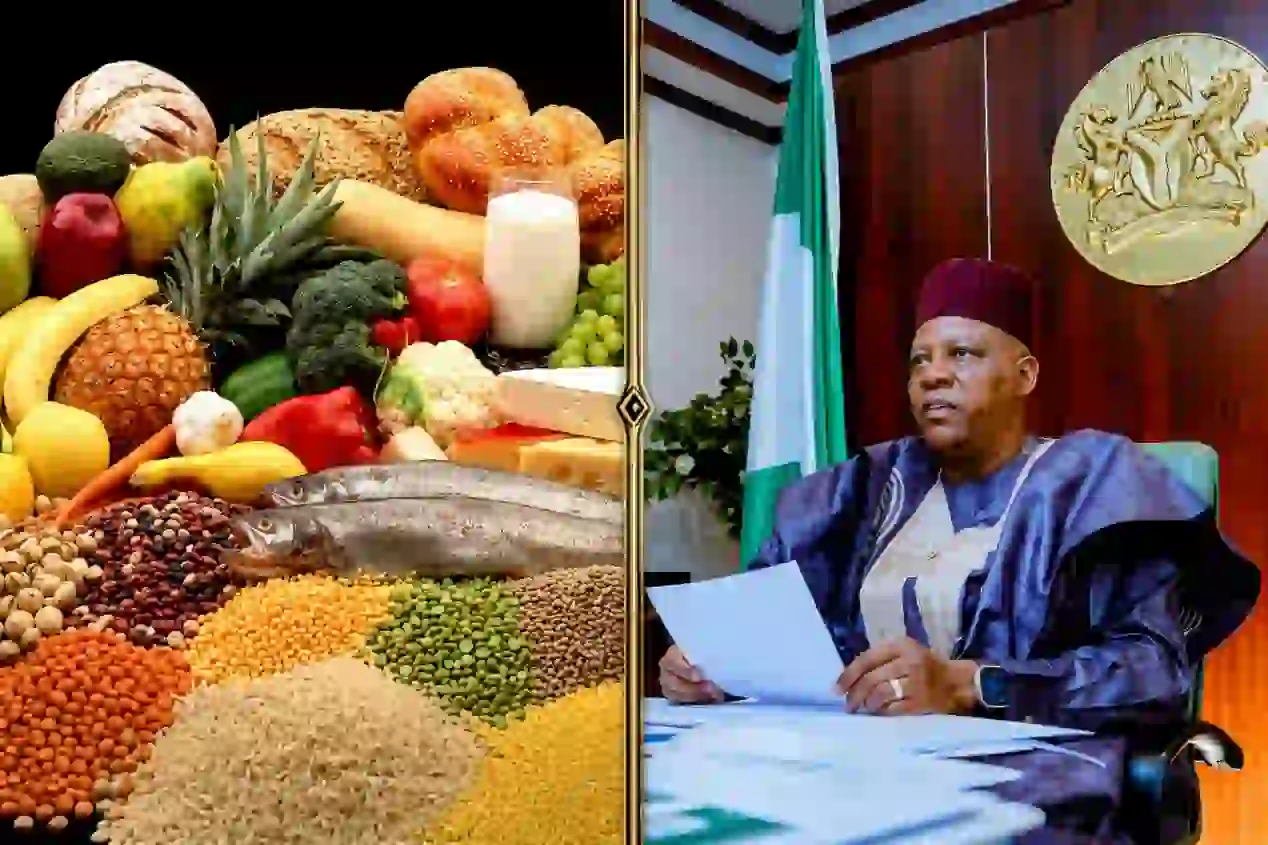
The Federal Government is moving to tackle malnutrition nationwide through a coordinated rollout of the Nutrition 774 Initiative, following fresh policy approvals by the National Council on Nutrition (NCN) aimed at strengthening food and nutrition systems across all levels of government.
At its 15th meeting, chaired by Vice President Kashim Shettima, the council formally adopted the National Policy on Food and Nutrition (NPFN) 2026–2035 and directed the Federal Ministry of Budget and Economic Planning to transmit the document to the Federal Executive Council (FEC) for final ratification. The approval marks a significant step in aligning Nigeria’s nutrition strategy with long-term development priorities under the Renewed Hope Agenda.
The adoption followed what officials described as a rigorous and consultative process involving key stakeholders across Nigeria’s nutrition ecosystem, including public institutions, development partners, and private sector actors. The policy is expected to serve as a comprehensive framework for addressing malnutrition, food insecurity, and related health outcomes over the next decade.
Summarising the council’s resolutions, Shettima stressed the urgency of translating policy decisions into measurable impact at the grassroots. He cautioned that the real test of the initiative would not lie in high-level deliberations but in tangible improvements in the lives of Nigerians, particularly vulnerable children.
“We will be judged not by our deliberations but by our deliveries. Not by what we decided in April 2026, but by what mothers and children in the 774 local government areas experience by 2035,” the Vice President said.
He described the NPFN 2026–2035 as “the most consequential nutrition policy this country has produced,” noting that it is deliberately designed to cut across sectors, backed by data, and focused on community-level implementation. According to him, the policy is not limited to a single ministry but requires collective ownership across federal, state, and local governments, as well as households.
“It is not a Federal Ministry of Budget and Economic Planning document. It is not a Federal Ministry of Health and Social Welfare document. It belongs to every Ministry, every State, every LGA, every ward, and every household represented in the work of this Council,” he stated.
To ensure alignment and accountability, the council directed all Ministries, Departments, and Agencies (MDAs) with nutrition-related mandates to harmonise their policies, plans, and budgets with the provisions of the NPFN within 12 months. It also mandated all 36 states and the Federal Capital Territory (FCT) to operationalise State Multisectoral Plans of Action for Food and Nutrition within six to nine months.
In addition, the NCN approved a six-week extension for the submission of a draft National Nutrition Bill, with a firm directive that the legislation must be transmitted to the National Assembly within eight weeks. The bill is expected to provide a legal framework that safeguards nutrition financing and clearly defines responsibilities across all tiers of government.
“Council approves the requested extension. Council also reaffirms that the Bill must be transmitted to the National Assembly within eight weeks from today,” Shettima said, commending the composition of the ad hoc committee handling the draft.
On financing, the council expanded the nutrition financing sub-committee to include the Federal Ministry of Humanitarian Affairs and Poverty Reduction, the Commissioners of Finance Forum, and the Association of Local Governments of Nigeria (ALGON). The move is aimed at strengthening coordination and ensuring broader ownership of funding strategies.
The Vice President highlighted that five key financing streams have been identified to support implementation. These include domestic funding, bilateral and multilateral support, private sector contributions, and innovative financing mechanisms. He added that the sub-committee would work closely with the Nutrition 774 Strategic Board to avoid duplication and maximise efficiency.
A major component of the government’s approach is the Nutrition 774 Initiative, which seeks to drive implementation across all 774 local government areas in the country. Shettima emphasised that the initiative reflects the administration’s commitment to practical, results-driven governance in addressing malnutrition.
“It reminds us that the success of our nutrition reform will not be judged by federal announcements, but by co-coverage of interventions and household outcomes across all 774 local government areas,” he said.
“From Yobe to Bayelsa, from Katsina to Cross River, from Nasarawa to Ebonyi, every Nigerian child must be seen as the face of this national assignment.”
He further noted that the National Nutrition Bill would serve as the legislative backbone of the reform effort, ensuring continuity and protection of funding regardless of political transitions. According to him, the bill must “protect nutrition financing from the uncertainties of political cycles” while also defining clear obligations for federal, state, and local authorities.
To deepen sub-national ownership, the council directed the Chairman of the Nigeria Governors’ Forum (NGF), working with its secretariat and the Office of the Vice President, to facilitate the establishment and inauguration of State Councils on Nutrition in the remaining 27 states and the FCT within three months. Currently, only nine states have functional councils.
On private sector engagement, Shettima announced plans to establish a co-branded nutrition challenge window within 60 days. The initiative will be developed in collaboration with the Dangote Foundation, the Federal Ministry of Industry, Trade and Investment, and the Federal Ministry of Innovation, Science and Technology, with the aim of mobilising private capital and innovation toward nutrition outcomes.
Earlier, Minister of Budget and Economic Planning, Atiku Bagudu, commended the Vice President for prioritising food security and nutrition, describing the policy as a critical tool for safeguarding Nigeria’s human capital. He noted that the NPFN 2026–2035 provides a structured pathway for accelerating progress in line with national development goals.
The Permanent Secretary of the ministry also highlighted that the policy integrates food security, public health, and economic planning into a unified strategy, positioning nutrition as a central pillar of national development.
Stakeholders across both public and private sectors expressed strong support for the policy, describing it as a timely and necessary intervention. Many noted that investing in nutrition remains one of the most effective ways to improve long-term outcomes in health, education, and productivity.
With the combined push of policy alignment, legislative backing, financing reforms, and nationwide implementation through the Nutrition 774 Initiative, the Federal Government is positioning the fight against malnutrition as a shared national responsibility with measurable targets over the next decade.
What do you think about this?
Drop your opinion in the comment section.
FOLLOW US & Share this with someone who needs to see this.