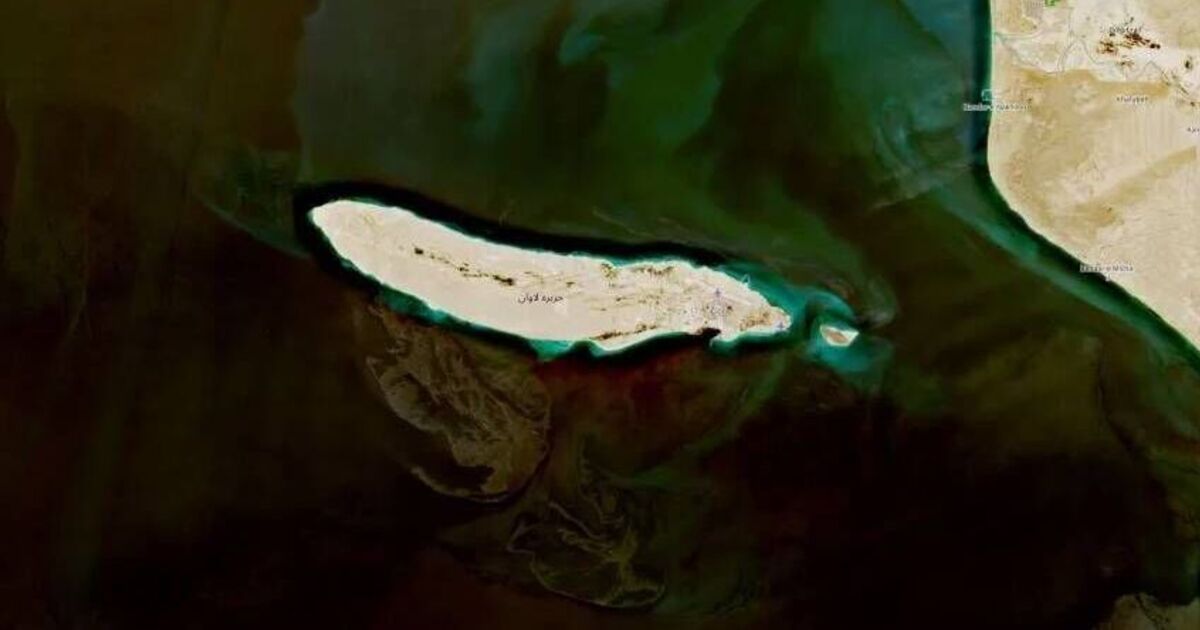
A satellite image captured on April 10 shows oil surrounding Iran’s Lavan Island (Image: Sentinel-1/European Space Agency)
Satellite imagery has revealed oil spills in Iran that are visible from space, as U.S.-Israeli strikes continue to target oil production facilities and infrastructure throughout the region.
With the two-week ceasefire due to expire on Wednesday and no agreement in place, tensions look set to escalate further. On Monday morning, President Donald Trump cautioned that “lots of bombs” will “start going off” if no deal is reached before the deadline.
The Iran conflict has exacted a devastating toll on a global scale. According to authorities, approximately 3,375 people have been killed in Iran since hostilities commenced, while 23 have died in Israel, more than a dozen in Gulf Arab states, and 13 U.S. service members have also lost their lives. Beyond the human cost, the conflict has sparked economic turmoil, with oil prices soaring, and environmental destruction is now mounting rapidly.
Satellite images from the European Space Agency’s Sentinel-1, taken earlier this month, lay bare the sheer scale of the devastation. One image from April 7 shows a five-mile oil spill in the Strait of Hormuz near Iran’s Qeshm Island.
Nina Noelle, spokesperson for Greenpeace Germany, told CNN that an Iranian vessel spilled oil in the same location after being hit by U.S. forces. Further imagery captured an oil spill near Lavan Island following Iranian state media reports that an oil facility close to the island’s coastline was struck on April 7.
Noelle explained to the publication that oil spills can trigger serious consequences, “affecting the entire ecosystem, from microorganisms to fish, birds, and marine turtles that depend on mangrove habitats.”
Read more: Trump issues furious rant over ‘The Iranians take Trump for a sucker’ insult
Read more: Your rights, compensation and what to do if your flight is cancelled
How badly is Iran impacted by Trump’s war?
A further photograph captured on April 6 showed oil pollution along Kuwait’s coastline. Iran’s Islamic Revolutionary Guard Corps confirmed it had struck petrochemical plants in Kuwait on April 5, alongside facilities in the United Arab Emirates and Bahrain.
According to Reuters, the Kuwait Petroleum Corporation recorded “severe material damage” following the Iranian drone attack, which sparked fires at its installations, reports the Mirror US.
Greenpeace’s Noelle told CNN that clean-up efforts for Gulf oil spills would prove exceptionally demanding, and potentially impossible, owing to the “structural complexity, limited accessibility and challenging working conditions.”

Oil off the coast of Kuwait, as seen in images from April 6 (Image: Sentinel-1/European Space Agency)
What is the environmental impact of oil spills?
The looming ecological disaster arising from the Iran conflict has sparked widespread global concern. On March 13, the United Nations Environment Programme (UNEP) released a statement cautioning that “Heavy smoke from burning oil, which includes hazardous compounds, is now being directly inhaled by people in Iran – including young children – raising serious concerns about long-term impacts on both human and environmental health.
“Pollution from uncontrolled fires may also enter soil and water, leach into groundwater, and be absorbed by crops, contaminating food supplies,” the UNEP team continued. “Oil spills have also been reported in marine areas, further impacting the health of coastal communities.”
In an X post on March 15, Iran’s Foreign Minister Abbas Araghchi contended that Israeli airstrikes targeting fuel depots in Tehran “violate international law and constitute ecocide.”

Satellite images captured from space show oil spills in the Persian Gulf due to the Iran war (Image: Sentinel-1/European Space Agency)
Are Iranians suffering due to the war?
Strikes on March 7 targeting these facilities blanketed Tehran’s skies in dense smoke filled with dangerous pollutants, amongst them soot, oil particles, and sulphur dioxide. That very same day, a storm deposited oil-contaminated rainwater across the city.
The CDC cautions that exposure to sulphur dioxide can aggravate the nose, eyes, throat, and lungs. Inhaling high levels may trigger lung swelling and respiratory difficulties, while skin contact with sulphur dioxide vapour can result in irritation or burns. Prolonged severe exposure could cause lasting lung damage, potentially leading to asthma, pneumonia, and bronchitis.
Drawing attention to the grave health implications for Tehran’s residents, Araghchi wrote, “Residents face long-term damage to their health and well-being. Contamination of soil and groundwater could have generational impacts.”